- 31 August, 2026
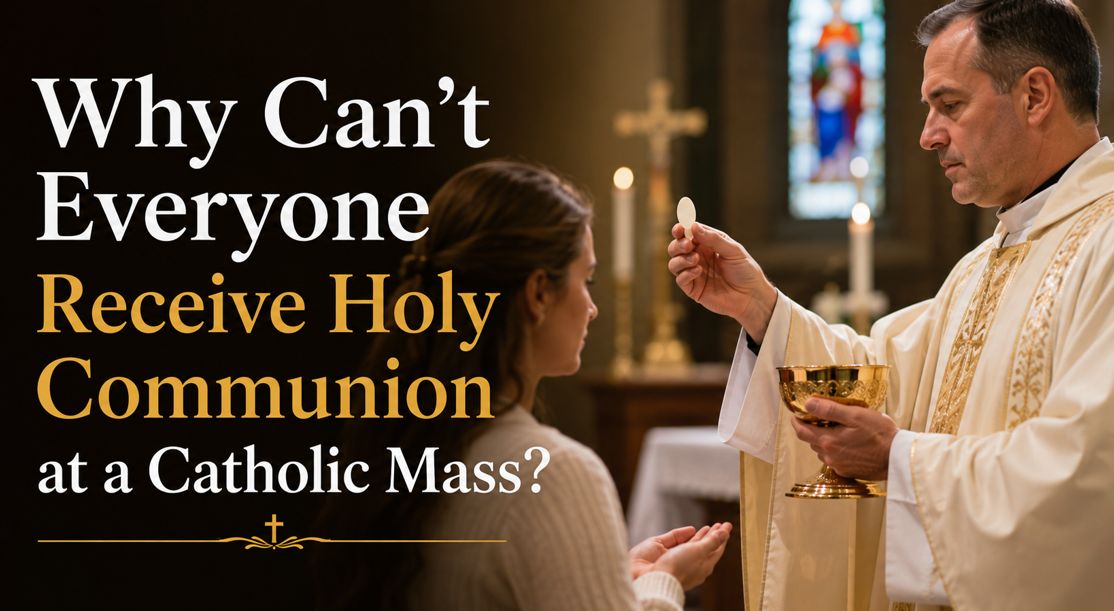
August 31, 2026: Visitors to a Catholic Mass are warmly welcomed, but not everyone present is ordinarily invited to receive Holy Communion. This is not intended as a judgement about anyone's faith or relationship with God. Rather, it reflects what the Catholic Church believes the Eucharist truly is.

Catholics believe that, through transubstantiation, the whole substance of the bread and wine becomes the Body and Blood of Jesus Christ. Christ is present truly, really and substantially—Body, Blood, soul and divinity—while the outward appearances of bread and wine remain.
When the minister says, “The Body of Christ,” and the communicant responds, “Amen,” that response is a public profession of faith in this Catholic belief. Asking someone who does not share that belief to receive could therefore ask them to affirm something they do not personally believe.


(CLICK HERE to follow Catholic Connect and to stay updated with Catholic News & Content)
The word communion expresses union. Receiving the Eucharist signifies communion not only with Christ, but also with the Catholic Church in her faith, sacramental life and ecclesial communion.
Because divisions still exist between Christian communities, sharing the Eucharist before full unity has been achieved could create an outward sign of unity that does not yet fully exist. For this reason, the Catholic Church ordinarily reserves Holy Communion for Catholics who are fully united with the Church and properly disposed.
Being Catholic does not automatically mean that a person should receive Communion on every occasion. A Catholic conscious of unconfessed mortal sin should first receive the Sacrament of Reconciliation.
Mortal sin involves grave matter, full knowledge and deliberate consent. Venial sin, by contrast, wounds rather than destroys charity and does not ordinarily prevent a person from receiving Communion.
St. Paul warns believers to examine themselves and not receive the Eucharist “in an unworthy manner” (1 Corinthians 11:27–29). The Church's guidance is therefore intended not to exclude people, but to protect the sacredness of the sacrament and the spiritual good of those receiving it.
Catholics are also ordinarily required to observe a Eucharistic fast of one hour before receiving Communion. Water and medicine do not break the fast, and particular exceptions apply to the elderly, the sick and those caring for them.
Canon 844 provides limited exceptions. Members of certain Eastern Churches with valid sacraments may, in particular circumstances, receive if they ask voluntarily and are properly disposed, subject also to the discipline of their own Church.
In danger of death or another grave necessity, certain other baptised Christians may also receive, provided the conditions established by the Church are fulfilled. These include manifesting Catholic faith in the Eucharist, being properly disposed, and being unable to approach a minister of their own community.
Those who do not receive Holy Communion remain fully welcome at Mass. They may remain in the pew and pray quietly during the Communion procession. In some parishes, visitors may also approach for a blessing, although the practice of crossing one's arms over the chest is a local custom rather than a universal liturgical rule.
The Eucharist is not simply a re-enactment of the Last Supper. Catholics believe that the Mass sacramentally makes present Christ's one, unique sacrifice and is the sacred banquet of the New Covenant. For this reason, receiving Holy Communion expresses both faith in Christ's Real Presence and a profound unity with His Church.
By Catholic Connect Reporter
Read More :
Why Does the Priest Receive Holy Communion First?
The Priest’s Prayer for Deliverance from Evil at Mass: Explained
Why Do We Say “Lamb of God” Three Times Before Holy Communion?
Why Does the Priest Break the Host Before Communion?
When Does the Bread and Wine Become the Body and Blood of Christ at Mass?
Why Do Catholics Ring Bells During Mass?
What Happens When We Sing “Holy, Holy, Holy” at Every Mass?
Why Does the Priest Wash His Hands During Mass?
Why Did Jesus Choose Bread and Wine for the Eucharist?
Why Does the Church Pray for the Whole World at Mass?
Why Do Catholics Say the Creed After the Homily?
Why Can’t We Skip the Homily at Sunday Mass?
Three Little Crosses Before the Gospel — But What Do They Mean?
Why Do Catholics Sit for the Readings but Stand for the Gospel?
Why Is There a Psalm Between the Readings?
Why Are There Usually Three Readings at Sunday Mass?
Why Does the Priest Say “The Lord Be with You” So Often at Mass?
Why Do We Keep Saying “Amen” at Mass? What Are We Really Saying?
The Prayer After “Let Us Pray” Changes at Mass—Do You Know Why?
Why Do Catholics Sing the Gloria—but Not at Every Mass?
Why Do We Confess Our Sins at the Start of Mass? The Deeper Meaning Explained
Why Does the Priest Kiss the Altar at Mass?
Why Does Mass Begin and End with the Sign of the Cross?
What Makes the Catholic Mass Different from Other Christian Worship Services?
If God Made the Seventh Day Holy, Why Do Catholics Worship on Sunday?
Four Parts, One Beautiful Story: Understanding the Flow of the Mass
Why Does the Mass Follow the Same Order Every Time? The Church's Timeless Wisdom
Why Do Catholics Call It the Mass? The Answer Begins with Three Latin Words
How the Mass Developed Over 2,000 Years: A Journey Through History and Worship
If God Made the Seventh Day Holy, Why Do Catholics Worship on Sunday?

© 2026 CATHOLIC CONNECT POWERED BY ATCONLINE LLP