- 26 August, 2026
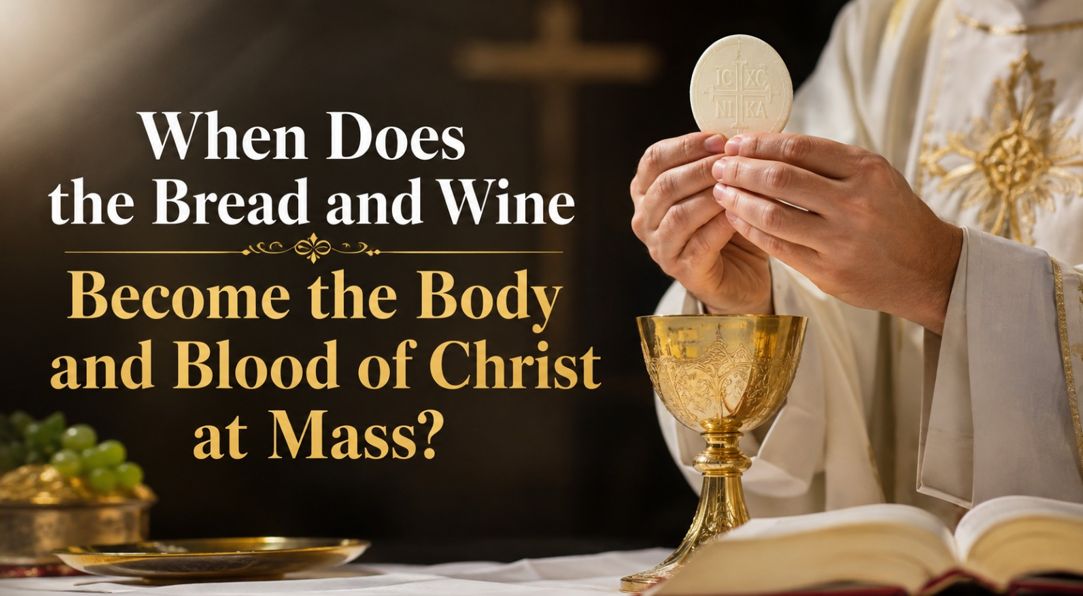
August 26, 2026: At Mass, there is a moment when something extraordinary takes place—yet nothing appears to change before our eyes. The bread still looks like bread, and the wine still looks like wine.

So, when exactly does the change happen?
The change takes place during the Eucharistic Prayer, at the Consecration, when the priest, acting in persona Christi (“in the person of Christ”), speaks Christ’s words of institution.
Over the bread, the priest says: “This is my Body.”
At that moment, the whole substance of the bread becomes Christ’s Body.


(CLICK HERE to follow Catholic Connect and to stay updated with Catholic News & Content)
The priest then takes the chalice and says: “This is the chalice of my Blood, the Blood of the new and eternal covenant, which will be poured out for you and for many for the forgiveness of sins. Do this in memory of me.”
At that moment, the whole substance of the wine becomes Christ’s Blood.
Although the two consecrations take place in sequence, after both have been completed, Christ is present whole and entire under each species.
The Church calls this miraculous change transubstantiation.
Catholic teaching holds that the whole substance of the bread becomes Christ’s Body and the whole substance of the wine becomes His Blood, while the outward appearances—or species—of bread and wine remain.
The appearance, taste and other physical properties remain those of bread and wine. Yet their substance has changed.
This is why Catholics do not believe that the Eucharist is simply ordinary bread and wine with Jesus symbolically attached to them. Christ is truly present.
The Eucharistic Prayer also includes the epiclesis, in which the Church invokes the Holy Spirit and asks the Father to sanctify the gifts.
The consecration is therefore not something the priest accomplishes by his own power. Christ acts through the ordained priest, who speaks the words of institution in the person of Christ, while the Holy Spirit is operative in the Eucharistic mystery.
Different Catholic liturgical traditions express the relationship between the epiclesis and the words of institution differently, but they share the same faith in Christ’s Real Presence.
After the Consecration, Christ is not divided between the Host and the Chalice.
Under the appearance of bread, Christ is present Body, Blood, soul and divinity. Under the appearance of wine, Christ is likewise present Body, Blood, soul and divinity.
The Church also teaches that Christ is present in the Eucharist truly, really and substantially. This Eucharistic presence is unique, even though Christ is genuinely present in other ways throughout the liturgy.
Nothing visible tells us that the change has occurred. The appearances remain the same.
But Catholic faith rests on Christ’s promise and the Church’s teaching: at the Consecration, through the Eucharistic sacramental action, the substance of the bread becomes Christ’s Body and the substance of the wine becomes His Blood.
This profound mystery is called transubstantiation—and it is at the heart of Catholic faith in the Holy Eucharist.
By Catholic Connect Reporter
Read More :
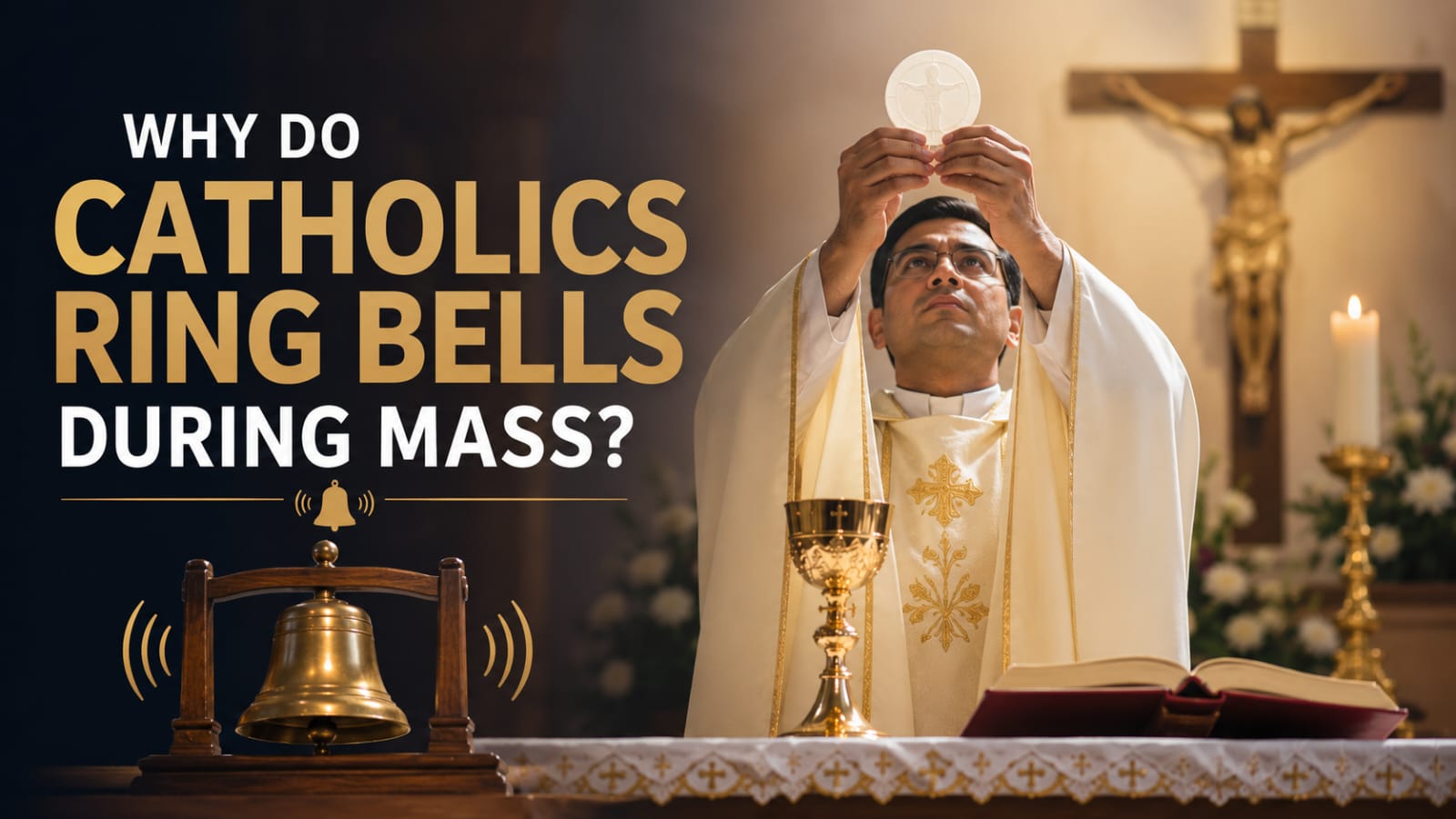
Why Do Catholics Ring Bells During Mass?
What Happens When We Sing “Holy, Holy, Holy” at Every Mass?
Why Does the Priest Wash His Hands During Mass?
Why Did Jesus Choose Bread and Wine for the Eucharist?
Why Does the Church Pray for the Whole World at Mass?
Why Do Catholics Say the Creed After the Homily?
Why Can’t We Skip the Homily at Sunday Mass?
Three Little Crosses Before the Gospel — But What Do They Mean?
Why Do Catholics Sit for the Readings but Stand for the Gospel?
Why Is There a Psalm Between the Readings?
Why Are There Usually Three Readings at Sunday Mass?
Why Does the Priest Say “The Lord Be with You” So Often at Mass?
Why Do We Keep Saying “Amen” at Mass? What Are We Really Saying?
The Prayer After “Let Us Pray” Changes at Mass—Do You Know Why?
Why Do Catholics Sing the Gloria—but Not at Every Mass?
Why Do We Confess Our Sins at the Start of Mass? The Deeper Meaning Explained
Why Does the Priest Kiss the Altar at Mass?
Why Does Mass Begin and End with the Sign of the Cross?
What Makes the Catholic Mass Different from Other Christian Worship Services?
If God Made the Seventh Day Holy, Why Do Catholics Worship on Sunday?
Four Parts, One Beautiful Story: Understanding the Flow of the Mass
Why Does the Mass Follow the Same Order Every Time? The Church's Timeless Wisdom
Why Do Catholics Call It the Mass? The Answer Begins with Three Latin Words
How the Mass Developed Over 2,000 Years: A Journey Through History and Worship
If God Made the Seventh Day Holy, Why Do Catholics Worship on Sunday?
© 2026 CATHOLIC CONNECT POWERED BY ATCONLINE LLP