- 10 October, 2026

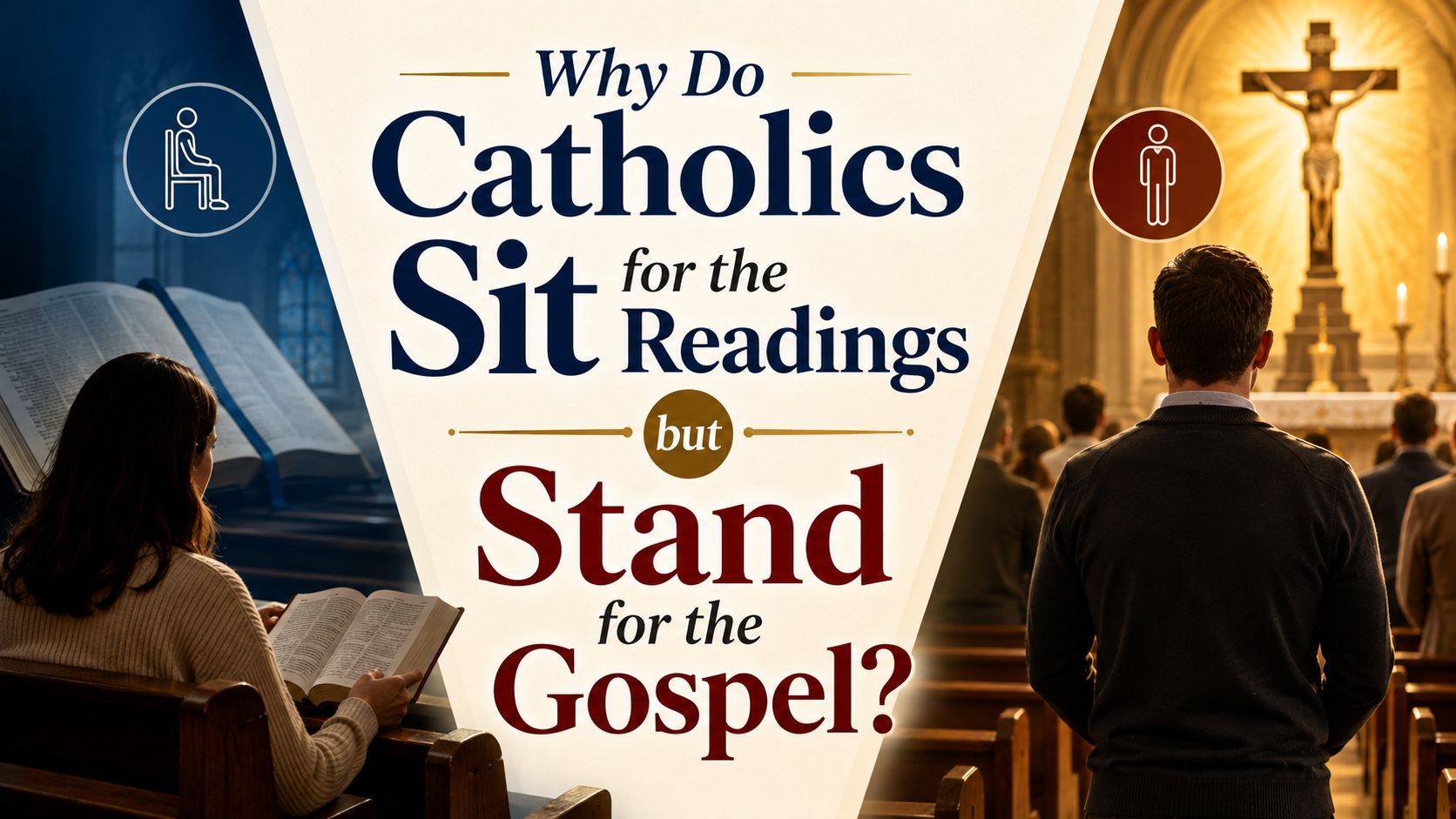
August 17, 2026: Have you noticed that Catholics remain seated during most of the Liturgy of the Word but stand when the Gospel is proclaimed? This change in posture is not simply a matter of custom. It expresses the distinct character of each part of the liturgy and helps the whole assembly participate with body and spirit.


Sitting: Listening and Meditation
After the Collect, the congregation sits for the First Reading, the Responsorial Psalm and the Second Reading. The General Instruction of the Roman Missal explicitly directs the faithful to sit during the readings before the Gospel and during the Responsorial Psalm.
Sitting expresses receptive attentiveness. Like disciples listening to a teacher, the faithful listen to God’s word, reflect upon it and allow it to shape their faith. After a reading, a brief silence may be observed so that the congregation can meditate on what it has heard.
The Responsorial Psalm is not merely an interval between readings. It is an integral part of the Liturgy of the Word, enabling the assembly to respond to God’s word through the words of Scripture itself.
(Click Here to follow Catholic Connect for regular News & Content)
Standing: Welcoming Christ in the Gospel
The congregation stands when the Alleluia—or another Gospel acclamation, especially during Lent—begins, and remains standing while the Gospel is proclaimed. The acclamation welcomes the Gospel and prepares the assembly to receive it.
The Gospel is the high point of the Liturgy of the Word. Through standing and through the acclamations, the faithful acknowledge Christ present and speaking to them in the Gospel.
This special honour does not mean that the other biblical readings are less inspired or less worthy of reverence. Rather, the Gospel receives distinctive liturgical honour because it proclaims the words and saving actions of Jesus Christ, especially his Passion, death and Resurrection. The Gospel book may therefore be carried in procession, incensed and accompanied by candles.
An Ancient Christian Sign
Standing has long signified spiritual attentiveness, readiness to do God’s will and participation in Christ’s Resurrection. Thus, Catholics stand for the Gospel not only to show respect, but also to welcome the risen Lord and commit themselves to live according to his word.
By Catholic Connect Reporter
Read more:
Why Do We Keep Saying “Amen” at Mass? What Are We Really Saying?
The Prayer After “Let Us Pray” Changes at Mass—Do You Know Why?
Why Do Catholics Sing the Gloria—but Not at Every Mass?
Why Do We Confess Our Sins at the Start of Mass? The Deeper Meaning Explained
Why Does the Priest Kiss the Altar at Mass?
What Makes the Catholic Mass Different from Other Christian Worship Services?
If God Made the Seventh Day Holy, Why Do Catholics Worship on Sunday?
Four Parts, One Beautiful Story: Understanding the Flow of the Mass
Why Does the Mass Follow the Same Order Every Time? The Church's Timeless Wisdom
Why Do Catholics Call It the Mass? The Answer Begins with Three Latin Words
If God Made the Seventh Day Holy, Why Do Catholics Worship on Sunday?
How the Mass Developed Over 2,000 Years: A Journey Through History and Worship

© 2026 CATHOLIC CONNECT POWERED BY ATCONLINE LLP