- 10 October, 2026

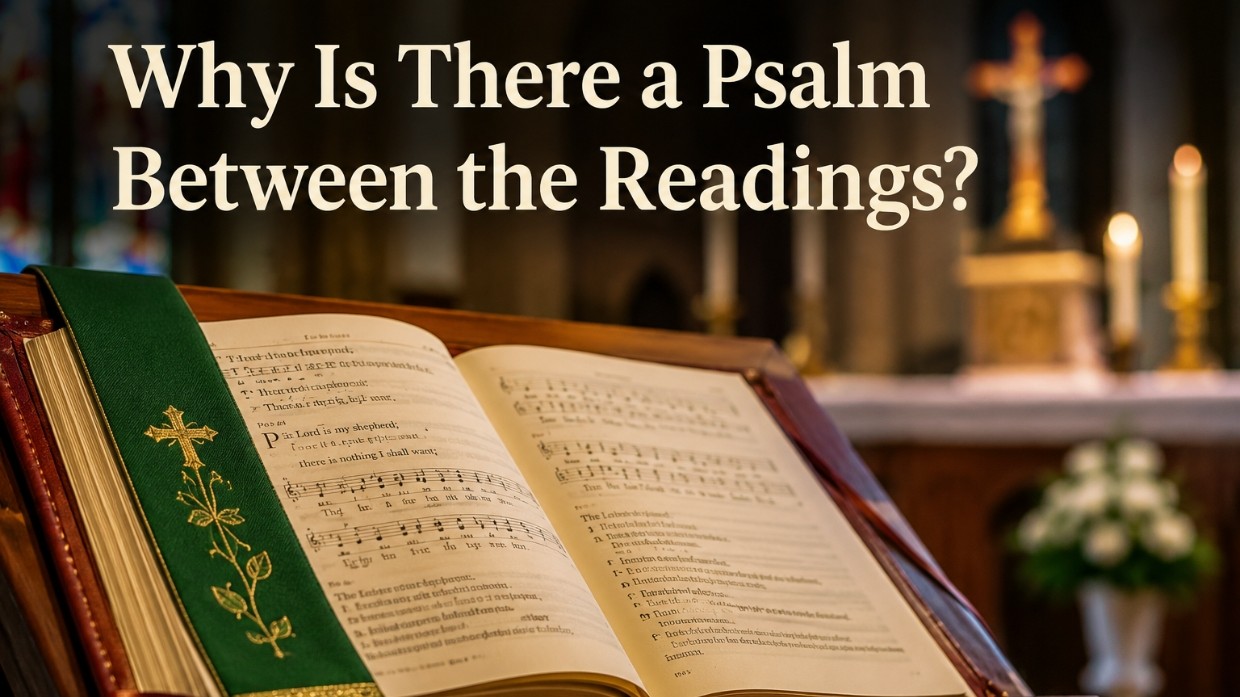
During the Liturgy of the Word, a psalm is normally proclaimed after the first reading. It may seem like a pause between the readings, but it is actually an essential part of the Mass. The Responsorial Psalm is Scripture, prayer and proclamation: it helps the Church receive the Word of God and respond to it with faith.


The Psalm is part of the Liturgy of the Word
The Responsorial Psalm is not an optional song inserted between the readings. The General Instruction of the Roman Missal calls it "an integral part of the Liturgy of the Word.” It therefore belongs to the proclamation of God’s Word, together with the readings, the Gospel and the homily.
The psalm is ordinarily taken from the Lectionary and is selected in connection with the readings of the day. Its themes often deepen, echo or interpret what has just been proclaimed. Nevertheless, the psalm should not be understood merely as a musical response to the first reading. It is itself a scriptural proclamation, prayed and sung by the Church.
Why is it called “responsorial”?
The name refers especially to the way the psalm is normally structured.
The psalmist or cantor proclaims the verses, while the congregation responds by singing a repeated refrain. In this way, the assembly does not remain passive. The people receive God’s Word and answer it together through prayer.
For example, after hearing a reading about God’s faithfulness, the congregation might respond:
"The Lord is my shepherd; there is nothing I shall want.”
The response is not merely a comment on the reading. It is an act of trust in God and a prayer of the whole Church.
The General Instruction states that the congregation ordinarily remains seated, listens to the verses and participates by singing the response.
The Church prays with the words of Scripture
The psalms teach us how to speak to God.
They include praise, thanksgiving, repentance, sorrow, confidence, longing and hope. They give words to the full range of human experience and place that experience before the Lord. Through the psalms, the Church learns to respond to God not merely with private thoughts, but with the inspired language of Sacred Scripture.
The Catechism teaches:
"Prayed and fulfilled in Christ, the Psalms are an essential and permanent element of the prayer of the Church.”
At Mass, therefore, the psalm is both God’s Word addressed to us and the Church’s prayer addressed to God. The same Holy Spirit who inspired the psalm speaks through it, and the same Spirit enables the assembly to receive it and respond.
Why does the congregation remain seated?
The posture of sitting expresses attentive listening.
During the psalm, the congregation is still receiving the Word of God, but it is also praying. The people listen to the verses proclaimed by the psalmist and join in the response. This creates a rhythm of proclamation and participation: the cantor sings, and the assembly answers.
The psalm may be sung from the ambo or another suitable place. If there is no psalmist, the lector may proclaim it.
Why is the psalm usually sung?
The Church gives preference to singing the Responsorial Psalm because singing helps the faithful understand and meditate upon its spiritual meaning. The melody allows the words to remain in the heart and makes the congregation’s response a genuine act of prayer rather than a merely spoken reply.
The psalm should be sung whenever possible, especially the response. However, if it cannot be sung, it must be recited in a manner that fosters meditation on the Word of God.
The essential point is not musical quality but faithful proclamation and prayerful participation.
Why can a hymn not replace the Responsorial Psalm?
Because the Responsorial Psalm is part of Sacred Scripture, it cannot ordinarily be replaced by an unrelated hymn or devotional song.
A hymn may express Christian faith and praise, but the Responsorial Psalm has a distinct liturgical role: it is the scriptural text appointed for the Liturgy of the Word. In the dioceses of the United States, the General Instruction explicitly states that songs or hymns may not be used in place of the Responsorial Psalm.
Approved alternatives may exist in the liturgical books, such as another permitted psalm or a proper gradual, but these alternatives remain forms of scriptural or officially approved liturgical chant.
The psalm points toward Christ
The psalms belong to the Old Testament, but Christians read and pray them in the light of Jesus Christ.
Christ prayed the psalms, fulfilled their hopes and brought their promises to completion. When the Church prays the psalms at Mass, she prays with Christ and through Christ. The words of lament, trust, praise and thanksgiving become part of the prayer of Christ’s Body, the Church.
A psalm of suffering can lead us toward the Passion of Christ. A psalm of thanksgiving can echo the Church’s Eucharistic praise. A psalm proclaiming God as King can direct our attention toward Christ’s reign. A psalm expressing hope can remind us of the Resurrection.
The Responsorial Psalm therefore helps unite the readings with the Gospel and shows that the whole history of salvation finds its fulfilment in Christ.
It is more than a pause between readings
The psalm creates a sacred space in which the assembly can pause, listen and pray before hearing the next reading. Yet it is not simply a break in the readings or background music for the liturgy.
It is a moment in which the Church allows God’s Word to take root. The first reading is not immediately followed by another human explanation. Instead, the Church responds with inspired prayer.
This movement is important:
The psalm thus serves both meditation and proclamation. It helps the faithful reflect upon the Word while continuing the scriptural proclamation of the liturgy.
What about the chant before the Gospel?
In the usual Sunday celebration, the Responsorial Psalm follows the first reading. After the second reading comes the Gospel Acclamation: normally the Alleluia, except during Lent, when another prescribed acclamation is used.
The Alleluia is not another Responsorial Psalm. It is an acclamation welcoming Christ, who is about to speak in the Gospel.
When there is only one reading before the Gospel, the liturgical books provide different possibilities depending on the season, including the Responsorial Psalm and the Alleluia or another Gospel acclamation.
A practical way to participate
When the Responsorial Psalm begins, avoid treating it as a musical interlude or as a moment to prepare for the next reading. Listen to the verses as Scripture and sing the response consciously.
The response may be a profession of faith, a plea for mercy, an expression of thanksgiving or a proclamation of hope. Allow its words to become your own prayer.
The next time the psalm is proclaimed at Mass, remember that the Church is doing more than filling the space between two readings. God has spoken, and His people are answering with the inspired prayer of Scripture.
By Catholic Connect Reporter


© 2026 CATHOLIC CONNECT POWERED BY ATCONLINE LLP