- 25 August, 2026

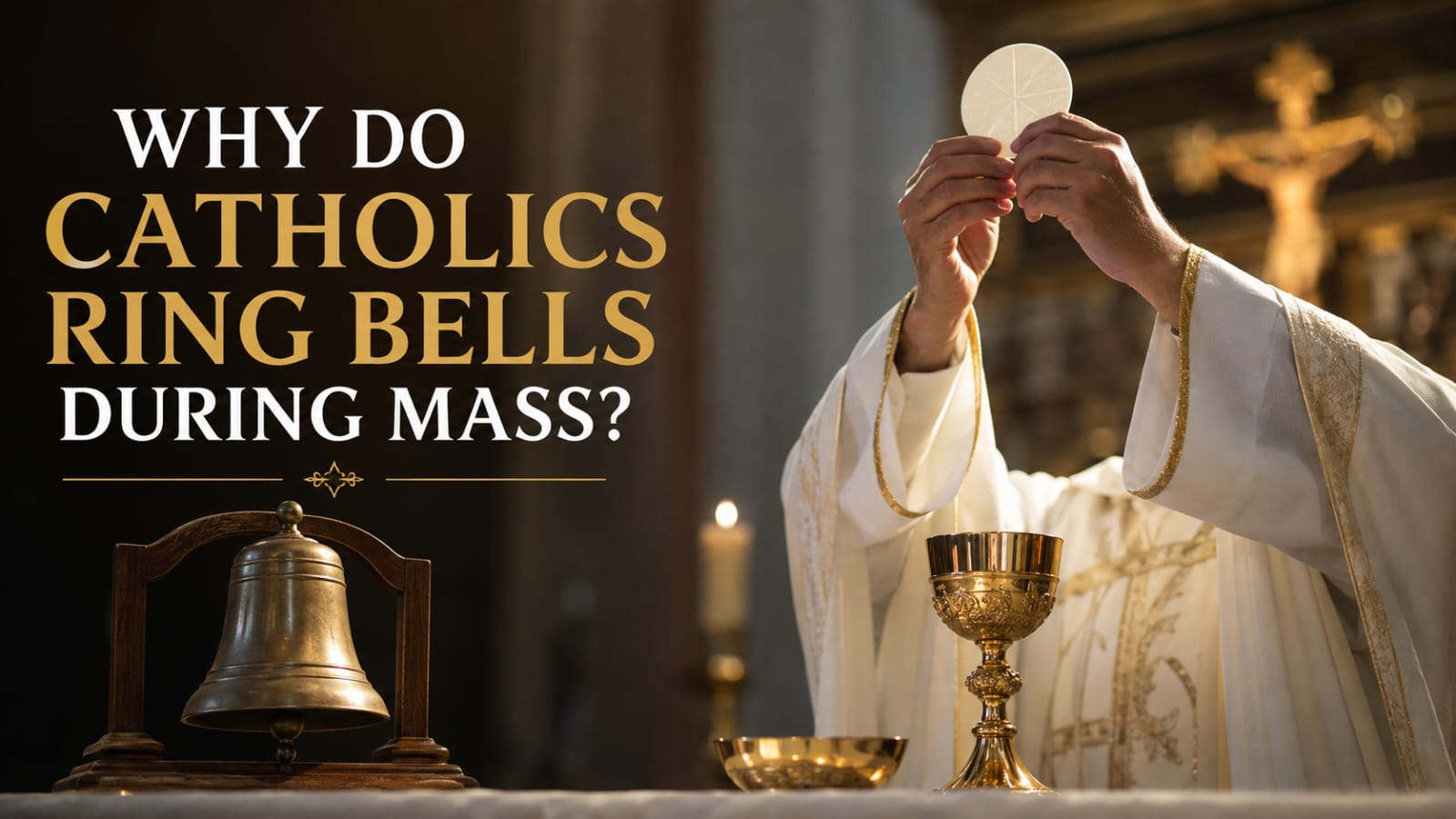
August 25, 2026: Have you ever noticed the small bells ringing during Mass and wondered why they are used? For many Catholics, sanctuary bells are associated with the most sacred moments of the Eucharistic celebration. They are not merely a familiar tradition: they can help the faithful recognise what is taking place at the altar and respond with reverence.


When Are the Bells Rung?
In the Roman Rite, the General Instruction of the Roman Missal states that, when appropriate, a server may ring a bell shortly before the consecration. According to local custom, the bell may also be rung when the priest elevates the consecrated Host and then the Chalice.
The bells therefore draw attention to the Eucharistic Prayer, especially the consecration, when the Church’s faith in Christ’s Real Presence is expressed sacramentally.


Why Did This Tradition Develop?
The custom became especially significant during the Middle Ages, when the elevation of the Host was an important moment of Eucharistic devotion. Bells helped alert the faithful to this sacred moment, including people who could not clearly see or hear what was happening at the altar. In some places, even the large church bell was rung so that people working outside could pause and adore Christ.
What Do the Bells Remind Us Of?
The sound of the bells can interrupt distractions and invite the congregation to look toward the altar with faith and adoration. At the consecration, transubstantiation takes place: the whole substance of the bread and wine is changed into the substance of Christ’s Body and Blood, while their appearances remain those of bread and wine.
The bells do not cause Christ’s presence; they simply signal and accompany this sacred moment. They can serve as a simple invitation: look, listen, and adore.
Are Bells Required at Every Mass?
No. Their use is optional and may vary according to liturgical norms and local custom. Their absence does not make Mass incomplete or invalidate the Eucharist. Sacramental validity depends on the required matter and form, not on the ringing of bells.
Whether they ring loudly, softly, or not at all, the essential reality remains unchanged: Christ is truly, really, and substantially present in the Eucharist, and the Church is invited to worship him with faith and reverence.
By Catholic Connect Reporter
Read More:
What Happens When We Sing “Holy, Holy, Holy” at Every Mass?
Why Did Jesus Choose Bread and Wine for the Eucharist?
Why does the Priest Wash His Hands During Mass?
Why Does the Church Pray for the Whole World at Mass?
Why Do Catholics Say the Creed After the Homily?
Why Can’t We Skip the Homily at Sunday Mass?
Three Little Crosses Before the Gospel — But What Do They Mean?
Why Do Catholics Sitefor the Readings but Stand for the Gospel?
Why Does the Priest Say “The Lord Be with You” So Often at Mass?
Why Do We Keep Saying “Amen” at Mass? What Are We Really Saying?
The Prayer After “Let Us Pray” Changes at Mass—Do You Know Why?
Why Do Catholics Sing the Gloria—but Not at Every Mass?
Why Do We Confess Our Sins at the Start of Mass? The Deeper Meaning Explained
Why Does the Priest Kiss the Altar at Mass?
What Makes the Catholic Mass Different from Other Christian Worship Services?
If God Made the Seventh Day Holy, Why Do Catholics Worship on Sunday?
Four Parts, One Beautiful Story: Understanding the Flow of the Mass
Why Does the Mass Follow the Same Order Every Time? The Church's Timeless Wisdom
Why Do Catholics Call It the Mass? The Answer Begins with Three Latin Words
How the Mass Developed Over 2,000 Years: A Journey Through History and Worship
If God Made the Seventh Day Holy, Why Do Catholics Worship on Sunday?

© 2026 CATHOLIC CONNECT POWERED BY ATCONLINE LLP