- 10 October, 2026
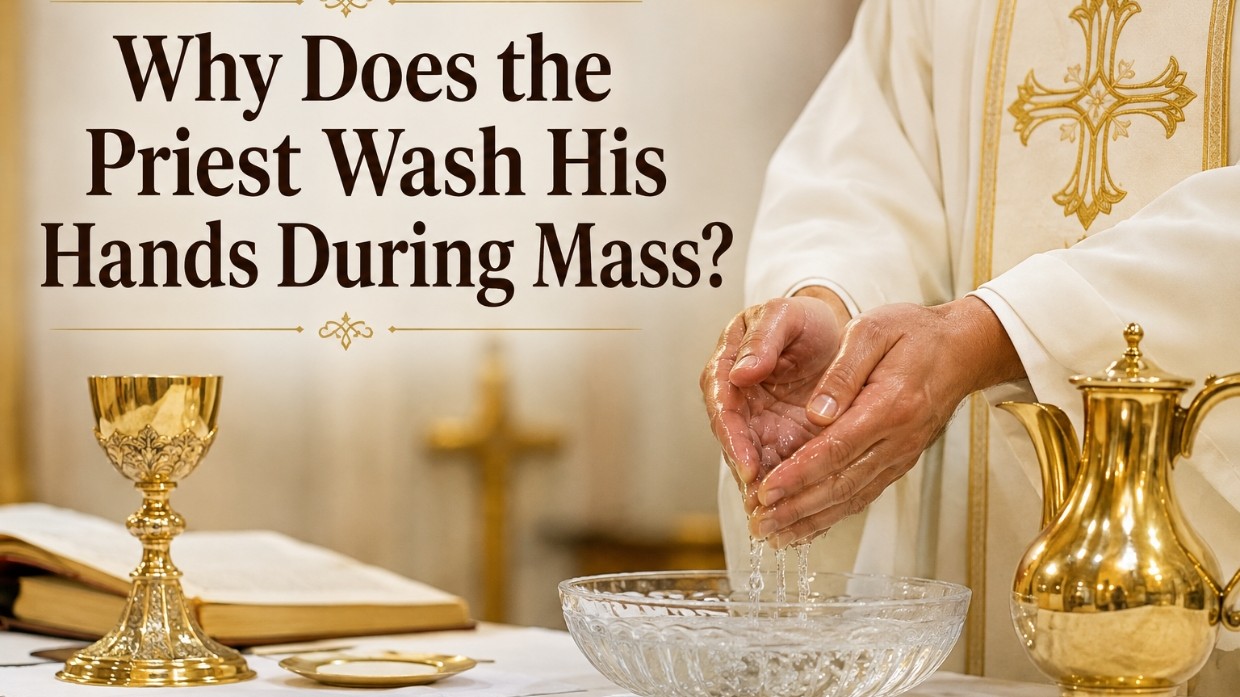
August 23, 2026: There is a quiet moment during the Liturgy of the Eucharist that many Catholics notice but may never stop to question. After the offerings have been prepared on the altar, the priest goes to the side and washes his hands.


It may appear to be a simple act of cleanliness, but the gesture carries a deeper spiritual meaning: before proceeding with the Eucharistic Prayer, the priest expresses his desire for interior purification.
(Click here to follow Catholic Connect for regular News and Content)
What is the Lavabo?
This ritual is traditionally called the Lavabo, from the Latin word meaning, “I will wash.” It takes place during the Preparation of the Gifts, after the offerings have been placed on the altar and, when incense is used, after the incensation. The General Instruction of the Roman Missal states that the priest washes his hands as “an expression of his desire for interior purification.”
The priest is not washing his hands because they are necessarily physically dirty. The ritual points to the purification of the heart and to the need for God’s grace as he continues the celebration of the Eucharistic Sacrifice.
As the minister pours water over his fingers, the priest says quietly:
"Wash me, O Lord, from my iniquity and cleanse me from my sin.”
This is the translation of the prescribed Latin prayer, Lava me, Domine, ab iniquitate mea, et munda me a peccato meo.
A symbol of interior purification
The symbolism of washing the hands is deeply rooted in Scripture. Psalm 51 expresses the prayer:
“Wash me thoroughly from my iniquity, and cleanse me from my sin.”
The physical washing therefore represents a spiritual reality: the need for repentance, purity of heart and dependence upon God’s mercy. Since the hands are associated with human actions, their washing can signify the desire that one’s conduct be purified and directed toward what is good. St Cyril of Jerusalem explained the rite in this symbolic sense, connecting the washing of the hands with freedom from sinful actions.
The Lavabo does not itself forgive sins or replace the Sacrament of Reconciliation. Rather, it is a liturgical sign and prayer expressing the priest’s need for God’s interior purification.
A practical historical background
In earlier forms of the Roman liturgy, the preparation of the offerings could involve receiving and handling gifts brought by the faithful. Washing the hands consequently had a practical purpose as well as a symbolic meaning. Over time, the rite continued within the Mass principally as a sign of spiritual purification.
The Lavabo should also be distinguished from the later purification of the sacred vessels and from washing the fingers if a fragment of the consecrated host adheres to them. Those actions have their own liturgical purpose.
A reminder for the faithful
The Lavabo also invites the faithful to examine their own hearts. As the priest prays for cleansing, Catholics can quietly ask God for humility, repentance and a deeper love for Christ in the Eucharist.
The next time the priest washes his hands at Mass, look beyond the water. See it as a reminder that God desires not merely clean hands, but hearts purified by His grace and prepared to enter more deeply into the mystery of the Eucharist.
By Catholic Connect Reporter
Read more:
Why Did Jesus Choose Bread and Wine for the Eucharist?
Why Does the Church Pray for the Whole World at Mass?
Why Do Catholics Say the Creed After the Homily?
Why Can’t We Skip the Homily at Sunday Mass?
Three Little Crosses Before the Gospel — But What Do They Mean?
Why Do Catholics Sit for the Readings but Stand for the Gospel?
Why Is There a Psalm Between the Readings?
Why Are There Usually Three Readings at Sunday Mass?
Why Does the Priest Say “The Lord Be with You” So Often at Mass?
Why Do We Keep Saying “Amen” at Mass? What Are We Really Saying?
The Prayer After “Let Us Pray” Changes at Mass—Do You Know Why?
Why Do Catholics Sing the Gloria—but Not at Every Mass?
Why Do We Confess Our Sins at the Start of Mass? The Deeper Meaning Explained
Why Does the Priest Kiss the Altar at Mass?
Why Does Mass Begin and End with the Sign of the Cross?
What Makes the Catholic Mass Different from Other Christian Worship Services?
If God Made the Seventh Day Holy, Why Do Catholics Worship on Sunday?
Four Parts, One Beautiful Story: Understanding the Flow of the Mass
Why Does the Mass Follow the Same Order Every Time? The Church's Timeless Wisdom
Why Do Catholics Call It the Mass? The Answer Begins with Three Latin Words
How the Mass Developed Over 2,000 Years: A Journey Through History and Worship
If God Made the Seventh Day Holy, Why Do Catholics Worship on Sunday?
Continue Reading on Catholic Connect App
Get access to exclusive news articles & more.



© 2026 CATHOLIC CONNECT POWERED BY ATCONLINE LLP