- 10 October, 2026
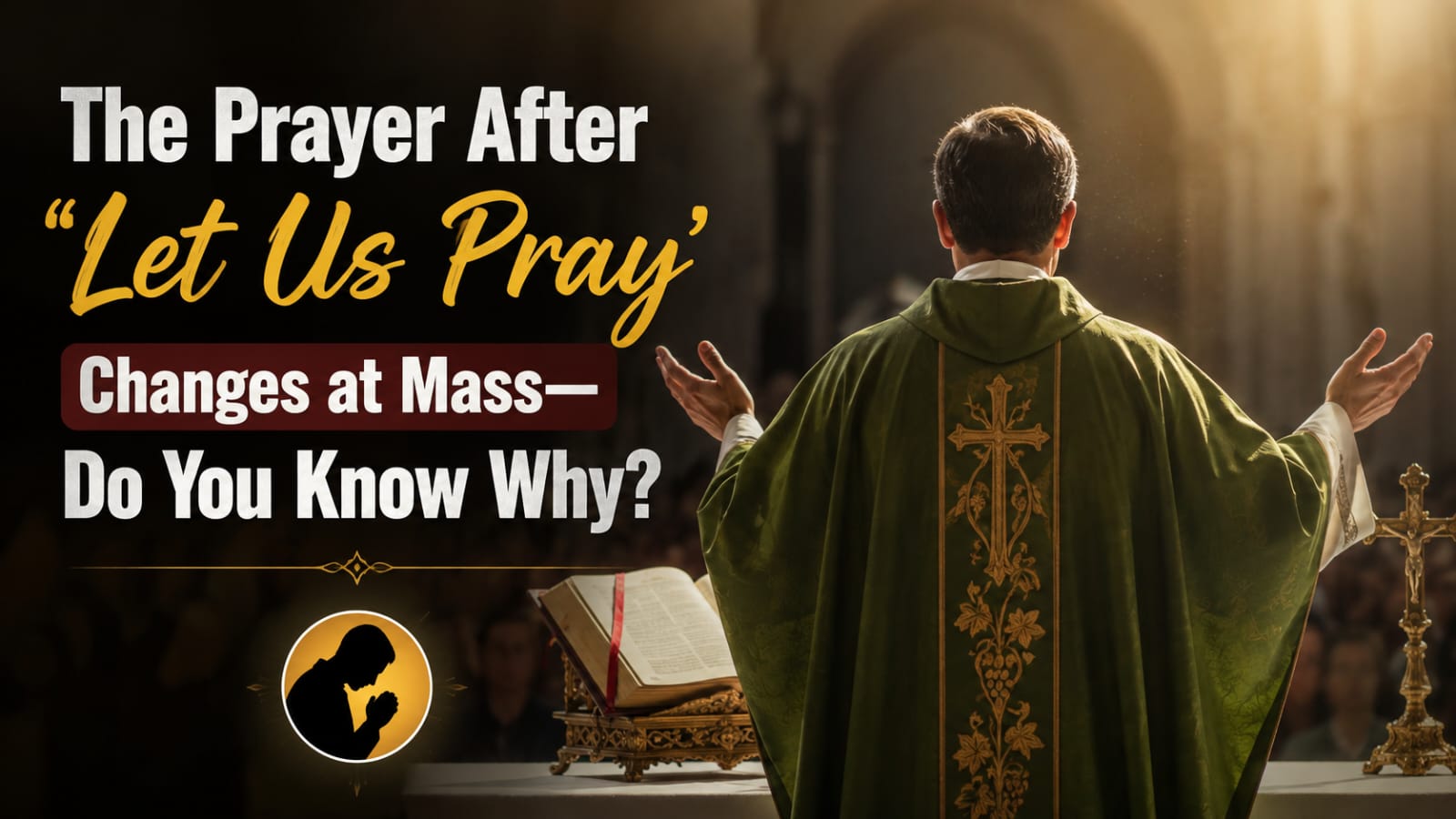
August 12, 2026: Have you ever wondered why the priest says, “Let us pray,” and then pauses? What is the Church doing in that silence? And why does the prayer that follows change from one Sunday or feast to another?


That short pause is not empty time. It gives everyone a moment to become conscious of God’s presence and silently bring their petitions before him. Then comes a prayer that many Catholics hear at every Mass but may not know by name. It is called the Collect.
A prayer that brings everyone together
The Collect comes at the end of the opening part of the Mass, just before the readings begin. After the priest invites everyone to pray, he gathers the assembly’s attention and proclaims the prayer. The congregation then responds, “Amen,” making the prayer its own.
The name “Collect” is traditionally associated both with the gathering of the Christian assembly and with gathering the prayers of the people into one prayer offered by the Church.
But have you ever noticed how carefully these prayers are written?
(CLICK HERE to follow Catholic Connect for regular News and Content)
More than just a short prayer
Many Collects follow a helpful pattern: they address God, recall something about his identity or saving work, ask for a particular grace, and conclude with a Trinitarian formula. This is not a rigid pattern for every Collect.
The Trinitarian conclusion expresses the Church’s faith that prayer is offered to the Father, through Christ, in the unity of the Holy Spirit. And when the people say “Amen,” they affirm the prayer as their own: “Truly,” “Yes,” or “So be it.”
Why is it different each time?
The Collect belongs to the proper prayer of the particular celebration, so it changes with the liturgical season, Sunday or weekday, solemnity, feast, memorial, ritual Mass or votive Mass.
Advent brings themes of expectation and preparation; Lent speaks of repentance and grace; Easter of resurrection and new life. When a saint is celebrated, the Collect may give thanks for God’s work in that saint, ask for the saint’s intercession, or pray that the faithful may follow the saint’s example.
The Collect can also resonate with the day’s readings and help the faithful listen to them attentively. Its primary purpose, however, is to express the character of the liturgical celebration as a whole.
So, the next time you hear “Let us pray,” will you listen more closely to the silence—and to the prayer that follows?
By Catholic Connect Reporter
Read More :
Why Do We Confess Our Sins at the Start of Mass? The Deeper Meaning Explained
Why Does the Priest Kiss the Altar at Mass?
Why Does Mass Begin and End with the Sign of the Cross?
What Makes the Catholic Mass Different from Other Christian Worship Services?
If God Made the Seventh Day Holy, Why Do Catholics Worship on Sunday?
Four Parts, One Beautiful Story: Understanding the Flow of the Mass
Why Does the Mass Follow the Same Order Every Time? The Church's Timeless Wisdom
Why Do Catholics Call It the Mass? The Answer Begins with Three Latin Words
How the Mass Developed Over 2,000 Years: A Journey Through History and Worship
If God Made the Seventh Day Holy, Why Do Catholics Worship on Sunday?

© 2026 CATHOLIC CONNECT POWERED BY ATCONLINE LLP