- 10 October, 2026
August 15, 2026: Have you ever noticed that Sunday Mass usually gives you three biblical readings before the Gospel? They may come from very different parts of the Bible, yet they are brought together within one celebration of the Liturgy of the Word. There is a reason for this structure.



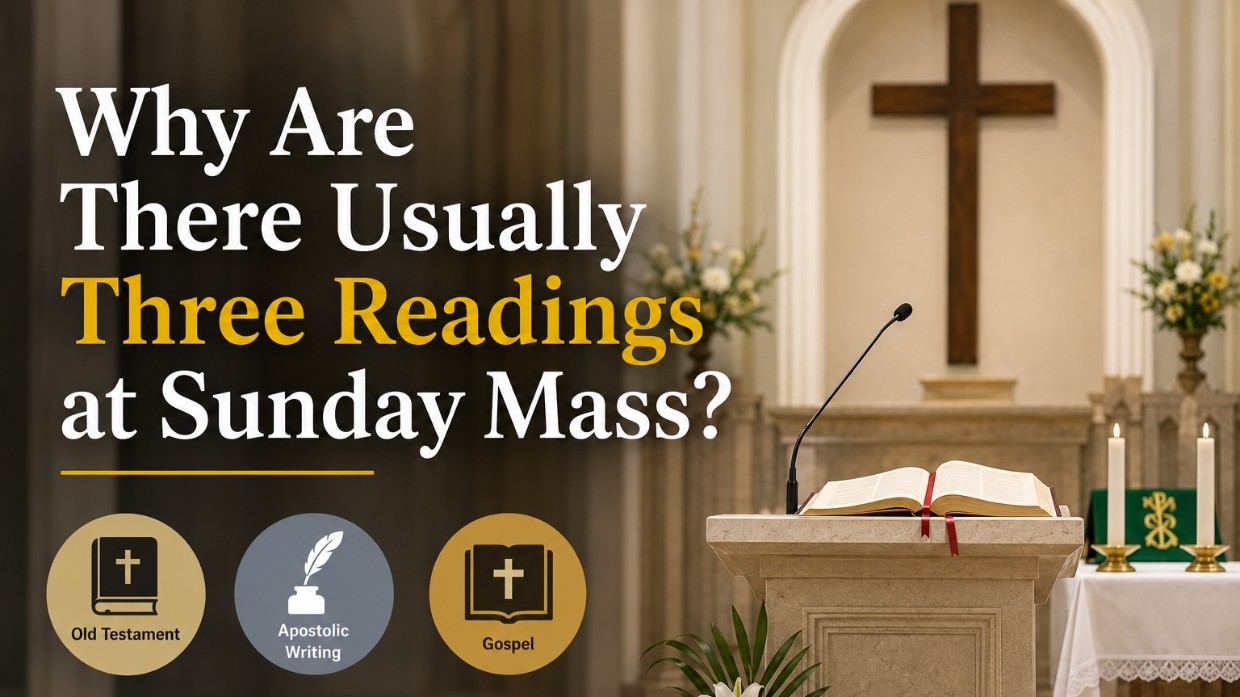
At Sunday Mass in the Roman Rite, the Liturgy of the Word normally includes three biblical readings: the first from the Old Testament, the second from an apostolic writing, and the Gospel. Together, they help the faithful perceive the continuity of God’s plan of salvation, which reaches its fulfilment in Jesus Christ.
Three readings, one story of salvation
The first reading is ordinarily taken from the Old Testament, often from a prophetic book. It is generally chosen in light of the Gospel and may present a promise, figure or theme that finds its fulfilment in Christ.
The second reading comes from an apostolic writing—usually one of the letters, although it may also be taken from Acts or Revelation. Unlike the first reading, it is normally arranged in a semi-continuous sequence. This means it is not always selected because of a direct thematic connection with the other readings, although meaningful connections can often be found.
Then comes the Gospel.
The Gospel stands at the heart and climax of the Liturgy of the Word. It proclaims the life, teaching, Passion, Death and Resurrection of Jesus Christ. The Church teaches that when the Gospel is proclaimed, Christ is present in His word and speaks to His people.
That is why the Gospel is given particular signs of reverence. The assembly stands, the Gospel book may be incensed, and the priest or deacon proclaims it with solemnity. The Gospel is therefore not simply another biblical passage. It is the privileged proclamation of Christ’s saving mystery.
What about the Responsorial Psalm?
There is another biblical text you hear between the readings: the Responsorial Psalm.
The Psalm is also Sacred Scripture and is an integral part of the Liturgy of the Word. It follows the first reading and helps the congregation meditate upon and respond to God’s Word. It normally corresponds to the reading that precedes it and is preferably sung, with the assembly joining in the response.
So, while the Psalm is not counted as one of the three readings, it is much more than an interlude between them. Through the Psalm, the Church receives God’s Word in song and makes that Word her prayer.
Why do the readings change from year to year?
If you attend Sunday Mass regularly, you may have noticed that the Gospel readings follow a pattern. The Sunday Lectionary uses a three-year cycle:
John’s Gospel is proclaimed especially during important seasons, including Lent, Easter and certain solemnities.
The first reading is harmonised with the Gospel, while the apostolic reading is generally proclaimed semi-continuously. This arrangement allows a broad portion of Sacred Scripture to be presented to the faithful.
It does not mean, however, that every reading on a particular Sunday has been chosen to create an artificial theme. The liturgy always celebrates the mystery of Christ, and the readings are arranged to proclaim the Gospel and lead believers towards the fullness of truth.
The Word invites a response
The Liturgy of the Word does not end when the readings have been proclaimed. It also includes the homily, the Profession of Faith and the Prayer of the Faithful.
The pattern is one of listening and responding: through the readings, God speaks to His people; through the homily, the Word is explained; and through the Creed and the prayers, the congregation responds in faith.
So the next time you hear the three readings at Sunday Mass, they can be understood as more than three separate passages from the Bible. Together with the Responsorial Psalm and the liturgical context, they open the unity of Scripture and proclaim the one work of salvation fulfilled in Christ.
By Catholic Connect Reporter
Continue Reading on Catholic Connect App
Get access to exclusive news articles & more.



© 2026 CATHOLIC CONNECT POWERED BY ATCONLINE LLP