- 27 November, 2026
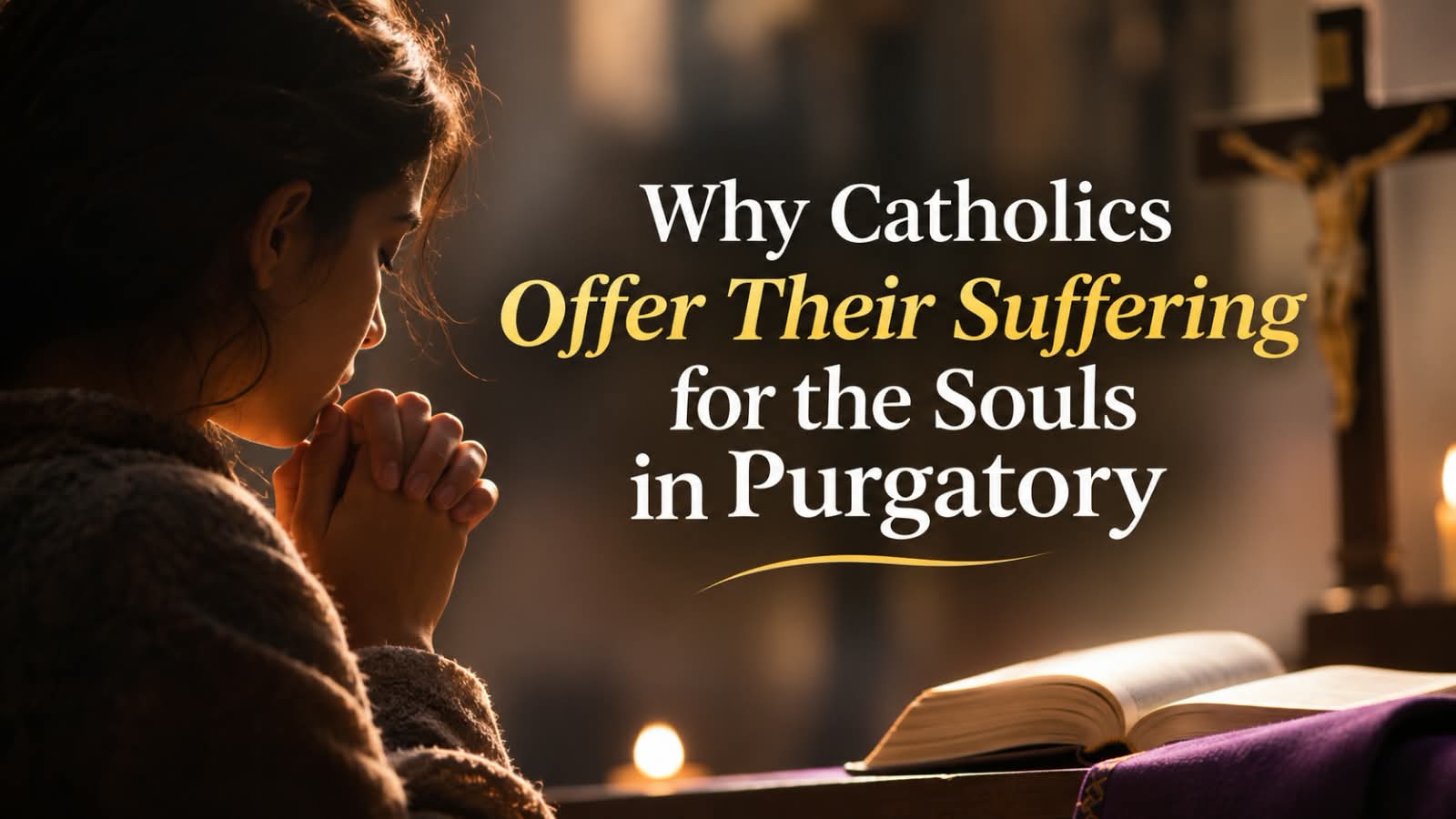
November 26, 2026: Illness, disappointment and hardships are often experiences we wish to escape. Yet, within the Catholic understanding of suffering, even difficult moments can be entrusted to God and united with the Passion of Jesus Christ. Rather than allowing pain to remain merely something endured, the faithful can consciously offer it as an act of prayer, including for the souls in purgatory, entrusting them to the mercy of God.

Offering hardship to God
Offering suffering does not mean glorifying pain, refusing help or deliberately seeking hardship. It means placing what we endure before God, uniting it with Christ’s Passion and asking Him to receive it as an offering. When a hardship is consciously offered as prayer or an act of penance for the departed, it is entrusted to God’s mercy—not treated as a source of spiritual power independent of Him.
The Church teaches that the faithful on earth can assist the souls undergoing purification through prayers offered for them, particularly the Eucharistic sacrifice. The Compendium of the Catechism also identifies almsgiving, indulgences and works of penance as ways of assisting the departed. Thus, a hardship deliberately united with prayer for the dead may be offered as an act of penance, while not every painful experience automatically becomes an offering for them. The Church’s teaching rests on suffrages—prayers and other pious acts offered for the faithful departed.
(CLICK HERE to follow Catholic Connect and to stay updated with Catholic News & Content)
The Church’s enduring prayer for the departed
Purgatory, according to the Church, is the final purification of those who die in God’s friendship but still require purification before entering the fullness of heaven. Praying for them is not an expression of doubt about their salvation, but an appeal to God’s mercy, asking Him to purify them and bring them into the joy of His kingdom.
The Catechism grounds this practice in Scripture, recalling how Judas Maccabeus offered atonement for the dead so that they might be delivered from sin. From the earliest times, the Church has honoured the departed and offered prayers for them, particularly through the Eucharistic sacrifice.
It also quotes St. John Chrysostom, who urges the faithful:
“Let us help and commemorate them. If Job’s sons were purified by their father’s sacrifice, why would we doubt that our offerings for the dead bring them some consolation? Let us not hesitate to help those who have died and to offer our prayers for them.”
These words express the Church’s conviction that prayer for the dead is an enduring act of charity—one rooted in the communion of saints and the hope of God’s mercy.
Turning everyday hardships into prayer
When faced with suffering, the faithful can make a simple offering: “Lord, I offer this difficulty for the faithful departed. In Your mercy, purify them and bring them to the joy of Your kingdom.”
Such an offering need not involve elaborate words. Remembering the departed at Mass, praying for them, giving alms or performing works of mercy are also ways of interceding for them. These are among the forms of suffrage the Church commends on behalf of the dead.
Offering suffering does not mean neglecting medical care, comfort or support. It means placing our hardships honestly before God and remembering the departed through an act of faith and love. The pain may remain, and the circumstances may not change, but our response to suffering can become prayer—a humble act of trust that entrusts the faithful departed to the boundless mercy of God.
By Catholic Connect Reporter
Read More on Sainthood:
1) What If You Are Called to Be a Saint? Finding Holiness in Everyday Life
2) The Communion of Saints: How Are We Connected to Those Who Have Gone Before Us?
3) Do You Have to Be Extraordinary to Become a Saint? The Catholic Teaching on Holiness?
4) St Ignatius of Loyola: The Five-Minute Practice That Can Bring You Closer to God
5) What Does the Bible Say About Becoming a Saint? Understanding the Call to Holiness
6) St. Augustine: The Power of Conversion and a New Beginning
7) St. Monica: The Mother Who Never Stopped Praying – A Story of Faith, Patience and Perseverance
8) St. Francis of Assisi: He Gave Up Everything to Discover What Truly Matters
9) Live Like St. Joseph: Discovering Holiness in Life’s Quietest Moments
10) Beyond Likes and Followers: Five Virtues for a Holier Digital Life
11) St. Maximilian Kolbe: What Could Make a Man Choose Death to Save a Stranger?
12) St. Teresa of Calcutta: In a World of AI Conversations, Are We Forgetting Human Connection?
13) Why Do Catholics Ask Saints to Pray for Them? The Meaning Behind This Belief
14) The Beauty of Small Things: How St. Thérèse of Lisieux Found a Path to Sainthood
16) Are Catholics Worshipping Statues? The Catholic Explanation Behind Sacred Images
17) Are Catholic Relics Biblical or Pagan? What Scripture and Early Church History Reveal
18) St. Devasahayam Pillai: A Life That Refused to Renounce Christ
19) St. Maria Goretti : How Did an Eleven-Year-Old Girl Teach the World to Forgive?
20) St. Kuriakose Elias Chavara: Can a Classroom Become a Path to Holiness?
23) Why Do We Admire Saints but Rarely Imagine Becoming One?
24) Why Do Catholics Believe the Body Will Rise Again? The Extraordinary Hope Behind an Ancient Creed
25) St. John Paul II: How to Make Space for God When Your Life is Constantly Busy

© 2026 CATHOLIC CONNECT POWERED BY ATCONLINE LLP