- 03 November, 2026
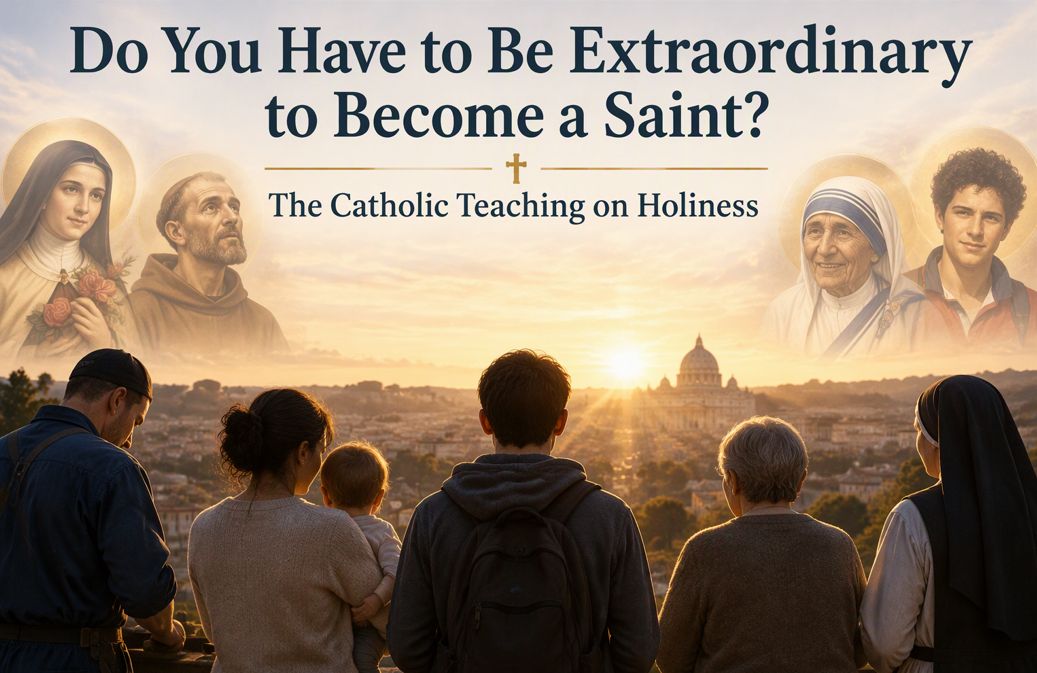
November 3, 2026: When we think of saints, we often imagine people who performed miracles, founded religious orders, travelled the world preaching the Gospel or endured terrible persecution. Their lives can seem so extraordinary that sainthood feels like something reserved for a select few.



But does becoming a saint really require an exceptional life?
According to the Catholic Church, no. Holiness is a calling extended to every Christian, regardless of their circumstances, abilities or state in life.
The Second Vatican Council reaffirmed this teaching through the universal call to holiness, reminding the faithful that everyone is invited to grow in love and become more like Christ.
Pope Francis also emphasises that holiness is possible in every vocation and circumstance, whether through family life, work, service or everyday encounters with others. As he explains, sanctity does not consist especially in doing extraordinary things, but in allowing God to act in our lives.
This does not mean that extraordinary deeds are unimportant. Rather, they are not a requirement for holiness. What matters is a life increasingly shaped by faith, love and openness to God's grace.
(CLICK HERE to follow Catholic Connect and to stay updated with Catholic News & Content)
Saints were not people who never experienced weakness, temptation or failure. They were human beings who needed God's mercy and allowed His grace to transform their lives.
Consider St. Peter. He denied Jesus three times during the Passion, yet later became a courageous apostle and witness to the Gospel.
St Augustine of Hippo also experienced a troubled period before his conversion, eventually becoming one of the Church's greatest theologians.
Their stories remind us that our past does not have to determine our future. Holiness is not achieved through human strength alone. It involves repentance, perseverance, a willingness to turn away from sin and openness to God's transforming grace.
God does not ask us to be perfect before approaching Him. He invites us to seek His mercy and allow Him to shape our lives. However, responding to that invitation requires a genuine commitment to conversion and growth in virtue.
One of the clearest examples of holiness in ordinary life is St Thérèse of Lisieux.
Rather than seeking spectacular achievements, she developed what became known as her Little Way: doing small, everyday things with great love and placing complete trust in God.
A patient response, a hidden sacrifice, a simple act of kindness or a prayer offered during a difficult moment could become an expression of love for God.
Her spirituality teaches that holiness is not measured by how impressive our actions appear to others, but by the love and faith with which we offer them to God.
The significance of these small acts lies not simply in their modesty, but in the charity behind them. When ordinary actions are rooted in love of God and neighbour, they become meaningful expressions of Christian discipleship.
In his apostolic exhortation Gaudete et Exsultate, Pope Francis draws attention to the idea of the “saints next door”: ordinary people who quietly reflect God's love through their daily lives.
They include parents raising children with patience, workers supporting their families honestly, caregivers serving those in need and elderly people offering prayers for others.
These lives may never attract public attention, but they can become genuine paths to holiness.
A person does not need to become a priest, religious sister, missionary or famous humanitarian to answer God's call. Every vocation and circumstance can provide opportunities to practise faith, hope and charity.
However, simply living an ordinary life does not automatically make someone holy. Holiness grows when we consciously respond to God's grace through our choices, relationships and responsibilities.
It can be seen in refusing to participate in gossip, listening patiently to someone who needs our attention, forgiving those who have hurt us, attending Mass faithfully or helping someone in need.
Such choices may seem small, but they reflect a heart increasingly formed by Christ.
Catholic teaching does not suggest that holiness means ignoring sin or treating perfection as unimportant. Christians are called to turn away from sin, receive God's mercy and grow continually in virtue.
Prayer, the sacraments, especially the Eucharist and Reconciliation, and acts of charity strengthen this journey. Through the Eucharist, we receive Christ and are nourished in our relationship with Him. Through Reconciliation, we encounter God's mercy and receive the grace to begin again.
Holiness is ultimately a response to God's grace, not a personal achievement earned through extraordinary deeds. Yet this does not mean that our response is passive. We are called to cooperate with grace through prayer, repentance, perseverance and faithful acts of love.
It is a lifelong journey of becoming more like Christ, allowing our faith to shape not only what we believe but also how we treat others and fulfil our responsibilities.
It is also helpful to distinguish between holiness and formal canonization. Every Christian is called to become holy, but not every holy person is formally declared a saint by the Church. Canonization is the Church's public recognition of particular men and women as saints and examples of Christian holiness.
There are countless holy people whose names may never be known beyond their families and communities, yet whose lives are deeply rooted in God.
You do not have to be famous, exceptionally talented or admired to become a saint.
The question is not whether your life looks extraordinary to the world, but whether you are willing to love God and your neighbour faithfully.
Holiness begins with a willingness to let God work in us. It grows through prayer, participation in the sacraments, repentance, perseverance and the countless opportunities to practise charity in everyday life.
You may find that your path to holiness lies in caring for your family, fulfilling your responsibilities honestly, forgiving someone who has hurt you or showing kindness when it is difficult.
Sainthood is not reserved for extraordinary people. It is the calling of every Christian: to allow God's extraordinary grace to transform ordinary life through faithful love, one choice at a time.
To know about more saints and Catholic feast days, please visit the spiritual section.
By Catholic Connect Reporter
Read More:
1) What If You Are Called to Be a Saint? Finding Holiness in Everyday Life
2) The Communion of Saints: How Are We Connected to Those Who Have Gone Before Us?


© 2026 CATHOLIC CONNECT POWERED BY ATCONLINE LLP