- 16 October, 2026

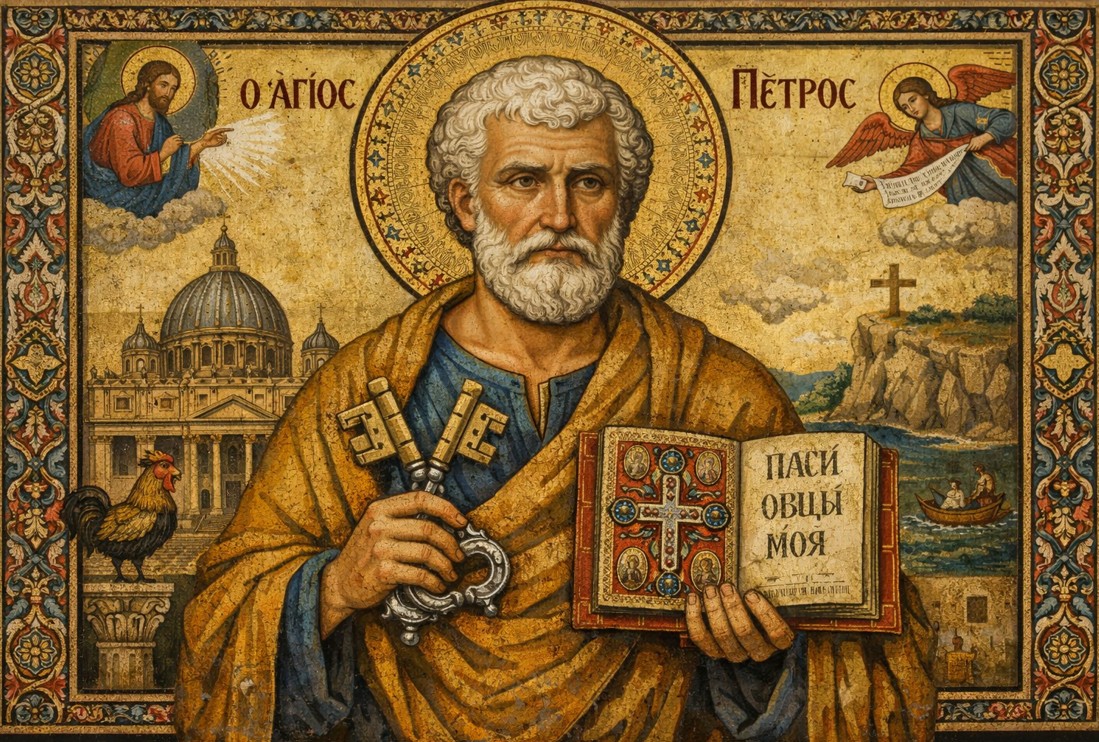
Saint Peter stands at the very foundation of the Catholic Church as its first Pope, chosen directly by Jesus Christ.


The story of Peter is one of transformation—from a humble fisherman to the leader of Christ’s Church. His life reflects both human weakness and divine calling, making him one of the most compelling figures in Christian history.
Born as Simon in Bethsaida near the Sea of Galilee, Peter worked as a fisherman alongside his brother Andrew. His life changed dramatically when he encountered Jesus, who called him to become a “fisher of men.” It was Jesus who gave him the name Peter, symbolizing his future role as the “rock” upon which the Church would be built.
Unlike later popes, Peter was not elected through a formal process. His authority came directly from Christ, who said:
“You are Peter, and on this rock I will build my Church.”
This moment is understood as the institution of the papacy, with Peter as its first holder.
Peter’s papacy unfolded under the vast and often hostile Roman Empire. Christians were a small, misunderstood minority facing suspicion and persecution.
During the reign of Emperor Nero, hostility toward Christians intensified, culminating in brutal persecution. The early Church also faced internal challenges, including questions about admitting Gentiles and maintaining unity among believers.
Peter’s leadership helped shape the identity and mission of the early Church:
These contributions were crucial in transforming a small group of followers into a growing, structured Church.
Peter was deeply human—impulsive, passionate, and at times fearful. His defining traits include:
His spiritual journey is marked by a profound lesson: failure is not the end. After denying Jesus three times, Peter repented and was restored, becoming a powerful witness to mercy and forgiveness.
Peter’s life was not without struggle:
These challenges highlight the reality of leadership in a fragile and developing Church.
One of the most defining moments of Peter’s life comes from his encounter with the risen Christ:
“Lord, you know everything; you know that I love you.”
This confession reflects the heart of Peter’s mission—love as the foundation of leadership.
Peter was martyred in Rome during Nero’s persecution, traditionally by crucifixion upside down, out of humility.
His tomb lies beneath St. Peter's Basilica, a central place of pilgrimage for Catholics worldwide.
St. Peter’s legacy includes:
He remains a symbol of hope for those who struggle yet seek to remain faithful.
Why does St. Peter matter today?
His life speaks directly to modern believers:
As the first Pope, Peter’s witness continues through every successor, including Pope Francis, reminding the world that the Church is built not on human perfection, but on God’s grace working through imperfect people.
By Catholic Connect Reporter
© 2026 CATHOLIC CONNECT POWERED BY ATCONLINE LLP