- 08 November, 2026
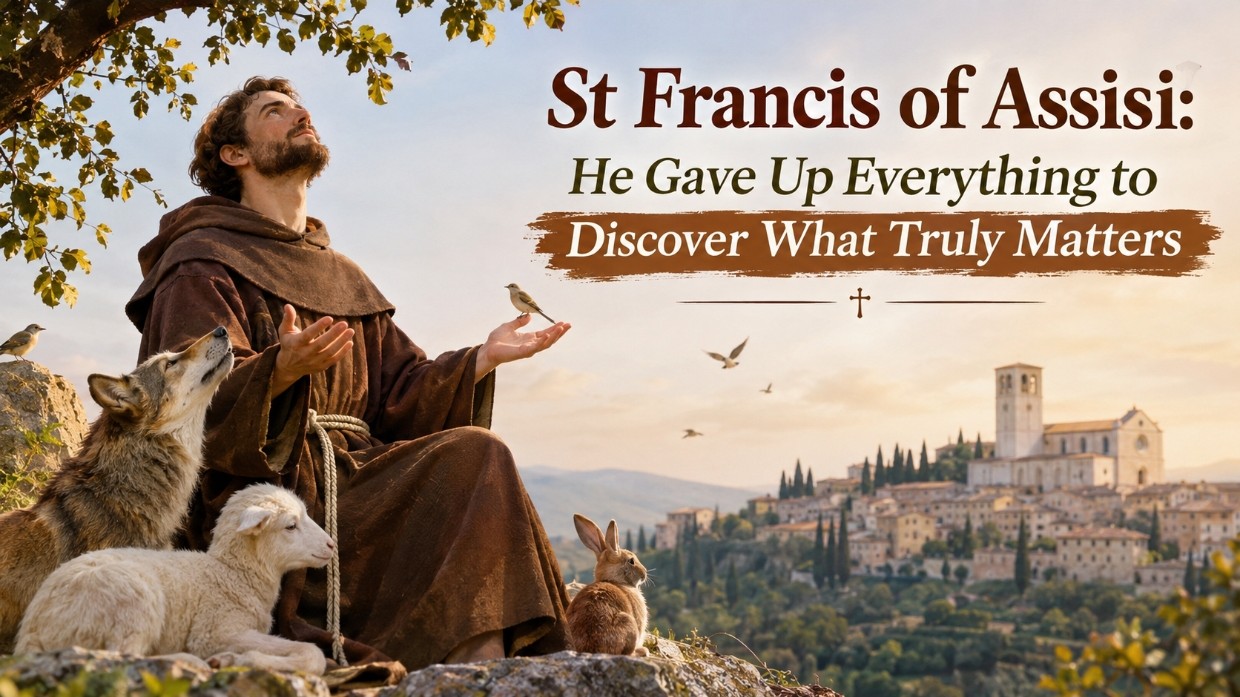
November 8, 2026: What if the things we spend our lives trying to possess are the very things keeping us from experiencing true happiness? In a world where success is often measured by wealth, possessions and social status, St. Francis of Assisi chose a radically different path. Born into a wealthy family, he gave up his inheritance, embraced poverty and discovered a deeper meaning of life through prayer, service and love for all creation. His journey raises a question that remains relevant today: can we truly live more by learning to own less?

From a Life of Wealth to a Life of Purpose
Born in Assisi, Italy, around 1181 or 1182, Francis grew up in a prosperous merchant family. His father, Pietro Bernardone, was a wealthy cloth merchant, and Francis enjoyed the comforts of an affluent lifestyle. As a young man, he dreamed of becoming a knight and gaining fame and recognition.
However, his experiences gradually changed his understanding of success. His encounters with people living in poverty, particularly those suffering from leprosy, challenged his attitudes towards wealth and social status. One defining moment came when he embraced and kissed a man with leprosy, overcoming the fear and discomfort he had once felt towards those rejected by society.
Francis eventually renounced his inheritance and publicly embraced a life of poverty. He chose to depend on God's providence, dedicating himself to prayer, preaching and serving the poor.
Owning Less, Discovering More
For St. Francis, poverty was not simply about having no money or possessions. It was a conscious decision to free himself from material attachments and place God at the centre of his life.
He believed that possessions should never become more important than people. By living simply, he could share the struggles of the poor, approach others without superiority and recognise the dignity of every individual.
His understanding of wealth also extended to creation. Francis saw the natural world as a gift from God rather than something human beings could exploit without responsibility. His famous Canticle of the Creatures praised God through the sun, moon, wind, water and earth, describing creation through the language of brotherhood and sisterhood.
Interestingly, his affection for animals became one of the most recognised aspects of his legacy. Stories of Francis preaching to birds and showing kindness to animals reflect his belief that all creation deserves respect and care. This deep connection with nature later made him an enduring inspiration for environmental responsibility.
A Lesson for a World That Always Wants More
St. Francis's message has particular relevance in today's consumer-driven society. People are constantly encouraged to buy more, achieve more and compare their lives with others. Yet the pursuit of material possessions does not always bring lasting satisfaction.
His example invites us to reconsider our everyday choices. Do we really need everything we desire? Are we giving enough time to relationships, prayer and helping those in need? Are our lifestyles contributing to the well-being of others and the environment?
Living simply does not mean rejecting every modern comfort. Rather, it means understanding the difference between needs and wants, avoiding unnecessary excess and using what we have responsibly.
A Legacy That Continues to Inspire
St. Francis founded the Franciscan movement, inspiring generations through his commitment to poverty, peace, humility and service. He died on 3 October 1226 and was canonised by Pope Gregory IX in 1228. His feast is celebrated on 4 October.
His influence continues even in contemporary Church teaching. Pope Francis chose his name in honour of the saint and drew inspiration from his spirituality in the 2015 encyclical Laudato Si', which calls for greater care for our common home.
Nearly eight centuries after his death, St. Francis continues to challenge the world with a simple but profound message: a meaningful life is not measured by how much we possess, but by how generously we love, how deeply we care and how freely we share. Perhaps the greatest lesson of his life is that when we make room for less, we make room for what matters most.
By Catholic Connect Reporter
Continue Reading on Catholic Connect App
Get access to exclusive news articles & more.
© 2026 CATHOLIC CONNECT POWERED BY ATCONLINE LLP