- 17 November, 2026
17 November, 2026: Why do Catholics preserve bones, pieces of clothing and personal belongings of saints, while some Christians dismiss the practice as pagan or even accuse it of bordering on idol worship? The veneration of relics is one of the most misunderstood practices in Catholic tradition, often raising questions about the relationship between faith, physical objects and the worship of God. Yet, this centuries-old practice has roots in the Bible and the earliest Christian communities. Understanding why the Church honours relics reveals not only an important aspect of Catholic faith but also fascinating stories of courage, sacrifice and devotion in the lives of the saints.


What exactly are relics?
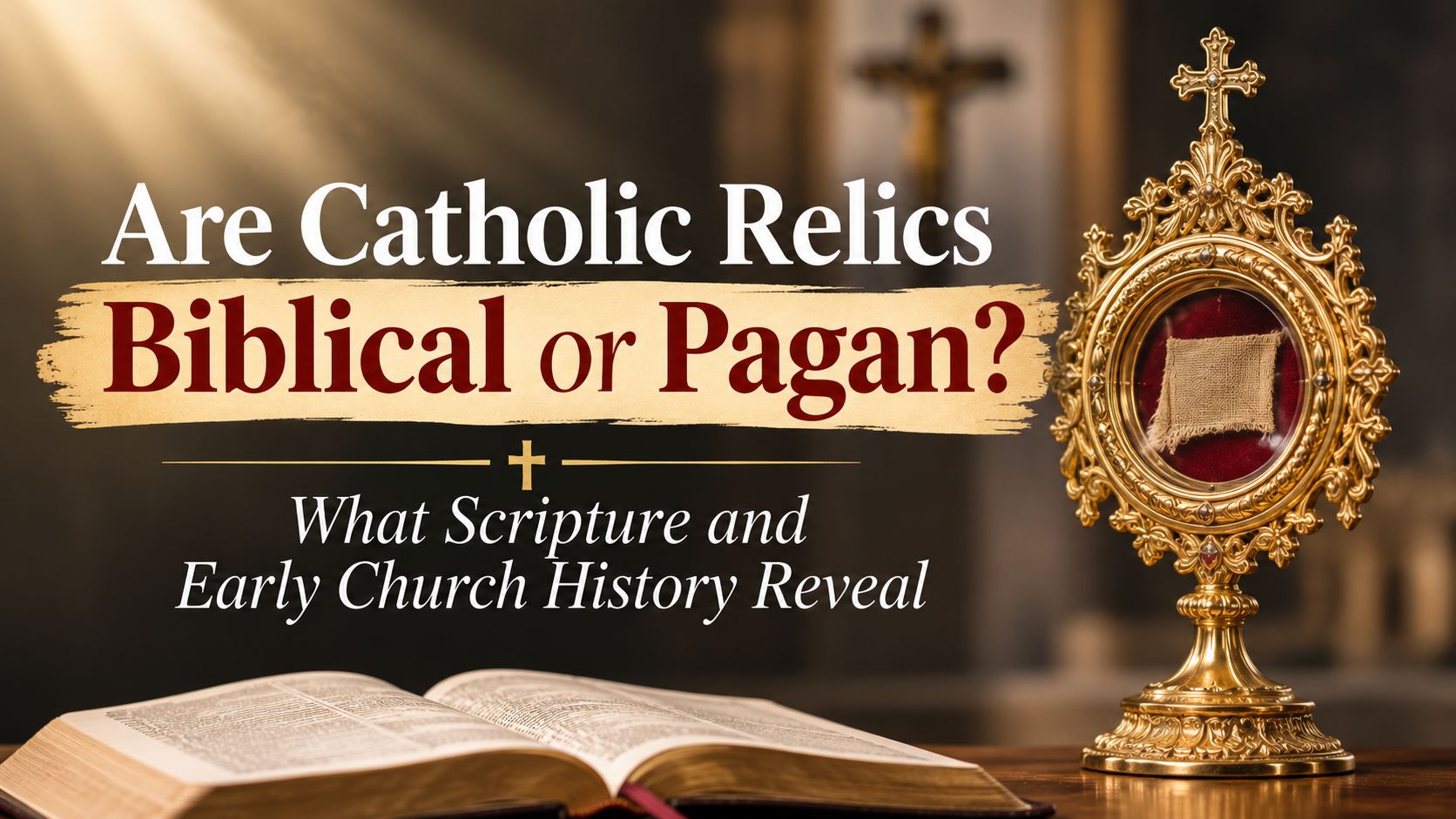
The word relic comes from the Latin reliquiae, meaning remains. In the Catholic tradition, relics are physical remains or objects associated with Jesus Christ or the saints. They are traditionally classified into three categories.
First-class relics are the physical remains of a saint, such as bones, hair or blood. Second-class relics are objects that belonged to or were used by a saint, including clothing, personal belongings or manuscripts. Third-class relics are objects that have been touched to a first-class relic or, in certain recognised traditions, to the saint's tomb.
These relics are often preserved in specially designed containers called *reliquaries*, some of which are remarkable works of religious art.
However, their importance is not determined by their material or monetary value. Rather, they point towards the faith, sacrifice and witness of the person with whom they are associated.
Is it biblical?
Although the formal practice of preserving saints' relics developed in the early Church, its biblical foundations can be traced to both the Old and New Testaments.
(CLICK HERE to follow Catholic Connect and to stay updated with Catholic News & Content)
One striking example appears in 2 Kings 13:20–21. After the prophet Elisha died and was buried, a dead man was thrown into his tomb during an encounter with raiders. When the man's body touched Elisha's bones, he came back to life. The passage records an extraordinary event associated with the remains of a prophet, demonstrating that God can work through material things.
In the New Testament, Mark 5:25–34 recounts how a woman suffering from a haemorrhage for twelve years approached Jesus, believing that touching His cloak would bring healing. Her faith was rewarded, and Jesus told her that her faith had made her well.
Similarly, Acts 19:11–12 describes how God worked extraordinary miracles through St Paul. Handkerchiefs and aprons that had touched his body were taken to the sick, and their illnesses were healed.
These passages do not establish the later classification of relics, but they provide important biblical examples of God's power being manifested through physical objects and human instruments.
Is this merely a medieval Catholic tradition?
The veneration of relics is not a medieval invention. Historical evidence shows that Christians were preserving and honouring the remains of martyrs from the earliest centuries of the Church.
One of the earliest documented examples comes from the *Martyrdom of St Polycarp*, a second-century Christian account of the death of St Polycarp, Bishop of Smyrna (in present-day Türkiye). According to the account, after Polycarp was executed and his body burned around AD 155–156, his followers gathered his bones and placed them in a suitable location. They described his remains as more precious than jewels and refined gold. They also planned to gather annually to commemorate his martyrdom and remember his witness to Christ.
This account is particularly significant because it provides early historical evidence that Christians honoured the remains of martyrs, not as objects of worship, but as reminders of those who had remained faithful to Christ even in the face of death.
By the fourth century, the practice had become widespread, and churches began preserving relics in specially constructed shrines and reliquaries. The custom of placing saints' relics beneath church altars also developed, connecting the sacrifice of the martyrs with the Eucharistic celebration.
Do Catholics worship relics?
A common misunderstanding is that Catholics worship relics or believe that the objects themselves possess supernatural powers. This is not the teaching of the Church.
Catholics worship God alone. The veneration given to relics is an expression of honour for the saints and gratitude for what God accomplished through their lives. The distinction is important: the relic is not the source of divine power; God is.
The Directory on Popular Piety and the Liturgy, published by the Vatican in 2001, explains that the bodies of saints were once temples of the Holy Spirit (1 Corinthians 6:19) and members of Christ's mystical Body. Their remains are honoured in the light of the Christian belief in the resurrection of the body.
The same document encourages the faithful to understand relics properly and warns against superstition, fraud and the trafficking of sacred objects.
What can relics teach us about the lives of saints?
Perhaps their greatest significance lies in the stories they preserve. A fragment of a saint's bone recalls a life that once walked the earth. A piece of clothing may remind us of someone who served the poor, endured persecution or dedicated their life to prayer. An object used by a missionary can bring to mind the sacrifices involved in spreading the Gospel.
Relics therefore make the lives of saints more tangible. They remind us that holiness was not an abstract ideal but something lived by real people, with human struggles, difficult choices and extraordinary faith.
They also invite us to reflect on our own Christian journey. The saints were not born with extraordinary holiness; they responded to God's grace through daily acts of love, forgiveness, service and perseverance.
Ultimately, relics are not meant to keep our attention fixed on the past. They point towards the example of those who followed Christ and encourage us to do the same. Their message is not simply to remember the saints, but to imitate their faith.
The next time we encounter a relic in a church or shrine, we might look beyond the glass case or the precious reliquary. Behind it is a human life that bore witness to the Gospel. And that may be the most valuable lesson a relic can offer: the call to become, in our own time, living witnesses of Christ.
By Catholic Connect Reporter
Read More on Sainthood:
1) What If You Are Called to Be a Saint? Finding Holiness in Everyday Life
2) The Communion of Saints: How Are We Connected to Those Who Have Gone Before Us?
3) Do You Have to Be Extraordinary to Become a Saint? The Catholic Teaching on Holiness?
4) St Ignatius of Loyola: The Five-Minute Practice That Can Bring You Closer to God
5) What Does the Bible Say About Becoming a Saint? Understanding the Call to Holiness
6) St. Augustine: The Power of Conversion and a New Beginning
7) St. Monica: The Mother Who Never Stopped Praying – A Story of Faith, Patience and Perseverance
8) St. Francis of Assisi: He Gave Up Everything to Discover What Truly Matters
9) Live Like St. Joseph: Discovering Holiness in Life’s Quietest Moments
10) Beyond Likes and Followers: Five Virtues for a Holier Digital Life
11) St. Maximilian Kolbe: What Could Make a Man Choose Death to Save a Stranger?
12) St. Teresa of Calcutta: In a World of AI Conversations, Are We Forgetting Human Connection?
13) Why Do Catholics Ask Saints to Pray for Them? The Meaning Behind This Belief
14) The Beauty of Small Things: How St. Thérèse of Lisieux Found a Path to Sainthood
16) Are Catholics Worshipping Statues? The Catholic Explanation Behind Sacred Images
© 2026 CATHOLIC CONNECT POWERED BY ATCONLINE LLP