- 28 September, 2026

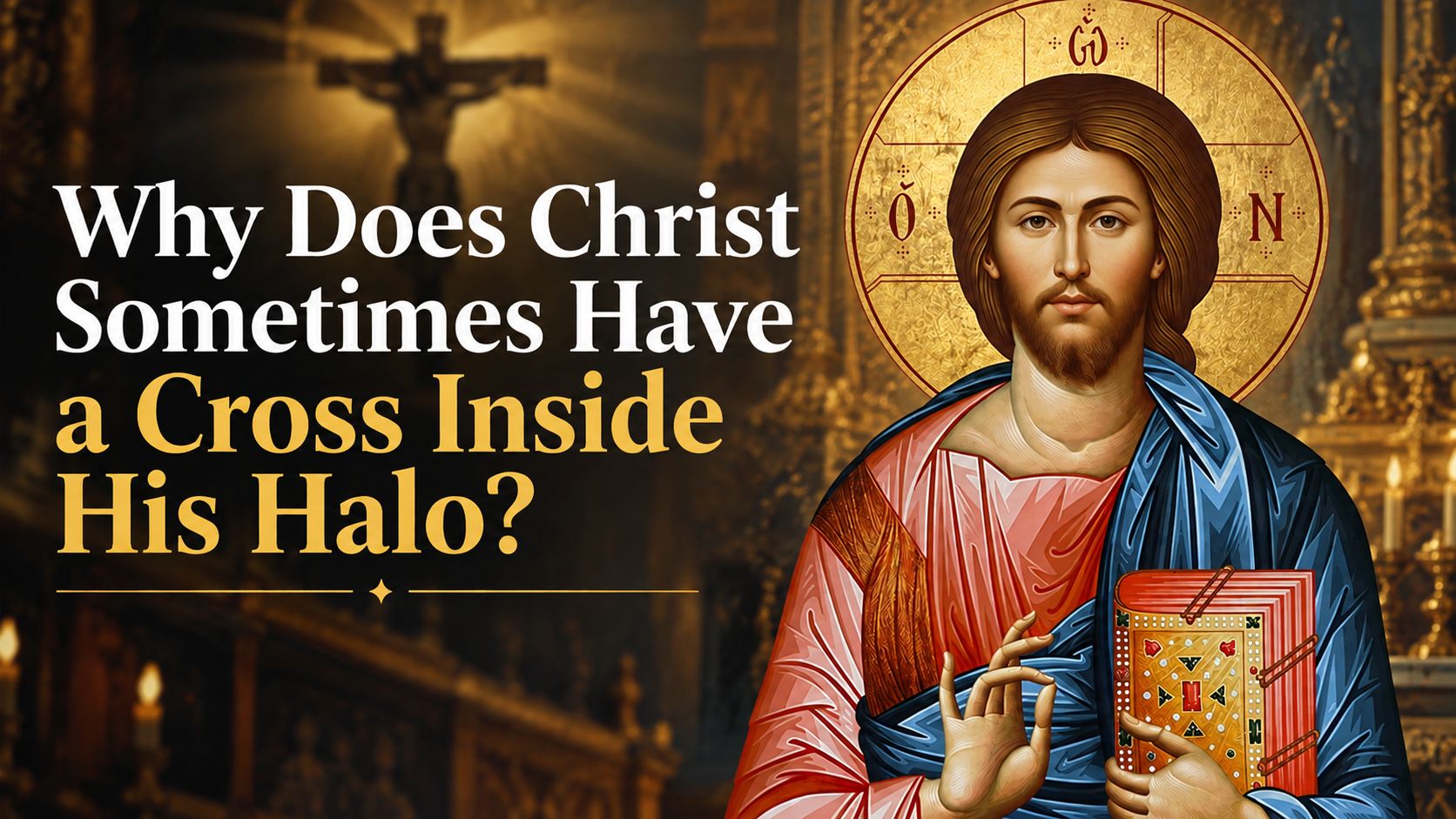
Sep 28, 2026: Have you ever noticed that in many traditional images of Jesus, a cross appears inside the halo surrounding His head? Unlike the simple golden circles seen around saints, Christ’s halo often contains three visible arms of a cross. This distinctive feature is known as the cruciform halo, and it carries a profound message about who Jesus is: the Son of God, the Saviour who conquered death through the Cross.


The Cross Within the Halo
In Christian art, the halo, also called a nimbus, is a circle of light around the head of a sacred figure. It represents holiness and divine glory. The National Gallery, London, notes that the halo appeared in Christian art by the fifth century and was initially associated with the three Persons of the Trinity and angels before becoming more widely used for Mary and the saints.
The cruciform halo, however, carries a more specific meaning. It is a halo with a cross inscribed within its circle, usually with three arms visible around Christ’s head. The National Gallery identifies this form as a symbol of Christ’s divinity, while its cross-shaped design recalls the Cross on which He was crucified.
(CLICK HERE to follow Catholic Connect and to stay updated with Catholic News & Content)
This is why the cruciform halo is particularly associated with Jesus. The ordinary halo identifies a holy figure, but the cross within Christ’s halo points to His unique identity as the Son of God and the Saviour of the world. The symbol brings together two inseparable truths of Christian faith: Christ’s divinity and His saving sacrifice.
Why Are Three Arms Usually Visible?
In traditional Christian iconography, the three visible arms of the cross are commonly understood in connection with the Holy Trinity: the Father, the Son and the Holy Spirit. The cross is not simply an artistic decoration. It serves as a visual confession of the faith Christians profess in the one God, revealed as three divine Persons.
In Byzantine and Eastern Orthodox icons, the cruciform halo often contains three Greek letters: Ο, Ω and Ν. Together, they form the expression ὁ ὢν (Ho Ōn), meaning “The One Who Is” or “The Existing One”.
This expression recalls God’s revelation of Himself to Moses in Exodus 3:14. Its presence in Christ’s halo proclaims His divine identity. In an icon, therefore, the halo does more than surround Jesus with light; it identifies Him as the eternal Son of God.
How Does It Distinguish Christ from the Saints?
The cruciform halo serves as a visual distinction between Christ and other holy figures. Saints, apostles and angels are generally depicted with plain circular halos, signifying their holiness. Christ’s halo, by contrast, incorporates the cross, identifying Him as the source of salvation and the divine centre of the Christian faith.
This distinction is particularly evident in Byzantine icons, where Christ may appear alongside the Virgin Mary, apostles or other saints. Even without an inscription identifying Him, the cruciform halo helps viewers recognise Jesus immediately.
The next time you see a cross within Christ’s halo, remember that it is not merely an artistic detail. It unites the mystery of who Jesus is with what He accomplished for humanity. The halo proclaims His divinity; the cross recalls His Passion and victory over death.
Together, they offer a powerful visual reminder that the One who suffered and died on the Cross is also the eternal Son of God, whose Resurrection brings hope and life to the world.
By Catholic Connect Reporter
Read more:
1) Why Is the Pelican a Symbol of Christ? The Christian Meaning Explained
2) Why Are the Four Gospels Represented by a Man, Lion, Ox and Eagle?
3) Why Is the Rooster a Symbol in Christian Art?
4) Why Do Peacocks Appear in Early Christian Tombs?
5) Why Does a Phoenix Appear in Christian Art?
6) Why Does a Pomegranate Appear in Christian Art?
7) A.M., AM or M? What Do These Mysterious Marian Letters Mean?
8) Why Is Mary Sometimes Shown With a Star?
9) What Does an Anchor Have to Do with Christianity?
10) Why Is a Ship One of Christianity’s Oldest Symbols?
11) Why Does the Grapevine Appear in Christian Art? Its Meaning Explained
12) Why Do Palm Branches Appear in Christian Art?
13) Why Do the Letters “IHS” Appear in Catholic Churches?
14) What is the Chi-Rho (ΧΡ)? The Ancient Symbol for Christ Explained
15) When Mary Looked to Heaven: The Curious Meaning Behind the Virgin’s Upward Gaze
16) Why Do Alpha and Omega Appear in Christian Art?
17) What Does the Eye Inside a Triangle Mean in Christian Art?
18) The Strange ‘Weapons’ of Christ: Why the Instruments of His Passion Appear Together
19) Why Does a Unicorn Appear in Medieval Christian Art?
20) The Mystery Behind Mary’s Enclosed Garden
21) Why Does a Scroll Appear in So Many Christian Images?
22) Why Does Jacob’s Ladder Appear in Christian Art? The Heavenly Stairway That Points to Christ
22) Why Does an Olive Branch Appear in Christian Art? The Biblical Symbol of Peace and Hope
26) Six Wings, One Mystery: The Angels Who Stand Before God’s Throne





© 2026 CATHOLIC CONNECT POWERED BY ATCONLINE LLP