
- 24 September, 2026
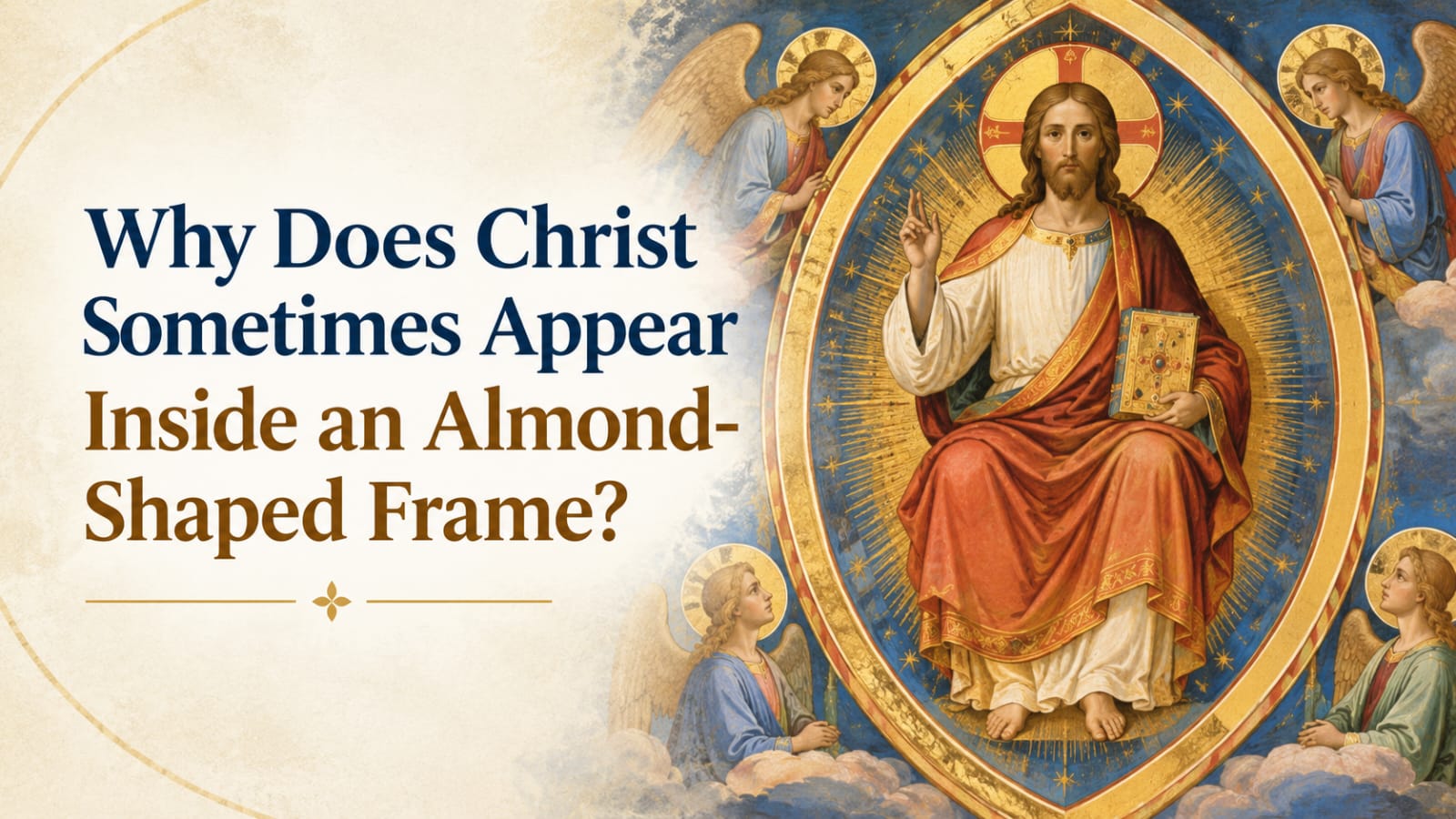
September 24, 2026: Have you ever noticed Christ surrounded by an unusual almond-shaped frame in a Christian painting, icon or mosaic? This distinctive shape is called a mandorla, and it is used around Christ—and sometimes other sacred figures—to express a visible sense of glory.


The word mandorla comes from the Italian word for “almond.” In art-historical terminology, it is a type of aureole: a radiance or glory shown around the whole figure, rather than just around the head. The shape itself is a visual device, although the available reference does not give a definitive explanation for why artists chose the almond form.
What Is a Mandorla?
A mandorla surrounds the entire figure of a sacred person. This makes it different from a nimbus or halo, which is shown around the head.

Christian art often uses visible forms and signs to direct the viewer towards spiritual realities that cannot be seen directly. In representations of Christ, power, majesty and glory may be conveyed through several visual elements, including his frontal presentation, a prominent or elevated position, and the presence of heavenly beings or other sacred signs.
The mandorla belongs to this wider visual language of sacred glory. However, it does not have one fixed meaning that applies to every image.
(CLICK HERE to follow Catholic Connect and to stay updated with Catholic News & Content)
The Mandorla and the Halo Are Not the Same
Although both the mandorla and the halo are associated with sacred figures, they are visually different.
A nimbus or halo marks the head, while a mandorla is an aureole surrounding the whole figure.
Christian artists developed different forms of the nimbus and aureole. Some mandorlas are also represented through groups of seven doves or through angels, showing that the visual forms surrounding sacred figures could vary from one artwork to another.
Where Do We See the Mandorla ?
The mandorla can be found within different contexts of Christian sacred art. In the Eastern Christian tradition, icons of Christ developed recognisable conventions, including the important image type known as the Pantocrator, in which Christ is represented as ruler of all.
Christian art in the East continued to develop the icon, while Western medieval art developed different styles, including Romanesque and Gothic.
These traditions provide a context for understanding the mandorla as part of Christian sacred art. However, the available material does not establish that the mandorla belonged exclusively to either the Byzantine East or the medieval West, nor does it provide a detailed chronology of its use.
What Does the Almond Shape Mean?
The almond shape is one of the most recognisable features of a mandorla. Yet it is important not to give it a meaning that the available evidence does not establish.
The mandorla can be understood as an almond-shaped aureole surrounding a sacred figure, belonging to the visual language through which Christian art expresses realities such as Christ’s glory.
Its precise significance can depend on the artwork and its context. The available reference does not establish one universally agreed meaning for the almond shape itself.
Ultimately, when Christ appears within a mandorla, the unusual frame is part of the visual vocabulary of Christian sacred art. It distinguishes the figure from the surrounding scene and participates in the artistic expression of sacred glory.
By Catholic Connect Reporter
Read More:
1) Why Is the Pelican a Symbol of Christ? The Christian Meaning Explained
2) Why Are the Four Gospels Represented by a Man, Lion, Ox and Eagle?
3) Why Is the Rooster a Symbol in Christian Art?
4) Why Do Peacocks Appear in Early Christian Tombs?
5) Why Does a Phoenix Appear in Christian Art?
6) Why Does a Pomegranate Appear in Christian Art?
7) A.M., AM or M? What Do These Mysterious Marian Letters Mean?
8) Why Is Mary Sometimes Shown With a Star?
9) What Does an Anchor Have to Do with Christianity?
10) Why Is a Ship One of Christianity’s Oldest Symbols?
11) Why Does the Grapevine Appear in Christian Art? Its Meaning Explained
12) Why Do Palm Branches Appear in Christian Art?
13) Why Do the Letters “IHS” Appear in Catholic Churches?
14) What is the Chi-Rho (ΧΡ)? The Ancient Symbol for Christ Explained
15) When Mary Looked to Heaven: The Curious Meaning Behind the Virgin’s Upward Gaze
16) Why Do Alpha and Omega Appear in Christian Art?
17) What Does the Eye Inside a Triangle Mean in Christian Art?
18) The Strange ‘Weapons’ of Christ: Why the Instruments of His Passion Appear Together
19) Why Does a Unicorn Appear in Medieval Christian Art?
20) The Mystery Behind Mary’s Enclosed Garden
21) Why Does a Scroll Appear in So Many Christian Images?
22) Why Does Jacob’s Ladder Appear in Christian Art? The Heavenly Stairway That Points to Christ
22) Why Does an Olive Branch Appear in Christian Art? The Biblical Symbol of Peace and Hope






© 2026 CATHOLIC CONNECT POWERED BY ATCONLINE LLP