- 21 September, 2026
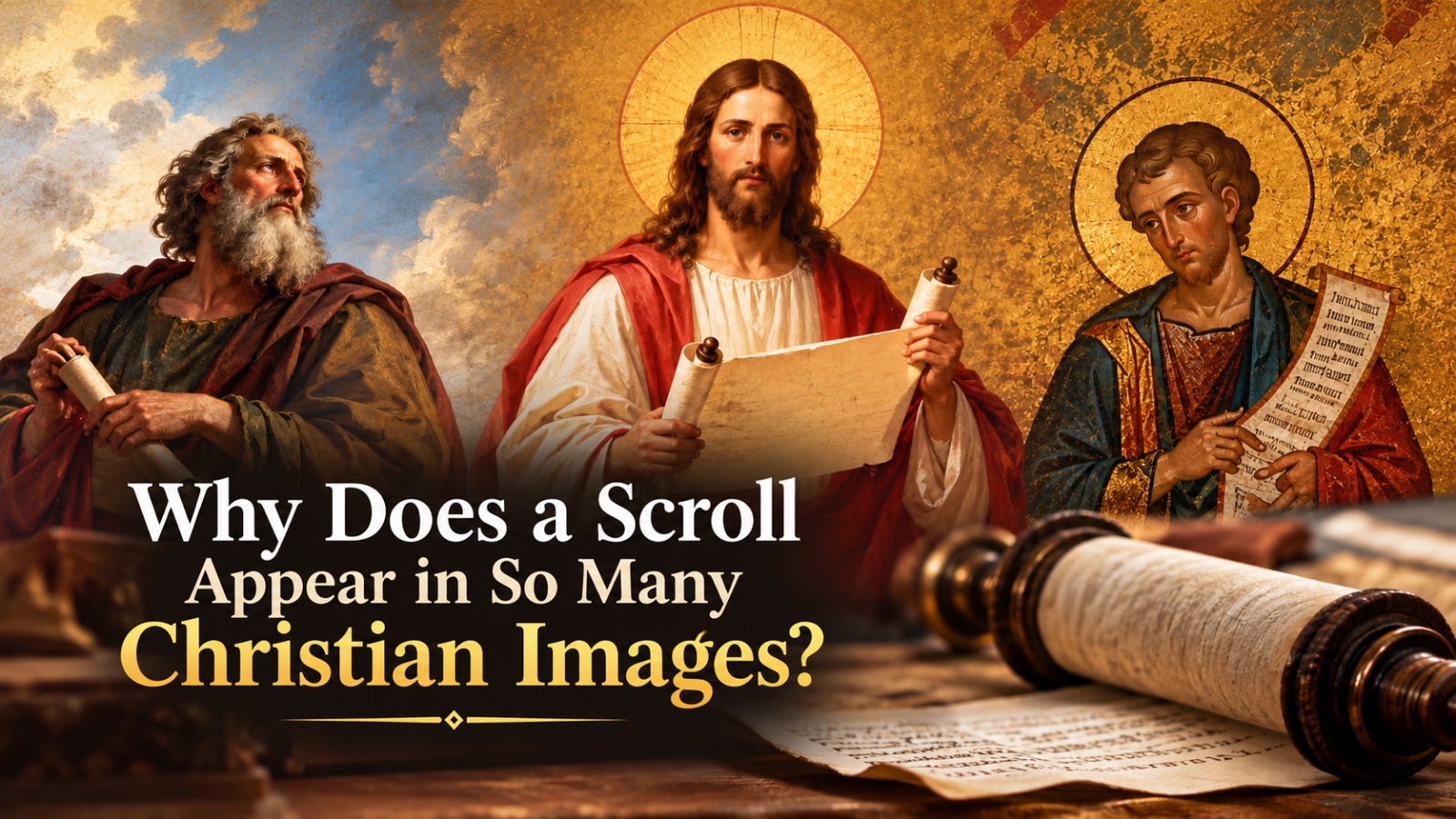
September 21, 2026: Look closely at Christian paintings, icons and mosaics, and you may notice prophets, Christ and saints carrying scrolls. Sometimes the scroll is tightly rolled; sometimes it is open, with words clearly visible. Why is this object so common?


A Sign of God’s Word
In Christian art, the scroll commonly evokes the written word, Sacred Scripture and prophetic proclamation. It is especially appropriate for biblical prophets, whose vocation was to receive and announce God’s message. Yet the scroll does not always represent the Bible itself. It may also signify preaching, teaching, a confession of faith or a message entrusted to a particular saint.
Catholic theology understands Sacred Scripture as the Word of God committed to writing under the inspiration of the Holy Spirit. Scripture, however, is not separated from the Church’s living Tradition: together, Scripture and Tradition form one sacred deposit of faith.

Artists sometimes write a biblical passage or traditional saying on a prophet’s or saint’s scroll. In such cases, the inscription helps identify the figure’s message and role.
(CLICK HERE to follow Catholic Connect and to stay updated with Catholic News & Content)
When Christ Holds the Scroll
When Christ holds a scroll, the meaning becomes especially profound. He is not merely a teacher who possesses Scripture. Christ is the incarnate Word, the definitive revealer of the Father and the one in whom all Scripture is fulfilled. “All Sacred Scripture is but one book,” the Catechism teaches, “and that one book is Christ.”
The scroll in Christ’s hands can therefore express his authority to teach, interpret and bring God’s promises to fulfilment.
This meaning appears vividly in the Book of Revelation. The sealed scroll contains God’s plan for history, and only the slain and risen Lamb is worthy to open it. Christ is thus presented as the revealer and Lord of God’s saving plan.
Open or Closed?
An open, inscribed scroll may communicate a specific prophecy, teaching or proclamation. A closed scroll may more generally identify a figure with prophecy or sacred teaching. Nevertheless, these meanings are not automatic. Artistic traditions differ, and the figure, gesture, inscription and context must all be considered.
The next time you see a scroll in Christian art, look beyond the object. It may point to Scripture, prophecy, teaching, authority—or to Christ, who fulfils and opens the meaning of God’s Word.
By Catholic Connect Reporter
Read More:
1) Why Is the Pelican a Symbol of Christ? The Christian Meaning Explained
2) Why Are the Four Gospels Represented by a Man, Lion, Ox and Eagle?
3) Why Is the Rooster a Symbol in Christian Art?
4) Why Do Peacocks Appear in Early Christian Tombs?
5) Why Does a Phoenix Appear in Christian Art?
6) Why Does a Pomegranate Appear in Christian Art?
7) A.M., AM or M? What Do These Mysterious Marian Letters Mean?
8) Why Is Mary Sometimes Shown With a Star?
9) What Does an Anchor Have to Do with Christianity?
10) Why Is a Ship One of Christianity’s Oldest Symbols?
11) Why Does the Grapevine Appear in Christian Art? Its Meaning Explained
12) Why Do Palm Branches Appear in Christian Art?
13) Why Do the Letters “IHS” Appear in Catholic Churches?
14) What is the Chi-Rho (ΧΡ)? The Ancient Symbol for Christ Explained
15) When Mary Looked to Heaven: The Curious Meaning Behind the Virgin’s Upward Gaze
16) Why Do Alpha and Omega Appear in Christian Art?
17) What Does the Eye Inside a Triangle Mean in Christian Art?
20) The Mystery Behind Mary’s Enclosed Garden




© 2026 CATHOLIC CONNECT POWERED BY ATCONLINE LLP