- 22 October, 2026

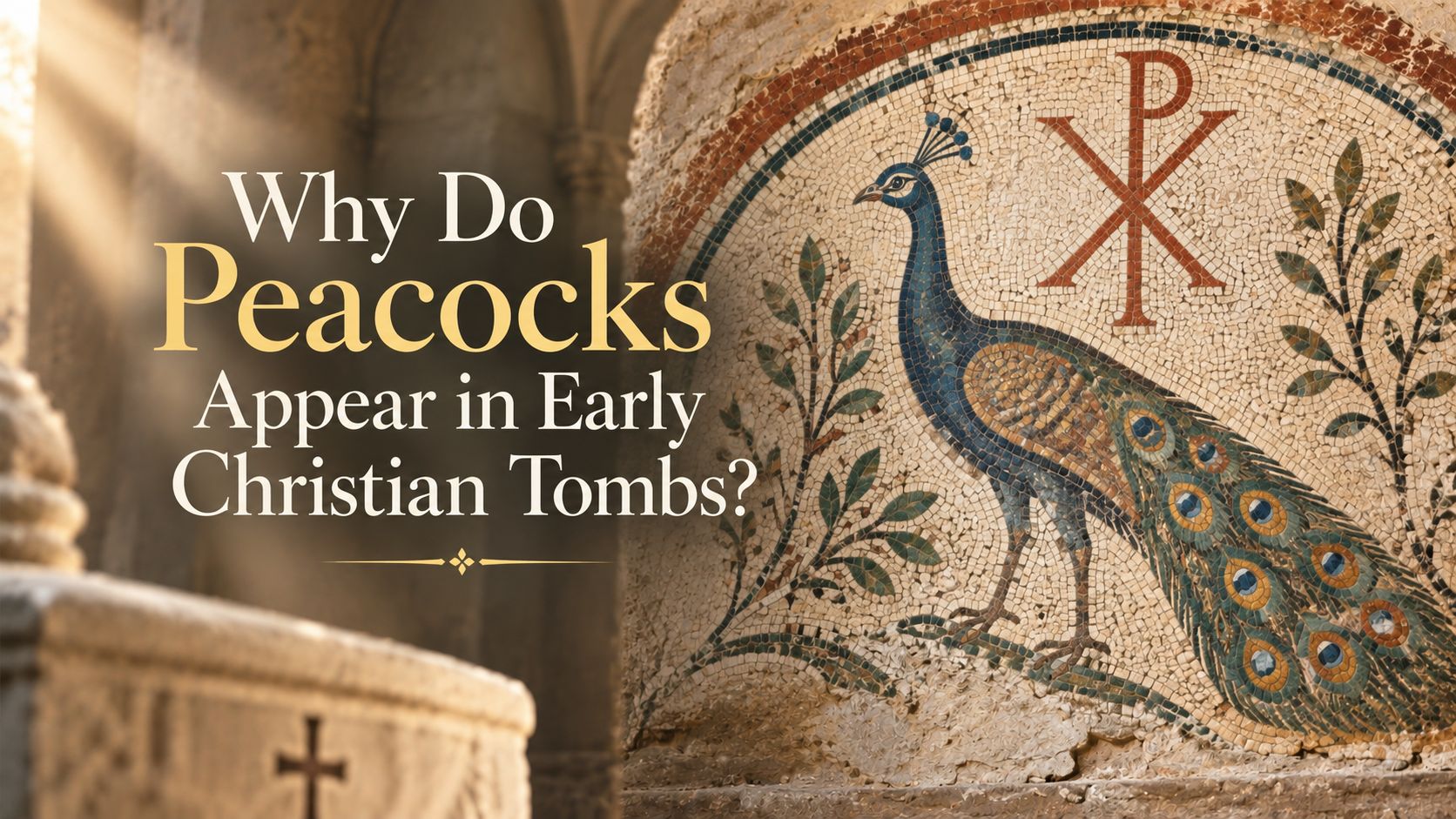
Sept 4, 2026: You may have seen the peacock associated with other religious traditions, where its striking appearance has inspired different meanings. But what does this beautiful bird have to do with Christianity — and why does it appear in some of the earliest Christian tombs and mosaics?


The answer takes us back to the ancient world, where the peacock’s beauty, its changing feathers and beliefs about its flesh gave it a remarkable place in the imagination of Greeks and Romans.
From Ancient Belief to Christian Hope
Greeks and Romans associated the peacock with immortality, partly because of a belief that its flesh resisted decay. Its yearly renewal of feathers also suggested the possibility of life renewed.
(CLICK HERE to follow Catholic Connect and to stay updated with Catholic News & Content)
Early Christians inherited these associations and gave them a new meaning in the light of the Resurrection. The peacock was not simply a Christian invention. It had already appeared in pagan funerary art, where it could suggest the soul’s ascent and the hope of life beyond death.
As Christianity developed its own artistic language, the bird was adopted into Christian decoration. Its meaning was no longer merely a claim about nature, but a visual reminder of the Christian hope of resurrection and eternal life.
A Bird in the Tombs
This is why the peacock appears in some of the earliest Christian funerary settings. It can be found in the Catacombs of Priscilla in Rome, in ancient tombs and sarcophagi, and in early Christian mosaics.
Sarcophagi are stone coffins, often decorated with carvings or other artwork. In the ancient Roman world, they were used for burial, and some early Christian examples feature peacocks among their decorative imagery.
A fifth-century mosaic now in the Kimbell Art Museum, for example, shows a peacock with a floral motif. Such imagery could evoke paradise and the promise of life beyond the grave.
The symbolism became especially rich when two peacocks were shown drinking from a vessel. The image could suggest the believer receiving the waters of eternal life. Peacocks also appeared beside the Tree of Life, reinforcing the connection with paradise and resurrection.
More Than a Beautiful Bird
The bird’s beauty, however, was not always understood positively. In the ancient world and later Christian art, the peacock could also represent vanity and worldly pride. Its meaning depended on the setting and the message the artist intended to convey.
For Christians, the peacock ultimately became a reminder that the splendour of creation points beyond itself. Its renewal of feathers and its ancient association with incorruptibility offered artists a way to express a central Christian hope: that death is not the final word, and that life is renewed in Christ.
The peacock’s place in Christian art therefore reflects more than a fascination with its beauty. It shows how early Christians drew on familiar images, reshaped their meanings and used them to express the hope at the heart of their faith.
By Catholic Connect Reporter
Read More
1) Why Is the Pelican a Symbol of Christ? The Christian Meaning Explained
2) Why Are the Four Gospels Represented by a Man, Lion, Ox and Eagle?




© 2026 CATHOLIC CONNECT POWERED BY ATCONLINE LLP