- 22 October, 2026

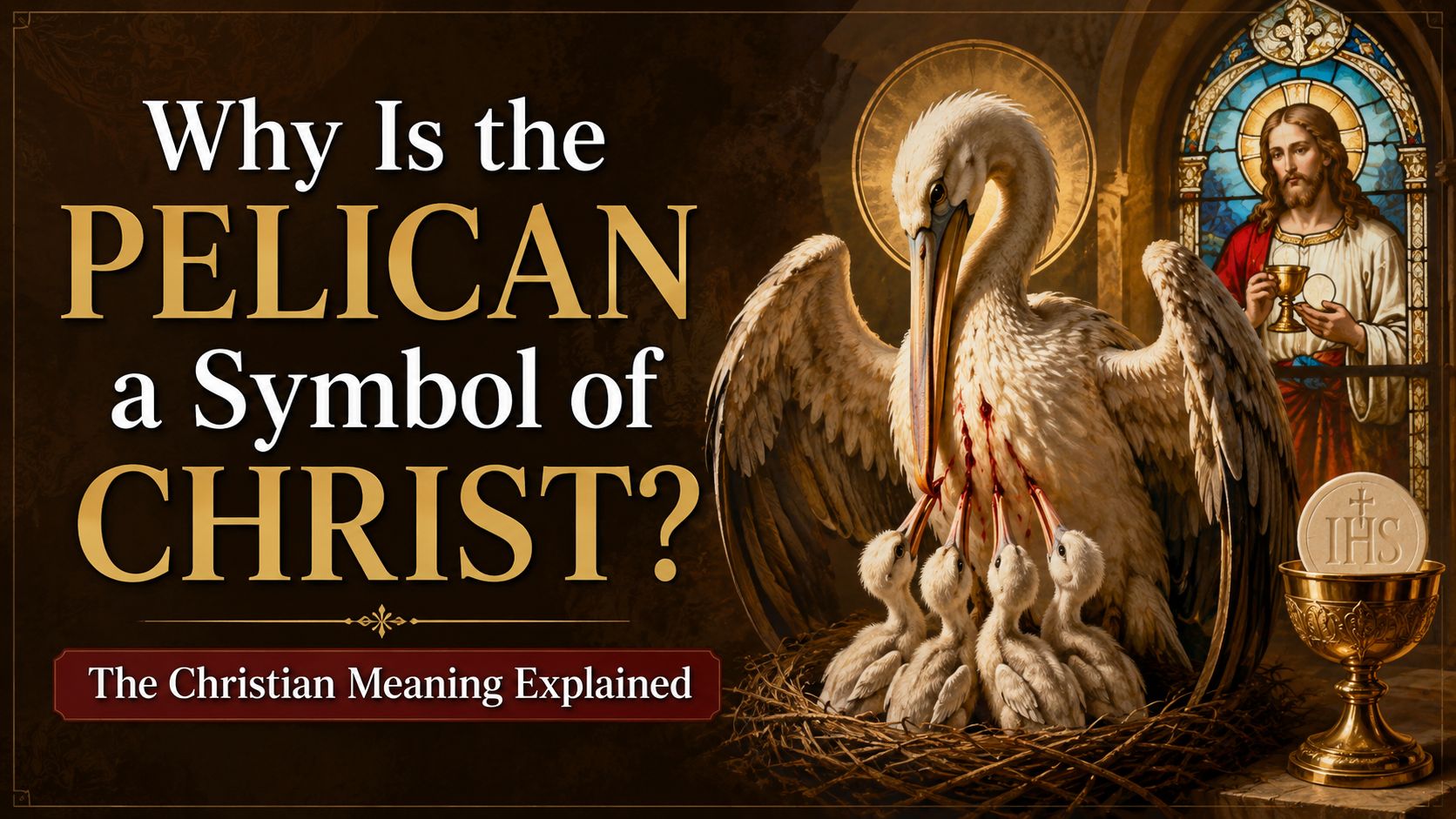
Sep 1, 2026: If you have ever noticed a pelican depicted near an altar, in a stained-glass window, in a painting or among Eucharistic symbols, you may have wondered why this particular bird became associated with Jesus Christ. The answer lies not simply in the bird itself, but in a centuries-old Christian interpretation of the pelican’s supposed behaviour.


In medieval Europe, a belief became widespread that when a pelican could not find enough food for its young, it would pierce its own breast and feed them with its blood. Modern zoology does not support this as an accurate description of pelican behaviour. Nevertheless, the image became deeply meaningful in Christian thought because it offered a powerful visual analogy for Christ giving himself for humanity.
(CLICK HERE to follow Catholic Connect and to stay updated with Catholic News & Content)
The pelican therefore came to symbolise self-sacrificing love. Christians saw in the imagined act of the bird a reflection of Christ’s Passion: Jesus willingly gave his life for the salvation of humanity. The symbolism naturally connected with the words of Christ at the Last Supper, when he gave his disciples bread and wine as his Body and Blood.
This connection became especially strong in Eucharistic imagery. The pelican could represent Christ who gives himself as spiritual nourishment to his people. For this reason, the image is sometimes found near tabernacles, on altars, in stained-glass windows, church paintings and other sacred artwork.
The symbolism also entered Christian literature. One of the best-known examples appears in the medieval hymn Adoro te devote, traditionally associated with St Thomas Aquinas. In the hymn, Christ is addressed as the “loving Pelican,” linking the bird directly with the Lord’s sacrificial self-giving. The image became particularly powerful in Eucharistic devotion.
The pelican motif also developed in different artistic forms. A common representation shows the mother pelican standing over her three young and piercing her breast so that they receive nourishment. In Christian art, this image is sometimes called the “Pelican in her Piety.” The three young birds have also been interpreted in relation to Christian symbolism, although such interpretations are secondary and should not be treated as a fixed doctrine of the Church.
The important point is that the pelican is a symbol, not a teaching about the natural behaviour of the bird. Medieval Christians used the image to communicate a theological truth through familiar symbolism: Christ gives himself completely for others.
That is why the pelican can carry such a striking Eucharistic meaning. The bird became an artistic reminder of the mystery Christians celebrate at the altar—the self-giving love of Christ, whose sacrifice is made sacramentally present in the Eucharist.
The next time you see a pelican in a church, it may therefore be worth looking beyond the unusual bird depicted in the artwork. It points towards one of Christianity’s central images of love: Christ who gives himself for the life of the world.
By Catholic Connect Reporter




© 2026 CATHOLIC CONNECT POWERED BY ATCONLINE LLP