- 23 September, 2026

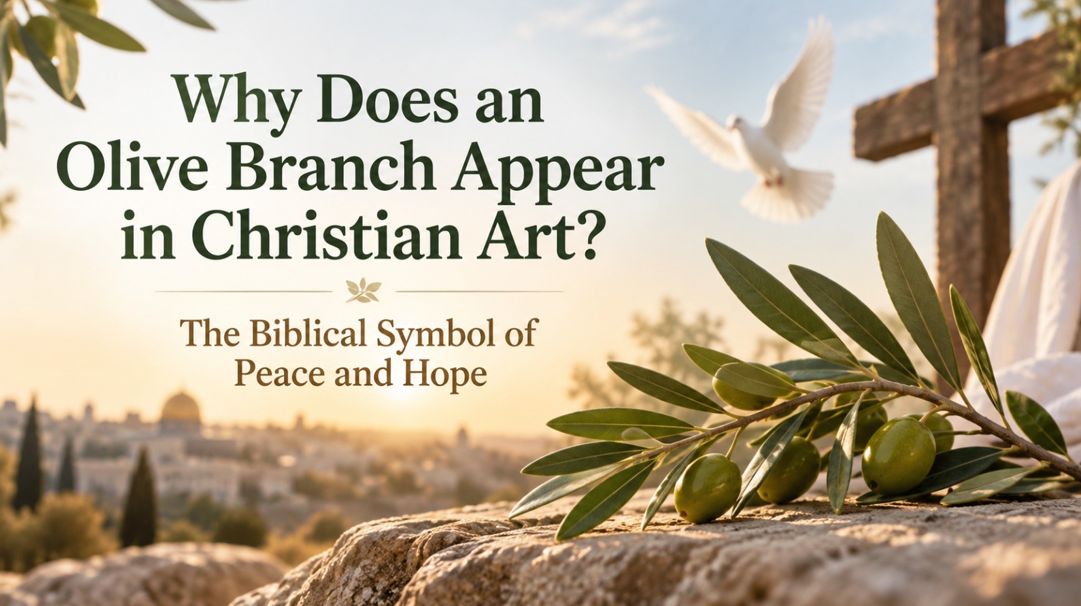
September 23, 2026: Why does a small green branch appear in so many Christian paintings, carvings, and mosaics? Its story reaches back to one of the Bible’s most memorable accounts. In Christian art, the olive branch may represent peace, reconciliation, mercy, and hope. Its most important biblical connection begins with Noah, while later Christian tradition deepened its association with salvation and new life.


The story begins after the Flood in Genesis 8. Noah sends a dove from the Ark to discover whether the waters have receded. When the dove returns, it carries a freshly plucked olive leaf in its beak.
The leaf is significant because it provides evidence that the waters are falling and that vegetation has begun to return. After destruction and uncertainty, Noah receives a visible sign that life is beginning again.

(CLICK HERE to follow Catholic Connect and to stay updated with Catholic News & Content)
Genesis does not explicitly call the olive leaf a symbol of peace. Its later association with peace developed in biblical and Christian symbolism. For Christians, the image naturally came to suggest restoration, mercy, and hope after catastrophe.
After the Flood, God establishes a covenant with Noah. For Christians, this makes the image especially suggestive of a new beginning and God's continuing mercy.
The olive branch can therefore evoke several connected ideas:
These meanings should be understood as traditional symbolism rather than as an explicit biblical definition of the olive branch.
Artists frequently place an olive branch in the beak of a dove, creating one of Christianity's most recognisable images. The dove recalls Noah's story and the renewal of creation.
The dove also has a distinct Christian meaning. At Jesus' Baptism, the Holy Spirit is manifested in the form of a dove (Matthew 3:16). Depending on the artistic context, therefore, the dove may evoke Noah, renewal, or the Holy Spirit.
Early Christian reflection also connected Noah's deliverance through water with Baptism. The Flood could be understood as a foreshadowing of the cleansing and salvation associated with Baptism. The olive leaf could consequently suggest life and hope emerging after the waters.
The olive branch later appeared in other Christian works, including some representations of the Annunciation, where the Archangel Gabriel is shown carrying an olive branch. In such artworks, it may be interpreted as a sign of peace and reconciliation brought by Christ.
This is an artistic tradition, not a required Catholic interpretation. The more familiar Western symbol associated with the Annunciation is the lily.
The title “Prince of Peace” is likewise rooted especially in Isaiah 9:5–6 and Christian understanding of Christ, rather than in the olive branch itself.
The olive tree may also appear in scenes associated with Christ's Passion because of the biblical landscape of the Mount of Olives. In such contexts, an olive branch may evoke the setting and the wider themes of suffering, redemption, and hope, rather than carrying one fixed doctrinal meaning.
Ultimately, the olive branch in Christian art is a visual reminder of a recurring biblical theme: after judgement and suffering, God offers the possibility of renewal, reconciliation, and life.
By Catholic Connect Reporter
Read More:
1) Why Is the Pelican a Symbol of Christ? The Christian Meaning Explained
2) Why Are the Four Gospels Represented by a Man, Lion, Ox and Eagle?
3) Why Is the Rooster a Symbol in Christian Art?
4) Why Do Peacocks Appear in Early Christian Tombs?
5) Why Does a Phoenix Appear in Christian Art?
6) Why Does a Pomegranate Appear in Christian Art?
7) A.M., AM or M? What Do These Mysterious Marian Letters Mean?
8) Why Is Mary Sometimes Shown With a Star?
9) What Does an Anchor Have to Do with Christianity?
10) Why Is a Ship One of Christianity’s Oldest Symbols?
11) Why Does the Grapevine Appear in Christian Art? Its Meaning Explained
12) Why Do Palm Branches Appear in Christian Art?
13) Why Do the Letters “IHS” Appear in Catholic Churches?
14) What is the Chi-Rho (ΧΡ)? The Ancient Symbol for Christ Explained
15) When Mary Looked to Heaven: The Curious Meaning Behind the Virgin’s Upward Gaze
16) Why Do Alpha and Omega Appear in Christian Art?
17) What Does the Eye Inside a Triangle Mean in Christian Art?
18) The Strange ‘Weapons’ of Christ: Why the Instruments of His Passion Appear Together
19) Why Does a Unicorn Appear in Medieval Christian Art?
20) The Mystery Behind Mary’s Enclosed Garden
21) Why Does a Scroll Appear in So Many Christian Images?
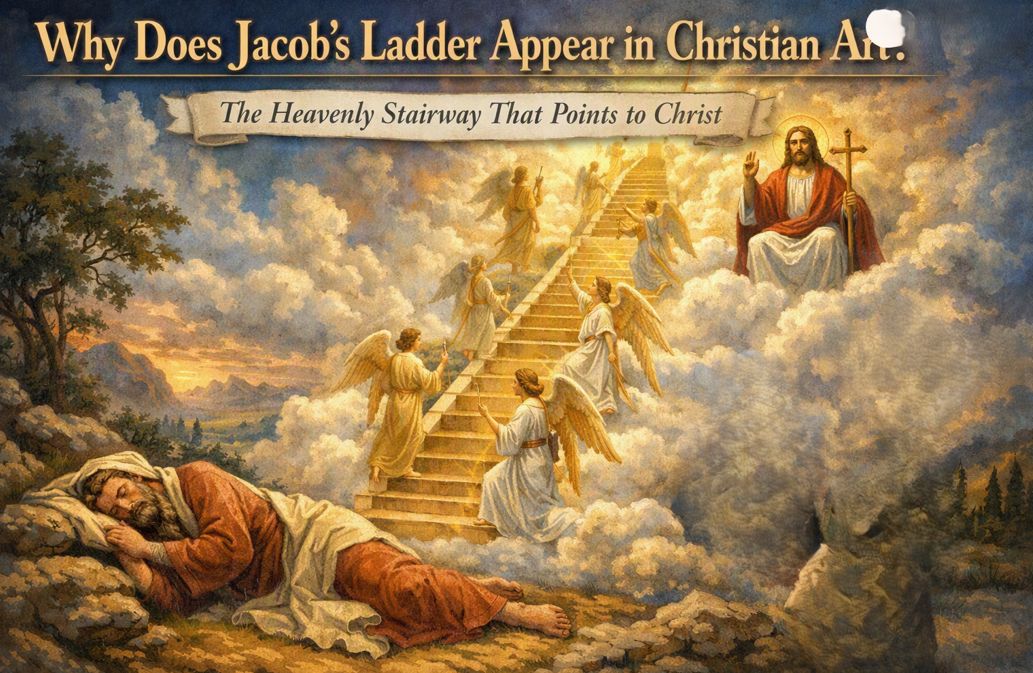
22) Why Does Jacob’s Ladder Appear in Christian Art? The Heavenly Stairway That Points to Christ





© 2026 CATHOLIC CONNECT POWERED BY ATCONLINE LLP