- 23 July, 2026

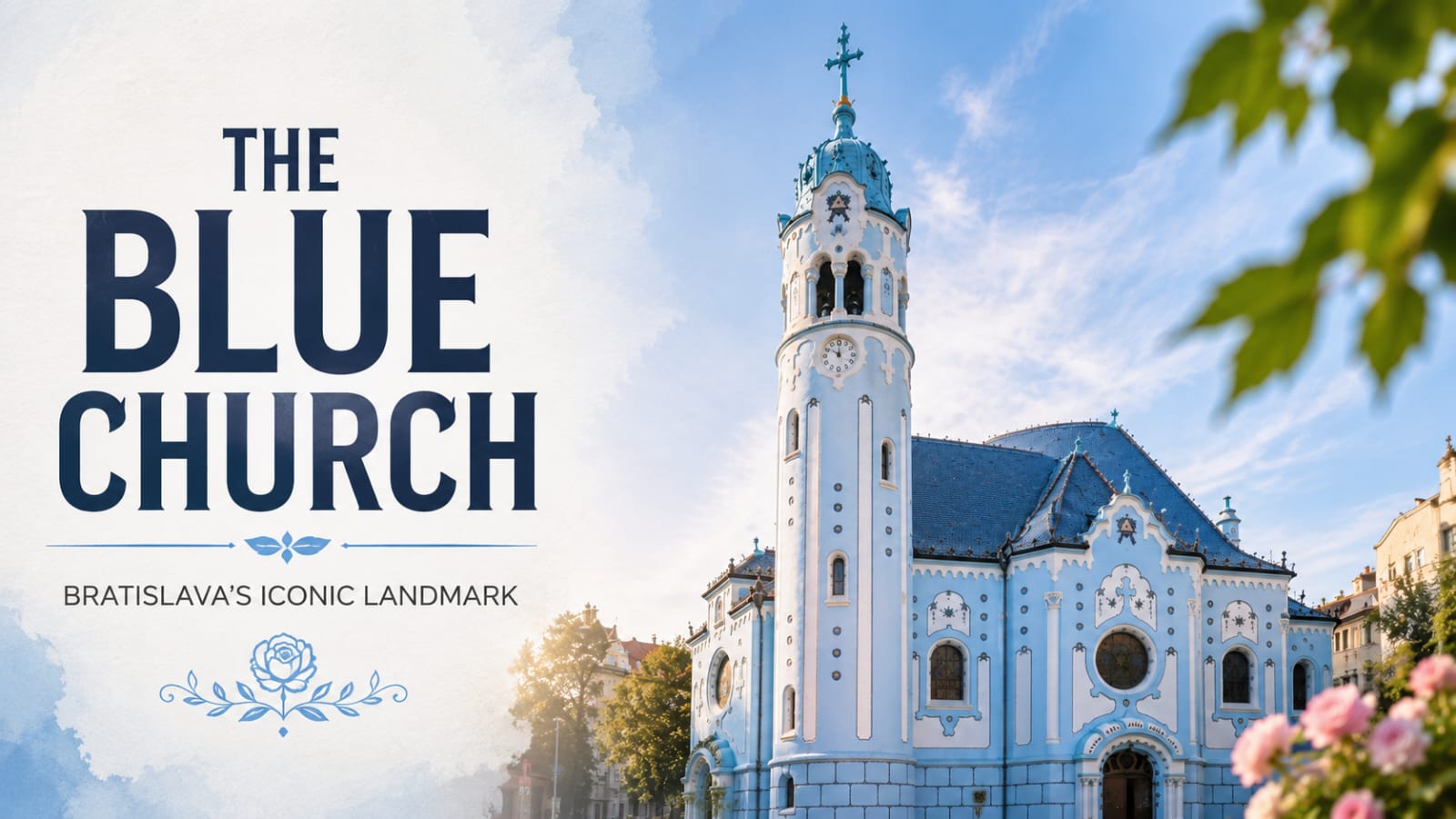
July 23, 2026: A stroll through the quiet streets of Bratislava's Old Town can suddenly feel like stepping into the pages of a storybook. Standing gracefully on Bezručova Street is the Church of St. Elizabeth, affectionately known as the Blue Church—one of Slovakia's most captivating Catholic landmarks. Dressed in soft shades of blue, from its pastel façade to its glazed roof and elegant tower, the church draws visitors from around the world. Yet beyond its fairytale appearance lies an inspiring story of faith, charity and the enduring legacy of St Elizabeth of Hungary.


A Masterpiece in Shades of Blue
Built between 1909 and 1913, the Church of St Elizabeth is one of the finest examples of Hungarian Secession, the Hungarian branch of the Art Nouveau movement. Designed by celebrated Hungarian architect Ödön Lechner, often called the "Hungarian Gaudí", the church reflects his vision of blending architecture with nature-inspired beauty.
As you draw closer, every detail seems carefully crafted to delight the eye. The pastel-blue façade is adorned with delicate floral ornamentation, while blue majolica tiles and a blue-glazed ceramic roof give the church its unmistakable identity. Rising above it all is a graceful round tower crowned with a dome and cross, creating a silhouette unlike any other church in Slovakia.


Stepping Into a Haven of Peace
Push open the doors, and the story continues. The calming shades of blue extend into the interior, where pale blue pews, gentle wall accents and intricate floral motifs create an atmosphere of serenity. Sunlight filtering through the windows softly illuminates the space, inviting visitors to pause from the bustle of everyday life and embrace a moment of prayer and reflection.
Above the main entrance, a beautiful mosaic depicts the Miracle of Roses, one of the most beloved stories associated with St Elizabeth of Hungary. It serves as a reminder that while the church is admired for its architecture, its true heart lies in the life and witness of the saint to whom it is dedicated.
(CLICK HERE to follow Catholic Connect for regular News and Content)
Built to Honour a Saint of Compassion
The Blue Church was commissioned in 1907 to commemorate the 700th anniversary of the birth of St Elizabeth of Hungary. Originally conceived as the chapel for the neighbouring royal Catholic grammar school, it has since grown into an active parish church and one of Bratislava's best-loved landmarks.
Born into royalty in the 13th century, St Elizabeth chose a path of humility rather than privilege. She devoted herself to serving the poor, feeding the hungry and caring for the sick, becoming a shining example of Christian charity.
Her life is closely linked with the Miracle of Roses, a cherished tradition that tells of bread she was carrying to the poor being miraculously transformed into roses when she was questioned about her charitable work. Through the centuries, the story has remained a powerful symbol of God's blessing upon selfless acts of love and mercy.
Where Faith and Beauty Meet
More than a striking architectural landmark, the Blue Church remains a living place of worship. Mass is celebrated regularly, welcoming parishioners, pilgrims and visitors who come not only to admire its beauty but also to encounter the peace that fills its sacred space.
Its distinctive blue walls may be what first capture a visitor's attention, but they are only the beginning of its story. Every floral detail, every carefully designed arch and every quiet corner reflects a deeper purpose—to honour a saint whose life was marked by generosity, humility and unwavering faith.
For many, a visit to the Blue Church begins with curiosity about its unusual colour. It often ends with a deeper appreciation of the woman whose legacy inspired its construction. In celebrating the life of St. Elizabeth of Hungary, the Church of St. Elizabeth continues to remind the faithful that true beauty is found not only in magnificent architecture, but in a life devoted to God and to serving others.
By Catholic Connect Reporter
Read more on Must-Visit Catholic Architectural and Historical Wonders:
The Church of the Carmel: Porto's Blue-and-White Masterpiece That Tells a Story in Stone and Tile
Ōura Church, Nagasaki: The Church Where Japan's Hidden Christians Emerged
How a Tiny Statue Inspired Brazil's National Shrine Basilica of Our Lady Aparecida
Notre-Dame du Haut: The Chapel That Redefined Sacred Architecture
How Did the Holy Family's House End Up in Italy?
Sumela Monastery: Where Faith Finds a Home on the Cliffs
Sanctuary of Monte Sant'Angelo: Descending into the Cave Where Heaven Touched Earth
The Church Where Heaven Touched Earth: Mount Tabor's Basilica of the Transfiguration
Meteora: The Monasteries That Seem to Hang Between Heaven and Earth
Monastery of Alcobaça: Portugal's Treasure of Love and Legacy
Las Lajas Sanctuary: Colombia's Breathtaking Church Between Cliffs and Sky
Church of Saint George, Lalibela: The Astonishing Church Carved from a Single Rock
Archbasilica of St John Lateran: Inside the Highest-Ranking Church in the Catholic Church
Saint Catherine's Monastery: The World's Oldest Living Christian Monastery
The Church of the Holy Sepulchre: Walking Through the Sacred Heart of Christianity
Inside St. Mark's Basilica: The Church That Glows Like Heaven
Notre-Dame Cathedral: The Gothic Masterpiece That Rose from the Ashes to Inspire the World
Milan Cathedral: Italy's Crown of Marble Reaching Towards Heaven
Chartres Cathedral: Where Stone, Light, and Heaven Meet
Montserrat Monastery: A 1,000-Year-Old Architectural Marvel in the Mountains
Inside the Sagrada Família: The Incredible Story of Gaudí's Greatest Masterpiece



© 2026 CATHOLIC CONNECT POWERED BY ATCONLINE LLP