- 24 November, 2026
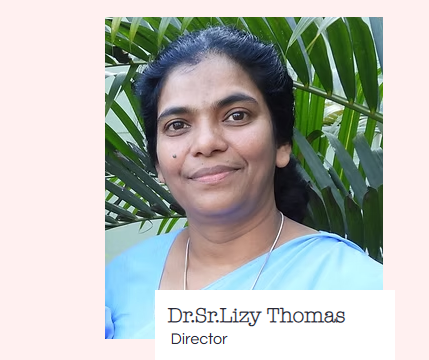
BHOPAL, November 24, 2026:: Through Nyaya Chaupal (Women’s Legal Aid Cell), Sr. Dr Lizy Thomas SSpS is helping women who once suffered domestic violence find the courage to stand up for others, while building an unique partnership between communities and the police and judiciary.


There was a time when Phoolvati Sahu was afraid of the police. Having experienced domestic violence, she knew what it meant to feel helpless and uncertain about where to seek help.
Today, she walks into police stations with confidence, speaks to government officials and stands beside other women facing violence.
"Earlier, I was very shy and frightened of the police. Today, I can confidently speak before police personnel and government officers," she says.
Phoolvati's journey captures the heart of a mission that Sr Dr Lizy Thomas, a member of the Sisters of the Holy Spirit (SSpS), has been pursuing for nearly a decade.
Through Nyaya Chaupal–Women's Aid Legal Cell, she is turning survivors of domestic violence into community leaders who help other women find support and access justice.
For Sr. Lizy, the fight against violence cannot be left to individual women or the police alone. It requires communities that are willing to intervene and institutions that are ready to listen.
Her distinctive contribution has been to bring these two together.
A survivor should never stand alone
When Sr. Lizy and her fellow sisters launched Nyaya Chaupal in 2017 through Uday Social Development Society, the social action wing of the Holy Spirit Sisters' Central Province, they began with just 16 survivors of domestic violence.
They encountered women who were often trapped in abusive relationships, unaware of their legal rights and afraid to approach the police.
Many had no one to accompany them or explain what steps they could take.
Sr Lizy saw an opportunity to change this situation by involving women who understood these struggles from personal experience.
The women were trained to recognise domestic violence, understand legal protections, provide basic counselling service to survivors and connect them with the police and other support services.
Gradually, they began reaching out to women in their neighbourhoods, listening to their difficulties and accompanying them through the process of seeking help.
The initiative has since grown into a network of more than 800 women leaders across urban and rural communities. Since its inception, they have helped resolve over 2,000 domestic violence cases through counselling and other legal intervention especially through DLSA-District Legal Service Authority.
But behind these numbers are individual stories of women who have found someone willing to listen, stand beside them and help them take the first step towards justice.
From victims to protectors
Phoolvati Sahu, Alomali Rai and Rajkumari Rajput are among the women whose lives reflect this change. Having experienced domestic violence themselves, they now help other survivors navigate difficult situations.
Together, they say they have helped resolve around 150 cases and have also intervened to prevent child marriages.
Their work often begins with a conversation. A woman shares her suffering, sometimes for the first time, and finds someone who understands her situation without judging her. The volunteers then help her explore possible solutions, seek counselling or approach the authorities.
This is the human strength of Nyaya Chaupal. The women are not distant counsellors or officials; they are members of the same communities and understand the social pressures that often keep survivors silent.
Sr. Lizy's vision is to ensure that a woman who has experienced violence does not remain alone in her struggle. Her experience can become a source of understanding and support for another woman.
Changing the face of policing
An equally important part of Sr Lizy's mission is changing how women relate to the police.
Traditionally, many women approach the police only when a situation becomes unbearable. Fear, mistrust and uncertainty often make even that step difficult. Nyaya Chaupal seeks to change this relationship by making women active partners in community policing.
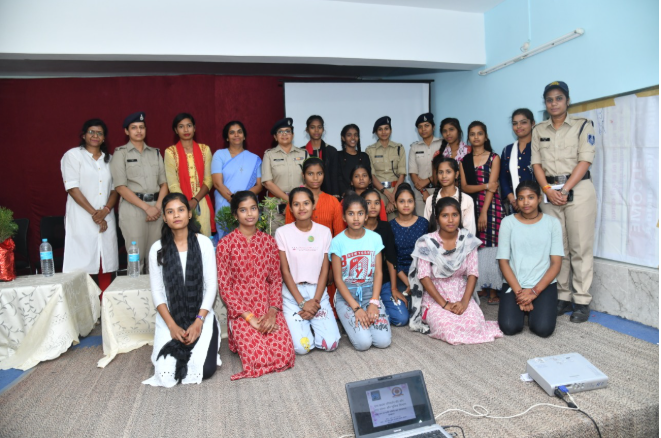
Today, 471 women associated with the initiative are members of Police–Community Partnership Committees attached to police stations. They interact with police personnel, bring cases to their attention and follow up on interventions.
This partnership gained momentum after Dr Vineet Kapoor, then Deputy Commissioner of Police (Headquarters), Bhopal, and now DIG for Community Policing and Cyber Policing, attended an International Women's Day programme organised by the sisters in 2021. More than 1,000 women from 20 slum communities participated.
Impressed by the experiences shared by survivors, he proposed extending the initiative to eight police station areas through the training of 240 women volunteers.
The collaboration also strengthened efforts to sensitise police personnel on gender issues, POCSO and the POSH Act. More than 6,000 police personnel have received training through these efforts in collaboration with UNICEF.
For Sr. Lizy, this cooperation is essential. Community women can help prevent violence and support survivors, but their efforts become meaningful when the police are approachable and responsive. The objective is not to replace institutional mechanisms but to make them more accessible through community participation.
A movement that begins at home
Domestic violence is often hidden behind closed doors, sustained by silence, fear and social pressure. Laws and institutions are important, but they cannot always reach a woman who is afraid to speak.
This is where Sr Lizy's work makes a difference. By building a network of women who are willing to listen, intervene and accompany survivors, she has brought the response to violence closer to the neighbourhoods where it occurs.
What began with 16 survivors in 2017 has grown into a movement of more than 800 women, with the support of the police and other institutions.
Yet the real measure of this work is not simply the number of cases resolved or volunteers trained. It is the sight of a woman who once feared the police now standing beside another survivor, helping her find the courage to seek justice.
Through Nyaya Chaupal, Sr Lizy Thomas is nurturing a community in which survivors are no longer defined by what they have suffered. They are recognised for what they can do for others.
Her mission is ultimately to ensure that no woman has to fight violence alone—and that the women who once needed someone to stand beside them become the very people who stand up for others.
By Fr Suresh Mathew


© 2026 CATHOLIC CONNECT POWERED BY ATCONLINE LLP