- 17 October, 2026

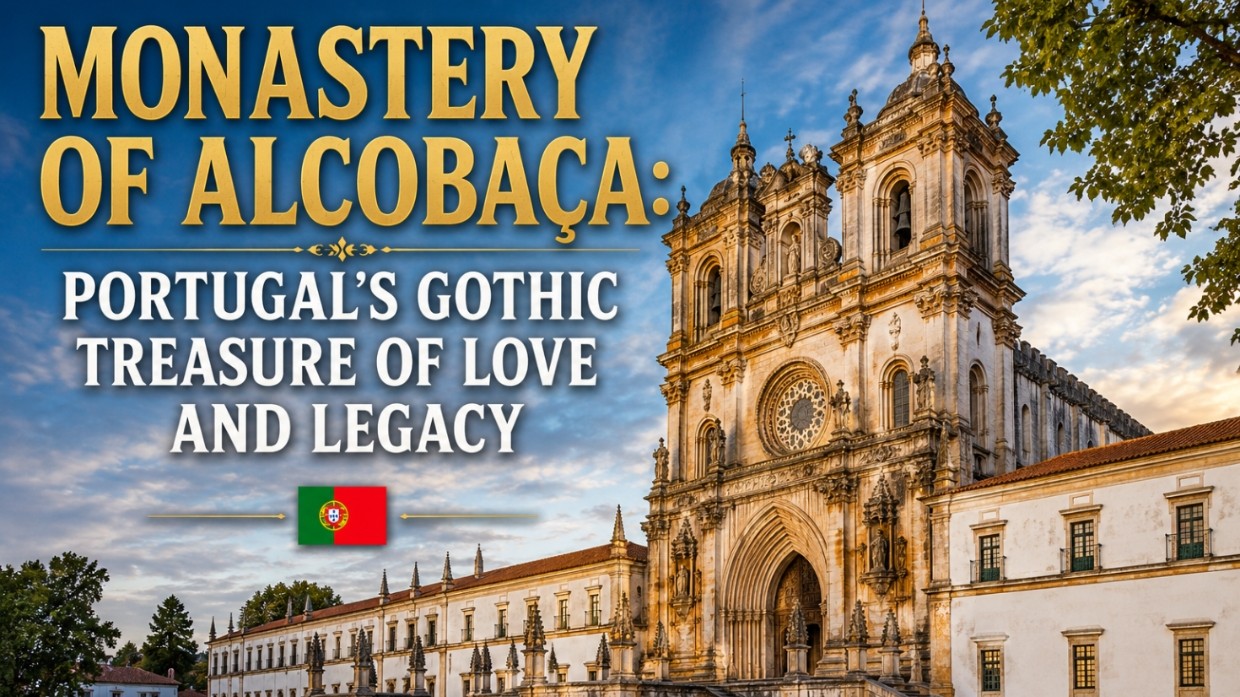
Portugal, July 12, 2026: Nestled in the historic town of Alcobaça in central Portugal, the Monastery of Alcobaça is one of Europe's most magnificent medieval monasteries and a masterpiece of Cistercian Gothic architecture. Recognised as a UNESCO World Heritage Site in 1989, it has stood for more than 850 years as a symbol of faith, history, and architectural excellence. Today, it remains one of Portugal's most visited cultural and religious landmarks.


A Royal Foundation
The monastery was founded in 1153 by King Afonso I, Portugal's first king, following his victory over the Moors. Entrusted to the Cistercian Order, it quickly became one of the country's most influential monasteries. Beyond its religious mission, the monks played a key role in developing agriculture, education, and economic life in the surrounding region, helping shape medieval Portugal.
A Masterpiece of Gothic Architecture
Construction of the monastery's church began in the 12th century, making it one of Portugal's earliest Gothic buildings. Its soaring vaulted ceilings, elegant pointed arches, graceful cloisters, and spacious interior reflect the Cistercian ideals of simplicity, harmony, and devotion. Despite its monumental scale, the monastery's restrained decoration creates an atmosphere of serenity and spiritual reflection.
Among its highlights are the magnificent cloisters, medieval kitchen with its enormous chimney, chapter house, refectory, and royal pantheon. Together, these spaces provide a fascinating glimpse into monastic life during the Middle Ages.
The Legendary Love Story of Pedro and Inês
The monastery is most famous for housing the beautifully carved tombs of King Pedro I and Inês de Castro, whose tragic romance has become one of Portugal's greatest love stories. After Inês was executed for political reasons, Pedro mourned her deeply and, according to tradition, declared her his rightful queen after her death.
Their elaborate marble tombs, placed facing one another inside the church, symbolise the belief that the lovers will be reunited on the Day of Resurrection. Decorated with intricate biblical scenes and detailed carvings, they are regarded as masterpieces of medieval funerary art.
A Living Legacy
Today, the Monastery of Alcobaça attracts pilgrims, historians, architects, and travellers from around the world. Visitors come not only to admire its remarkable Gothic architecture but also to experience the rich history, spirituality, and timeless romance that define the site.
Blending faith, history, and artistic brilliance, the Monastery of Alcobaça stands as one of Portugal's greatest treasures and one of the finest examples of medieval monastic architecture in Europe.
By Catholic Connect Reporter
Continue Reading on Catholic Connect App
Get access to exclusive news articles & more.





© 2026 CATHOLIC CONNECT POWERED BY ATCONLINE LLP