- 06 October, 2026

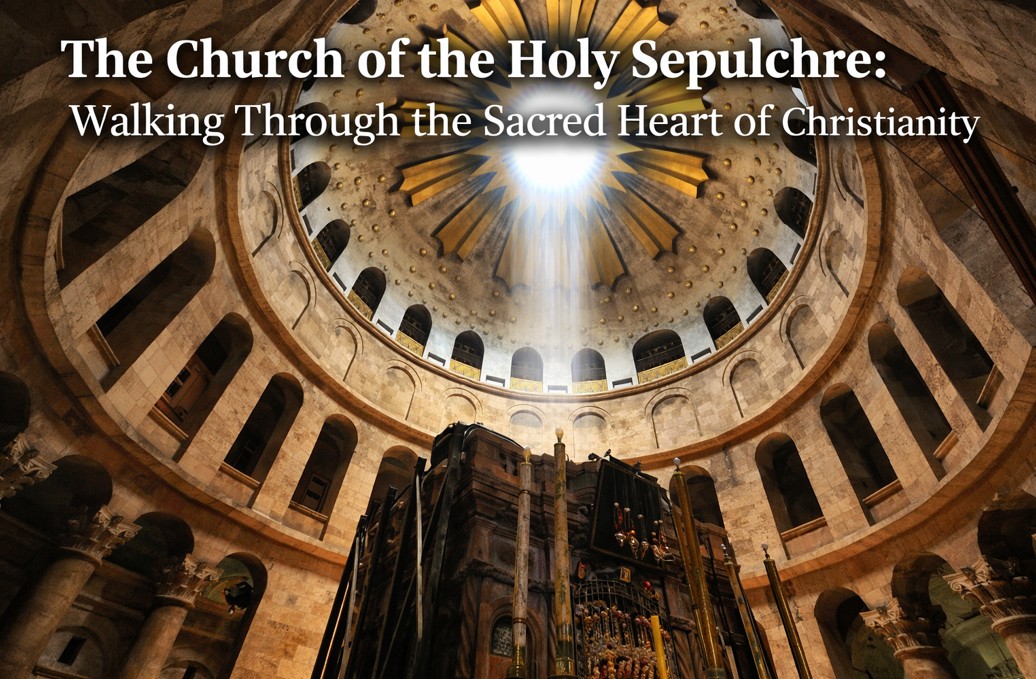
July 7, 2026: There are churches that inspire admiration through their beauty, and there are churches that move the soul through their history. Then there is the Church of the Holy Sepulchre in Jerusalem—a place where architecture, history, and faith converge in a way unlike anywhere else on earth. For nearly seventeen centuries, millions of pilgrims have crossed its threshold believing they are walking upon the very ground where Jesus Christ was crucified, buried, and rose from the dead.


Nestled within the winding stone streets of Jerusalem's Old City, this ancient church is not defined by soaring spires or dazzling façades. Instead, its extraordinary significance lies beneath its weathered walls. Every stone, every chapel, every worn staircase invites visitors to journey through the final moments of Christ's earthly life. To enter the Church of the Holy Sepulchre is not simply to visit a historic monument—it is to step into the very heart of the Christian story.
Approaching the church through the narrow lanes of the Christian Quarter, first-time visitors are often surprised by its appearance. Unlike Europe's magnificent Gothic cathedrals that dominate city skylines, the Church of the Holy Sepulchre reveals little of its greatness from the outside. Its aged limestone walls, weathered arches, and modest entrance reflect centuries of rebuilding following fires, earthquakes, invasions, and the passage of time.
(CLICK HERE to follow Catholic Connect for regular News and Content)
Yet perhaps this simplicity is fitting. Christianity has always proclaimed that God's greatest work entered the world not in earthly grandeur, but in humility. Behind these ancient walls lies the place that countless Christians have venerated since the fourth century as Calvary—where Christ was crucified—and the nearby tomb from which He rose victorious over death.
The church was originally commissioned in AD 335 by Emperor Constantine the Great after his mother, Saint Helena, identified the site through early Christian tradition. Since then, generations of believers have journeyed here, carrying with them prayers, tears, hopes, and thanksgiving.
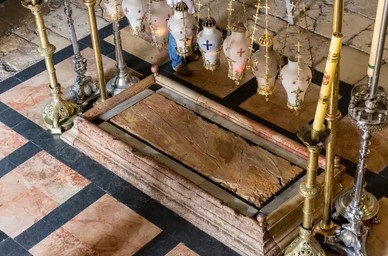
Stepping through the entrance, visitors are immediately drawn to one of the church's most moving landmarks—the Stone of Anointing.
According to Christian tradition, this is the place where the body of Jesus was lovingly prepared for burial after being taken down from the Cross. A polished marble slab now covers the ancient stone, glowing softly beneath hanging lamps that fill the air with the fragrance of incense.
Pilgrims from every corner of the world approach quietly. Some kneel in silent prayer. Others gently touch the stone with trembling hands or place rosaries, prayer books, and sacred images upon it, hoping to carry home a tangible reminder of this holy place.
In that moment, history becomes deeply personal. The noise of the crowded church fades, replaced by quiet reflection upon Christ's sacrifice and the immeasurable depth of God's love.
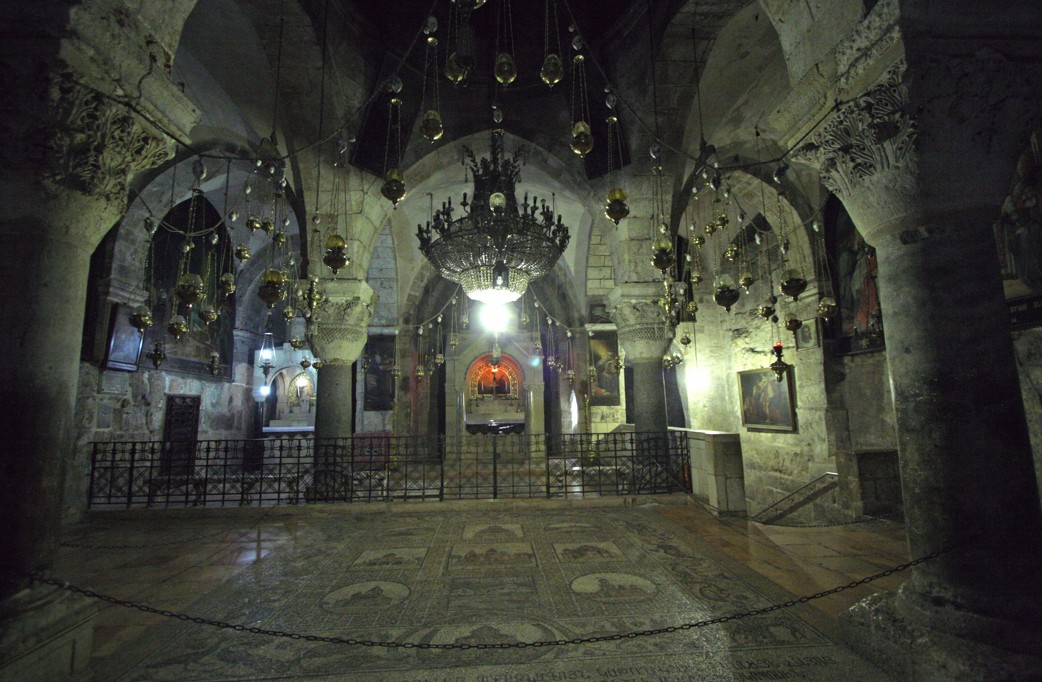
A narrow staircase leads upward to Golgotha, also known as Calvary, the traditional site of the Crucifixion.
The space is surprisingly intimate. Beneath glittering mosaics, silver lamps, and richly decorated altars lies the exposed rock believed to be part of the hill where Christ's Cross once stood. Pilgrims wait patiently for their turn to kneel beneath the altar and reach through a small opening to touch the stone below.
Whether one arrives as a devoted believer or a curious traveler, the atmosphere is profoundly moving. The elaborate decoration does not distract from the significance of the place; instead, it serves as a visible offering of love. Gold mosaics shimmer like rays of heavenly light, while flickering candles remind visitors that hope continues to shine even in the shadow of the Cross.
The architecture itself becomes a witness to the mystery celebrated here. Every arch and chapel has been shaped by centuries of prayer, transforming stone into a lasting testimony of redemption.
The spiritual heart of the church lies beneath its great dome, where a small shrine known as the Aedicula encloses the traditional tomb of Christ.
The structure stands almost like a tiny chapel within the larger church, surrounded by countless lamps whose gentle flames have burned continuously for generations. Pilgrims often wait patiently for hours to enter its small inner chamber, where only a handful of people can stand at a time.
Inside, silence speaks louder than words.
The marble slab marking the burial place is simple and unadorned, yet its significance is immeasurable. Christians believe this is the place where death was conquered and the Resurrection transformed the course of human history. It is not a monument to loss, but a proclamation of victory and hope.
Leaving the tomb, many visitors carry an unmistakable sense of peace. Regardless of language or nationality, everyone emerges with the awareness that they have stood at one of the most sacred places in the Christian faith.
One of the Church of the Holy Sepulchre's most remarkable features is not architectural but symbolic. The church is shared by several Christian communities, including the Greek Orthodox, Armenian Apostolic, and Roman Catholic Churches, along with other ancient traditions. Their rights and responsibilities are carefully governed by a centuries-old arrangement known as the Status Quo.
One of the most recognizable symbols of the Status Quo is a wooden ladder resting on a ledge above the church's main entrance. It has remained there since at least 1728, as no single Christian denomination has the authority to move it without the consent of the others.
To avoid disputes over control of the church's entrance, the keys have been entrusted since the 12th century to two neutral Muslim families—the Joudeh and Nusseibeh families—who continue to serve as the custodians of this longstanding arrangement.
Although this shared stewardship has sometimes been challenging, it also reflects the universal significance of this sacred place. Christians from many traditions come here for the same reason: to honor the Passion, Death, and Resurrection of Jesus Christ.
Within these ancient walls, countless liturgies, chants, and prayers rise together each day, creating a tapestry of worship that has echoed across the centuries.
The Church of the Holy Sepulchre is unlike any other church in the world. Its beauty does not lie in perfect symmetry or towering Gothic vaults, but in the extraordinary events it commemorates. Its walls have witnessed emperors and pilgrims, crusaders and monks, saints and ordinary believers, all united by the same desire—to draw closer to Christ.
As you step back into the sunlight of Jerusalem's ancient streets, it becomes clear that this is far more than an architectural masterpiece. It is a living sanctuary where faith has been expressed for nearly two thousand years through prayer, devotion, craftsmanship, and sacred space.
Here, architecture serves not merely as shelter but as a witness to the greatest story ever told. Every weathered stone whispers of sacrifice, every lamp proclaims hope, and every pilgrim who leaves carries with them the timeless message of the empty tomb: that Christ is risen, and because He lives, hope endures forever.
By Catholic Connect Reporter
Read More :
Inside St. Mark's Basilica: The Church That Glows Like Heaven
Notre-Dame Cathedral: The Gothic Masterpiece That Rose from the Ashes to Inspire the World
Milan Cathedral: Italy's Crown of Marble Reaching Towards Heaven
Chartres Cathedral: Where Stone, Light, and Heaven Meet
Montserrat Monastery: A 1,000-Year-Old Architectural Marvel in the Mountains
Inside the Sagrada Família: The Incredible Story of Gaudí's Greatest Masterpiece



© 2026 CATHOLIC CONNECT POWERED BY ATCONLINE LLP