- 29 July, 2026
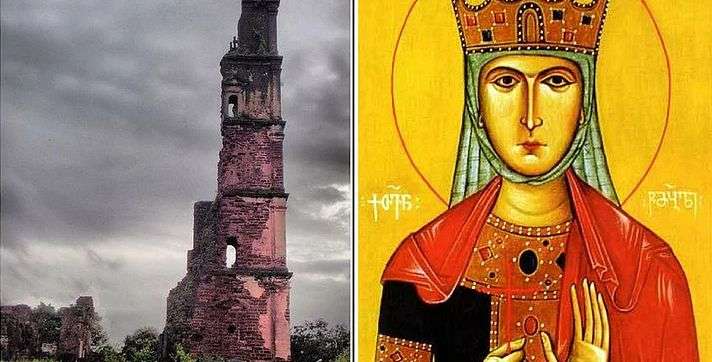

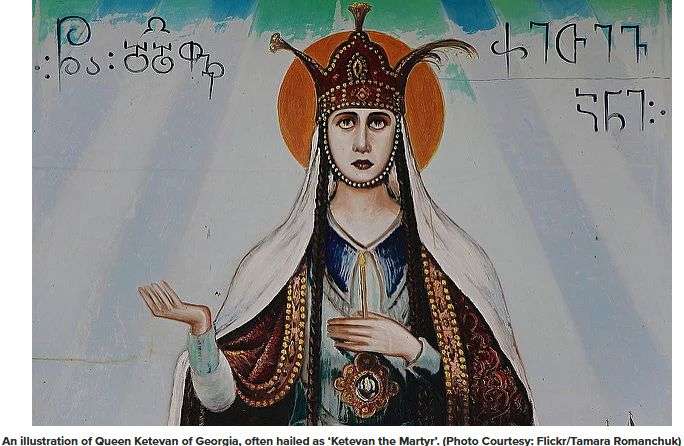

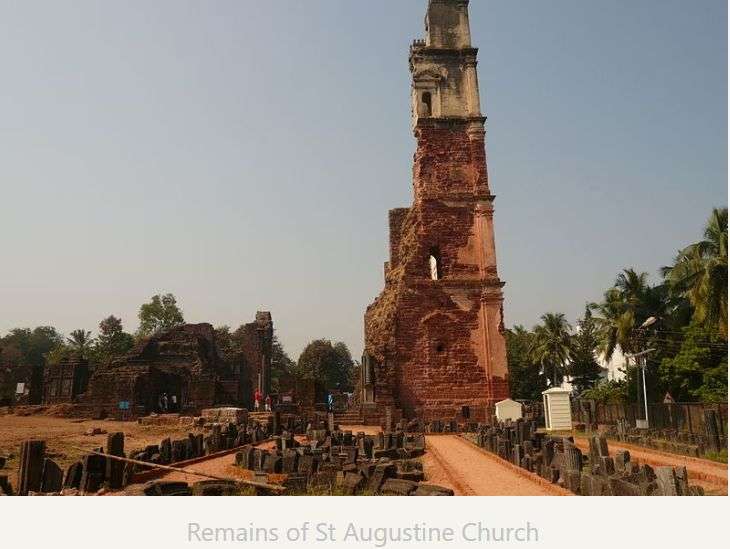
Goa, July 29, 2026: History occasionally uncovers extraordinary stories that transcend borders, faiths and centuries. One such story is that of St. Queen Ketevan, a 17th-century Georgian monarch whose unwavering Christian faith led to her martyrdom in Persia, and whose sacred relics unexpectedly found their resting place in Goa, India.


For nearly 400 years, the journey of her mortal remains remained shrouded in mystery until archaeologists in India uncovered evidence that would strengthen historical ties between India and Georgia while highlighting India's role in preserving an important chapter of Christian heritage.
Today, the discovery of St. Queen Ketevan's relics is recognised not only as an archaeological achievement but also as a symbol of faith, diplomacy and shared cultural history.


Queen Ketevan was born around 1560 into the royal House of Mukhrani in Georgia. She married King David I of Kakheti, who ruled eastern Georgia for a brief period. Following his death, Ketevan became Regent for her son, King Teimuraz.
During her reign, Georgia faced repeated invasions by the expanding Safavid Empire under Shah Abbas I of Persia. In 1614, to prevent further bloodshed, Queen Ketevan and her grandsons were handed over to the Persian ruler as hostages.
(CLICK HERE to follow Catholic Connect and to stay updated with Catholic News & Content)
While the young princes were brutally tortured and killed, Queen Ketevan remained imprisoned in Shiraz for nearly a decade.
In September 1624, Shah Abbas demanded that she renounce Christianity, convert to Islam and join his royal court. Despite severe torture, including being subjected to burning metal pincers, the Queen steadfastly refused to abandon her Christian faith.
She died on 13 September 1624, becoming one of Christianity's most revered martyrs.
Her heroic witness led to her canonisation by the Georgian Orthodox Church, where she is honoured as St Queen Ketevan the Martyr.
Following her execution, Portuguese Augustinian friars serving in Persia secretly recovered portions of Queen Ketevan's mortal remains.
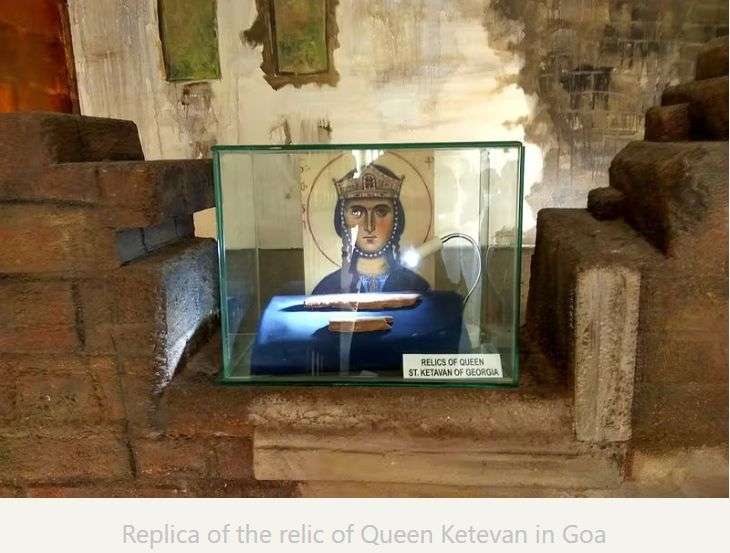
Recognising her as a Christian martyr, they transported fragments of her arm and palm to the Portuguese colony of Goa in 1627, where they were reverently interred beneath a window inside the Chapter Chapel of the Church of St Augustine in Old Goa.
The medieval Church attached great spiritual importance to relics of saints, and the Augustinian missionaries believed that preserving Queen Ketevan's relics in Goa would strengthen Christian devotion in Asia.
Over time, however, the magnificent Church of St Augustine fell into ruin following the suppression of religious orders by the Portuguese administration in the nineteenth century. As the church gradually collapsed, the precise location of the relics was forgotten.
Interest in Queen Ketevan's relics was revived during the twentieth century after historians uncovered Portuguese documents describing their burial in Goa.
Following years of research, the Archaeological Survey of India (ASI) began systematic excavations at the ruins of St Augustine Church.
In 2005, archaeologists discovered fragments of human bones exactly where seventeenth-century records had indicated they would be.
Scientific analysis followed.
DNA testing conducted by international experts confirmed that the remains belonged to a woman carrying mitochondrial DNA haplogroup U1b, a genetic marker commonly found in Georgia but absent among contemporary Indian populations.
Further comparison with DNA samples collected from Georgians strengthened the conclusion that the relics almost certainly belonged to St. Queen Ketevan.
The discovery was widely hailed as one of India's most significant archaeological and historical achievements involving Christian heritage.
Recognising the profound spiritual importance of the relics for the Georgian people, the Government of Georgia requested that a portion of the relics be returned.
After years of cooperation between both countries, India and Georgia signed the Agreement between the Government of the Republic of India and the Government of Georgia for Gifting of a Relic of St Queen Ketevan by the People of India to the People of Georgia on 8 July 2021.
The agreement formally gifted one holy relic from the people of India to the people of Georgia as a gesture of friendship and goodwill.
It stipulated that:
The agreement also encouraged continued archaeological cooperation, cultural exchanges, historical research, exhibitions and educational programmes between both nations.
The discovery of Queen Ketevan's relics has enhanced India's reputation as a country committed to preserving the heritage of all faith traditions.
Although St. Queen Ketevan was not an Indian saint, India protected her relics for nearly four centuries before returning a portion of them to her homeland.
The successful archaeological investigation also demonstrated India's scientific expertise, combining historical research, archaeology and modern DNA analysis to solve a centuries-old mystery.
Diplomatically, the discovery strengthened relations between India and Georgia by transforming a historical connection into a lasting cultural partnership.
For Christians in India, particularly in Goa, the discovery highlights the rich global connections of the Church in India during the Portuguese missionary era.
The ruins of St Augustine Church are not merely remnants of colonial history; they preserve an important testimony to Christian martyrdom that links India with the wider universal Church.
The story also reminds Indian Catholics of the enduring tradition of honouring saints and preserving relics as visible signs of faith, sacrifice and witness.
St. Queen Ketevan's courage continues to inspire Christians worldwide to remain steadfast in their beliefs despite persecution.
The story of St Queen Ketevan is far more than an archaeological discovery. It is a remarkable journey of faith that spans Persia, Georgia and India across four centuries.
Her martyrdom, the preservation of her relics in Goa, their scientific identification, and India's generous decision to gift a portion of them back to Georgia demonstrate how history can unite nations through shared respect for faith and heritage.
Today, the sacred relics of St Queen Ketevan stand not only as reminders of a courageous queen's unwavering faith but also as enduring symbols of friendship between India and Georgia, and of the Christian heritage that continues to enrich India's cultural landscape.
Courtesy Live History India
© 2026 CATHOLIC CONNECT POWERED BY ATCONLINE LLP