- 30 September, 2026
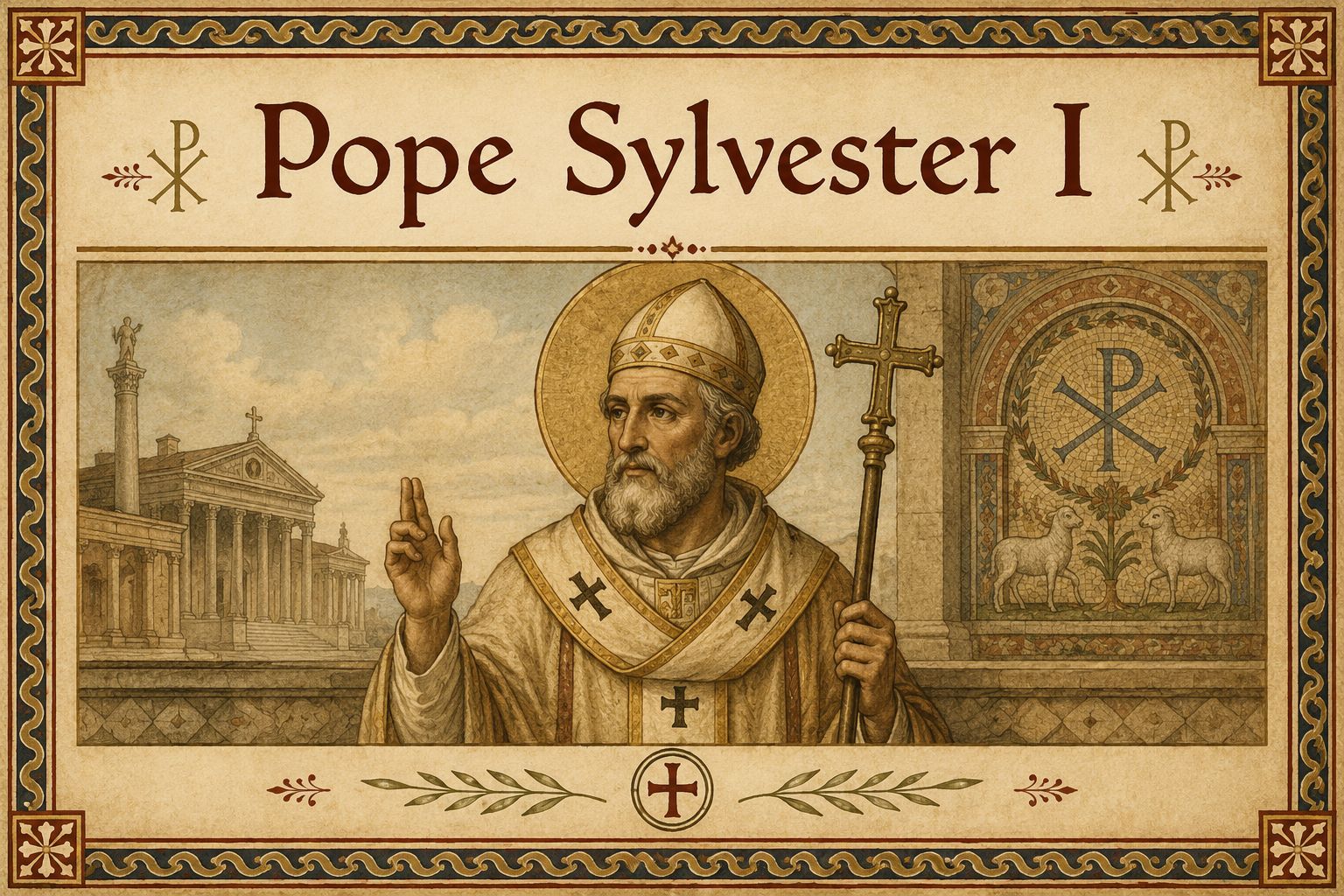
July 15, 2026: St. Sylvester I, the thirty-third successor of Saint Peter, presided over one of the most significant periods in the history of the Catholic Church. His twenty-one-year pontificate coincided with the reign of Emperor Constantine the Great, during which Christianity emerged from centuries of persecution to become a respected and protected religion within the Roman Empire. Although Sylvester himself did not attend the First Council of Nicaea, his papacy witnessed landmark developments that shaped Christian doctrine, worship, and Church governance for generations.


What does the Church do when persecution ends and a new era begins?
For Pope Sylvester I, this was the defining question of his pontificate. After centuries of worshipping in secret, Christians could now build churches openly, proclaim their faith publicly, and organise the Church without fear of imperial persecution. Rather than leading the Church through suffering, Sylvester guided it through unprecedented growth, helping lay the foundations of Christian civilisation in Europe and beyond.
(CLICK HERE to follow Catholic Connect for regular News and Content)
Very little is known about Sylvester's early years. Tradition holds that he was born in Rome and received his Christian formation during the final decades of Roman persecution.
Having witnessed the hardships endured by earlier generations of Christians, he understood both the sacrifices that had preserved the faith and the opportunities that religious freedom now presented.
Sylvester was elected Bishop of Rome in 314 AD, shortly after the death of Pope Miltiades.
His election came only a year after the Edict of Milan (313 AD) had granted Christians religious liberty throughout the Roman Empire. For the first time in history, a pope could lead the Church without the constant threat of persecution.
Sylvester's papacy unfolded during one of Christianity's greatest turning points.
The most significant theological challenge of the period was the rise of Arianism, which questioned the full divinity of Jesus Christ.
Pope Sylvester I played an important role in shaping the post-persecution Church.
These developments transformed Christianity from a persecuted community into a global Church with enduring institutions.
Sylvester is remembered for:
His spirituality reflected confidence that God's providence was guiding the Church into a new chapter.
Although Sylvester governed during a relatively peaceful period, important challenges remained.
The greatest was the Arian controversy, which threatened the unity of the Church by denying Christ's full divinity. While the Council of Nicaea addressed the issue, the debate continued for decades afterwards.
Another enduring legend—the Donation of Constantine, which claimed Constantine granted temporal authority over the Western Empire to Pope Sylvester—was later proven to be an eighth-century forgery and has no historical basis.
Although no major writings of Sylvester survive, his pontificate conveys a lasting truth: When the Church is free, it must use that freedom to proclaim the truth, deepen worship, and serve the world.
The Church honours Sylvester I as a saint.
Unlike many of the early popes, he died peacefully after more than two decades of faithful leadership.
Why does St. Sylvester I matter today?
His legacy continues through the life of the Church today, carried forward by his successors.
To know more about the previous Popes, click here
By Catholic Connect Reporter
St. Sylvester I, Pope Sylvester I biography, thirty-third pope Catholic Church, First Council of Nicaea, Nicene Creed, Emperor Constantine and Pope Sylvester, Old St Peter's Basilica, Arian controversy, early Catholic popes, Catholic Church history




© 2026 CATHOLIC CONNECT POWERED BY ATCONLINE LLP