- 15 July, 2026

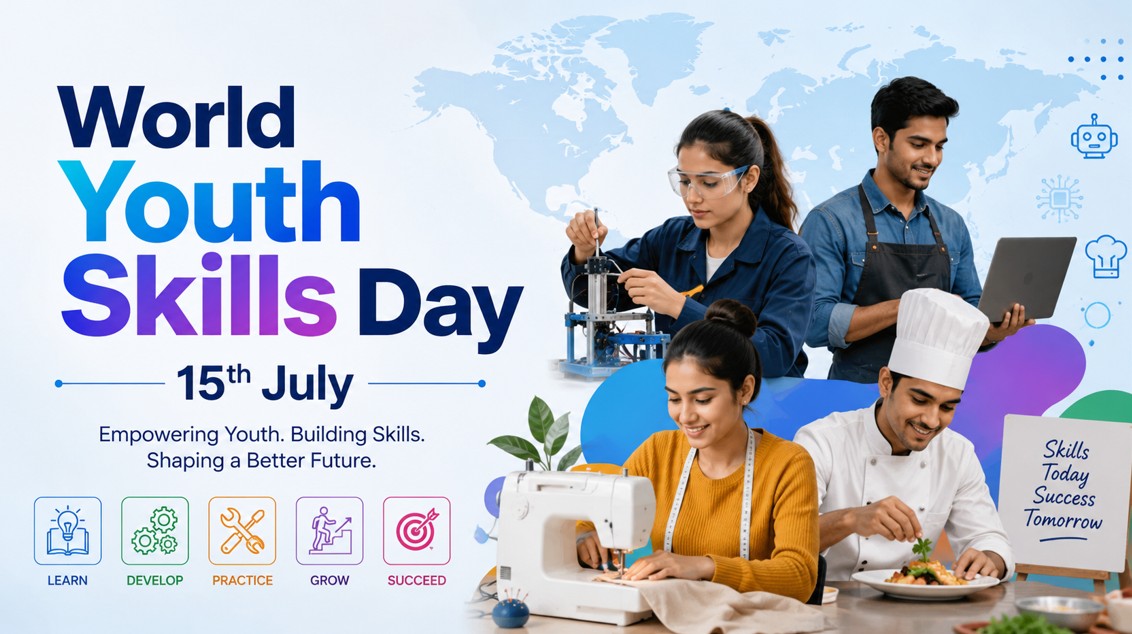
July 15, 2026 : Every year on 15 July, the world marks World Youth Skills Day, a United Nations observance dedicated to equipping young people with the skills they need for employment, entrepreneurship and a rapidly changing world.

While the day highlights technical, vocational and digital education, it also offers the Catholic Church an opportunity to reflect on a deeper question: What kind of people are we preparing young people to become?
For the Church, education has never been limited to preparing someone for a career. It has always been about forming the whole person—mind, heart and spirit—so that young people can contribute meaningfully to society while living lives rooted in faith, integrity and service.


The theme for World Youth Skills Day 2026, "Skills for a Shared Future," focuses on preparing young people for technological change, artificial intelligence and the transition to greener economies.
Around the world, governments, educational institutions and industries have organised programmes to promote vocational education, digital literacy and innovation. UNESCO-UNEVOC hosted an international webinar bringing together educators and policymakers, while in India, the Ministry of Skill Development and Entrepreneurship launched the IndiaSkills Competition 2026–27, encouraging young people to develop expertise across 63 skill categories.
These initiatives reflect the growing recognition that today's youth need more than academic qualifications. They require practical skills, adaptability and lifelong learning to succeed in an evolving employment landscape.
Long before modern discussions on employability and digital skills, the Catholic Church had already recognised the dignity of work and the importance of educating young people.
Across India and around the world, Catholic schools, colleges, technical institutes and vocational training centres have equipped generations of young people with practical skills while nurturing values such as honesty, compassion, discipline and responsibility.
Religious congregations, including the Salesians of Don Bosco, Jesuits and many women's congregations, have played a pioneering role in providing vocational education, especially for disadvantaged youth. Their institutions continue to offer training in trades, technology, healthcare, hospitality and entrepreneurship, helping thousands build secure and dignified livelihoods.
The Church believes that technical competence must be accompanied by moral responsibility. In an age shaped by artificial intelligence, automation and digital innovation, qualities such as integrity, compassion and respect for human dignity remain just as important as technological expertise.
This vision echoes Catholic Social Teaching, which emphasises that work is not merely a means of earning a living but a vocation through which individuals participate in God's creative work and contribute to the common good.
As unemployment and economic uncertainty continue to affect many young people, World Youth Skills Day serves as a reminder that investing in youth is an investment in society's future.
For the Catholic Church, supporting skill development goes beyond preparing individuals for the job market. It is about empowering young people to become ethical professionals,
compassionate leaders and responsible citizens who use their talents in the service of others.
By combining practical education with faith, values and a spirit of service, the Church continues to help young people discover that the greatest skill they can develop is not simply the ability to earn a living, but the ability to make a meaningful difference in the lives of others.
By Catholic Connect Reporter

© 2026 CATHOLIC CONNECT POWERED BY ATCONLINE LLP