- 30 September, 2026

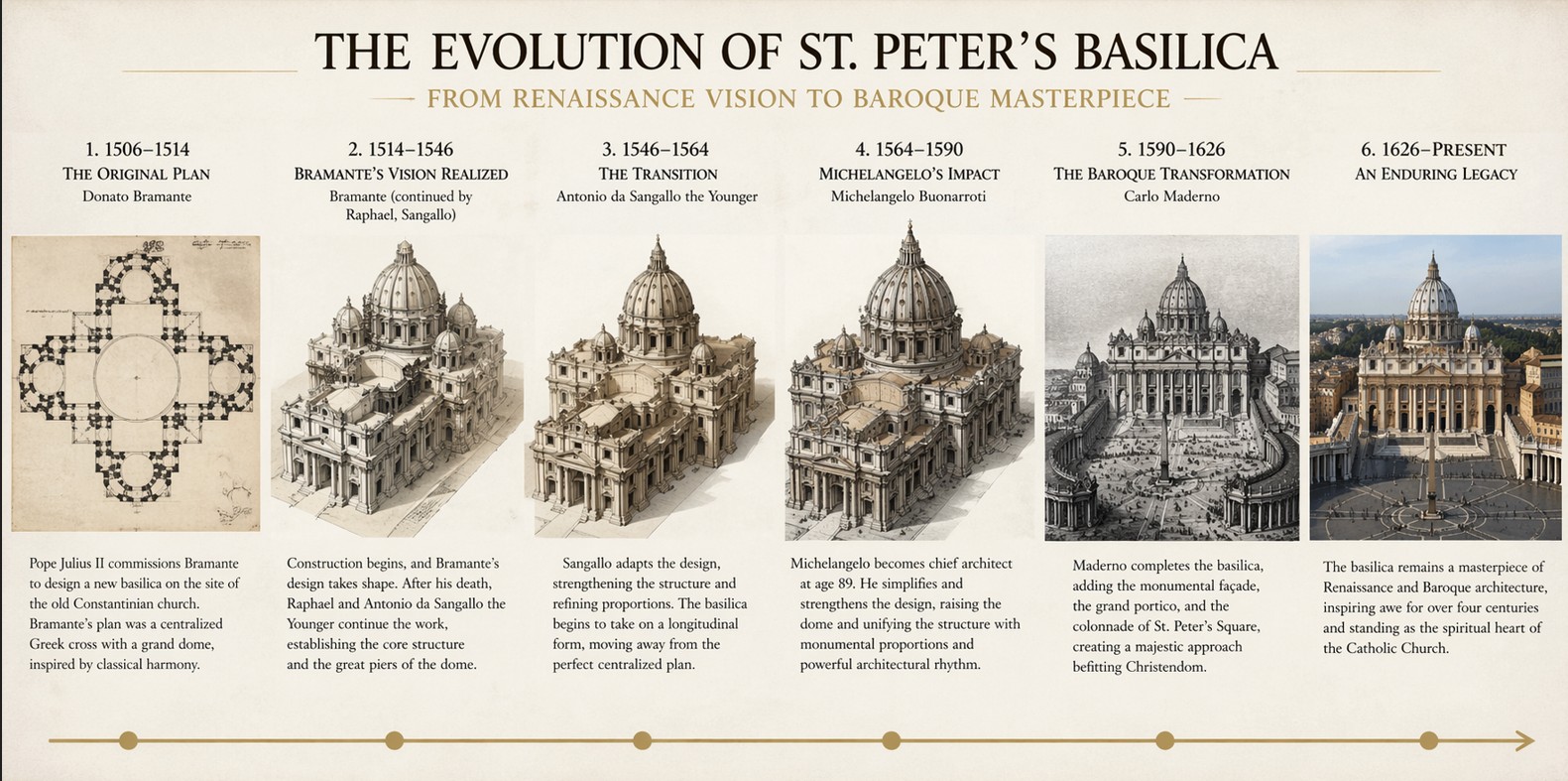
Vatican City, April 21, 2026: In a spirit of gratitude, wonder, and living faith, St. Peter’s Basilica marks the 400th anniversary of its consecration, a milestone that recalls centuries of devotion centered on the tomb of Saint Peter. Consecrated on November 18, 1626, by Pope Urban VIII, the basilica continues to stand as a powerful symbol of unity, pilgrimage, and the enduring presence of the Church in the world.


Long before its consecration in 1626, the site of St. Peter’s Basilica was already sacred. Following the martyrdom of St. Peter around 64 A.D. under Emperor Nero, early Christians began venerating his burial place on Vatican Hill. By the 4th century, Constantine the Great commissioned the first basilica over the apostle’s tomb.
This “Old St. Peter’s Basilica” stood for over 1,200 years, drawing pilgrims from across the known world. However, as centuries passed, the structure weakened and became insufficient for the growing number of faithful. In 1506, Pope Julius II laid the foundation stone for a new basilica, initiating one of the most ambitious architectural projects in history. Renowned artists and architects such as Michelangelo and Gian Lorenzo Bernini contributed to its design, blending art, theology, and grandeur.
Through The Centuries
From November 18, 1626, to November 18, 1726, the newly consecrated basilica entered its first century as a living center of Catholic worship. Although consecrated, much of its decoration—mosaics, sculptures, and artistic embellishments—continued to develop. Bernini’s iconic colonnade in St. Peter’s Square, completed decades later, embraced pilgrims in what has often been described as the “arms of the Church.” This period saw the basilica flourish as a focal point of liturgical life, papal ceremonies, and artistic achievement, reinforcing its identity as the “parish church of the whole world.”
Between November 18, 1726, and November 18, 1826, St. Peter’s Basilica stood as a beacon during times of both stability and upheaval in Europe. The basilica remained a constant spiritual anchor amid political changes, including the rise and fall of empires and the challenges faced by the Church. Pilgrimages continued steadily, and the basilica’s role as a center of global Catholic unity deepened. Despite external turbulence, the sacred space maintained its rhythm of prayer, liturgy, and devotion.
From November 18, 1826, to November 18, 1926, the basilica witnessed a rapidly changing world marked by industrialization, shifting political landscapes, and global conflicts. Yet, it continued to draw the faithful, symbolizing continuity amid change. The 19th and early 20th centuries also saw renewed attention to preservation and historical study, ensuring that the artistic and spiritual treasures of the basilica were safeguarded for future generations.
From November 18, 1926, to November 18, 2026, St. Peter’s Basilica has truly become a global spiritual home. With advancements in travel and communication, millions of pilgrims from every continent now visit annually. In recent decades, the basilica has embraced both tradition and innovation—enhancing liturgical celebrations while improving the visitor experience through guided tours, digital access, and pastoral initiatives. The Jubilee Year 2025 alone saw millions pass through its doors, reaffirming its role as a living center of faith.
Welcoming The Fifth Century
As it celebrates its 400th anniversary in 2026, the basilica continues to renew its mission. Special liturgical celebrations, cultural exhibitions, and initiatives aimed at deepening prayer and understanding are being highlighted. Efforts to manage the growing number of visitors while preserving the sacred atmosphere reflect a commitment to both heritage and hospitality.
Through every century, one reality has remained unchanged: the steady stream of pilgrims arriving at the tomb of St. Peter. From ancient martyrs to modern-day visitors, the basilica stands as a testimony to faith that transcends time. As it enters its fifth century since consecration, St. Peter’s Basilica continues to invite the world—not merely to admire its beauty, but to encounter the deeper call to truth, faith, and communion.
Courtesy Hannah Brockhaus (Vatican editor for EWTN News.)


© 2026 CATHOLIC CONNECT POWERED BY ATCONLINE LLP