- 06 October, 2026
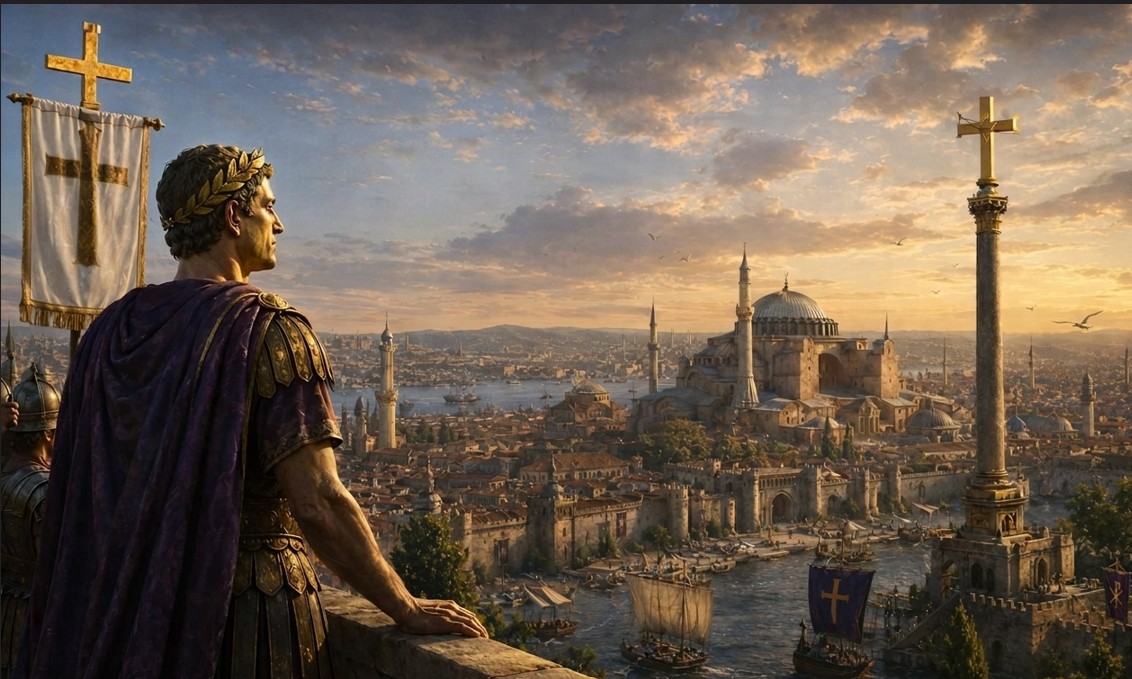
Emperor Constantine the Great officially dedicated a magnificent new capital city on the site of the ancient Greek settlement of Byzantium on May 11, 330 AD, . That moment, which took place 1,696 years ago, marked one of the most significant turning points in world history. The city Constantine called “New Rome” would later become famous as Constantinople — the City of Constantine — and would stand for more than a thousand years as the heart of the Christian Roman Empire.


Constantine had first ordered the construction of the city around 324 AD after recognizing the strategic importance of Byzantium. Located between Europe and Asia and controlling the vital trade routes between the Mediterranean and Black Seas, the city was perfectly positioned to become the center of imperial power. Over six years, workers transformed the ancient port into a grand imperial capital filled with palaces, forums, churches, and defensive walls.
What made Constantine’s new capital especially historic was its Christian identity. Constantine became the first Roman emperor to embrace Christianity openly, forever changing the direction of the Roman Empire. During the dedication ceremony on May 11, 330 AD, Constantine led a grand procession through the streets of the city and participated in a solemn Christian Mass at the Church of Saint Irene.
According to Orthodox Christian tradition, Constantine placed the city under the protection of the Most Holy Theotokos — the Virgin Mary. The dedication celebrations reportedly lasted for 40 days, symbolizing the birth of a Christian capital that would overshadow the old pagan traditions of ancient Byzantium.
Constantinople quickly became more than just a political center. It emerged as the spiritual and cultural heart of Eastern Christianity. Churches, monasteries, and religious schools flourished within its walls, making the city one of the most influential centers of faith in the world.
(CLICK HERE to follow Catholic Connect and to stay connected with the Church)
For over 1,100 years, Constantinople stood as one of the richest and most powerful cities on Earth. Protected by the legendary Theodosian Walls, the city survived countless invasions and sieges that destroyed many other great empires. Its location made it a thriving hub for trade, connecting Europe, Asia, and the Middle East.
One of Constantinople’s greatest treasures was the Hagia Sophia, later built by Emperor Justinian I in the 6th century. The massive cathedral became the greatest church in Christendom for nearly nine centuries and symbolized the glory of the Byzantine Empire.
The city also preserved ancient Greek literature, Roman law, and classical learning during periods when much of Europe faced instability. Historians often credit Constantinople with helping preserve knowledge that later fueled the Renaissance in Western Europe.
Despite its strength and prestige, Constantinople eventually faced its greatest challenge in 1453. On May 29 of that year, Ottoman Sultan Mehmed II captured the city after a brutal 53-day siege, bringing an end to the Byzantine Empire.
Following the conquest, the Hagia Sophia was converted into a mosque, and Constantinople became the capital of the Ottoman Empire. Centuries later, the city would officially become known as Istanbul in 1930.
Yet the legacy of Constantine’s vision never disappeared. The Orthodox Church still commemorates May 11 as the Feast of the Founding of Constantinople, honoring the day when a Roman emperor reshaped the destiny of both Christianity and the world.
By Catholic Connect Reporter
© 2026 CATHOLIC CONNECT POWERED BY ATCONLINE LLP