- 30 September, 2026

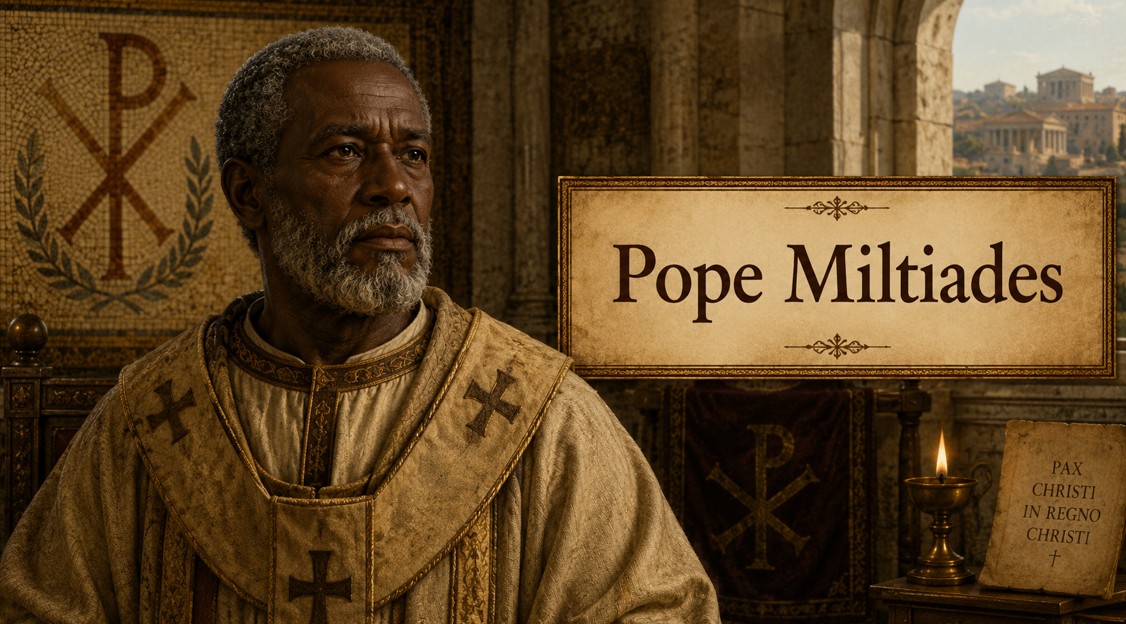
July 9, 2026: St. Miltiades, the thirty-second successor of Saint Peter, presided over one of the most transformative moments in Christian history. After nearly three centuries of intermittent persecution, his papacy witnessed the legal recognition of Christianity within the Roman Empire. The Edict of Milan, issued in 313 AD by Emperors Constantine and Licinius, changed the course of the Church forever. Miltiades became the pope who guided the Christian community from the shadows of persecution into a new era of freedom.


What would it have been like to witness Christianity move from being an outlawed religion to one protected by imperial law?
Pope Miltiades experienced this extraordinary turning point. During his brief pontificate, Christians who had worshipped in secret for generations were finally granted religious freedom. Churches confiscated during persecution were returned, public worship resumed, and the Church began a new chapter that would shape Christian history for centuries to come.
Little is known about his early life. Ancient sources indicate that he was of North African origin, making him one of the earliest African popes.
He likely grew up during the turbulent years of the late third century, witnessing both the growth of Christianity and the repeated attempts of Roman emperors to suppress it. These experiences prepared him to lead the Church through a remarkable period of change.
(CLICK HERE to follow Catholic Connect for regular News and Content)
He was elected Bishop of Rome in 311 AD following the death of Pope Eusebius.
The Church was still recovering from the Diocletian persecution, but political circumstances were changing rapidly. The rise of Constantine would soon alter the relationship between the Roman Empire and Christianity forever.
He led the Church during one of the most significant transitions in Christian history.
The Edict of Milan (313 AD) granted religious liberty throughout the empire and ordered the restoration of confiscated Christian property, marking a historic victory for the Church.
Although his pontificate lasted less than three years, he made enduring contributions:
His leadership ensured that the Church embraced its newfound freedom with wisdom and unity.
He's remembered for:
His spirituality reflected gratitude for God's providence after generations of suffering.
Despite the new freedom, he faced significant challenges.
The Donatist controversy questioned whether clergy who had compromised during persecution could validly administer the sacraments. Miltiades presided over a synod in Rome that rejected the Donatist position and affirmed the unity of the Church.
He also had to ensure that the Church adapted responsibly to its changing relationship with imperial authority.
Although no writings of his survive, his life proclaims an enduring message: Freedom is best used to strengthen faith, unity, and service to God.
He is honoured as a saint in the Catholic Church.
Unlike many of his predecessors, he died peacefully rather than as a martyr, symbolising the beginning of a new era for the Church.
Why does St. Miltiades matter today?
His legacy continues through the life of the Church today, carried forward by his successors.
To know more about the previous Popes, click here
By Catholic Connect Reporter
St. Miltiades, Pope Miltiades biography, Pope Melchiades, thirty-second pope Catholic Church, Edict of Milan, Constantine and Christianity, Donatist controversy, early Catholic popes, Catholic Church history, apostolic succession





© 2026 CATHOLIC CONNECT POWERED BY ATCONLINE LLP