- 30 September, 2026
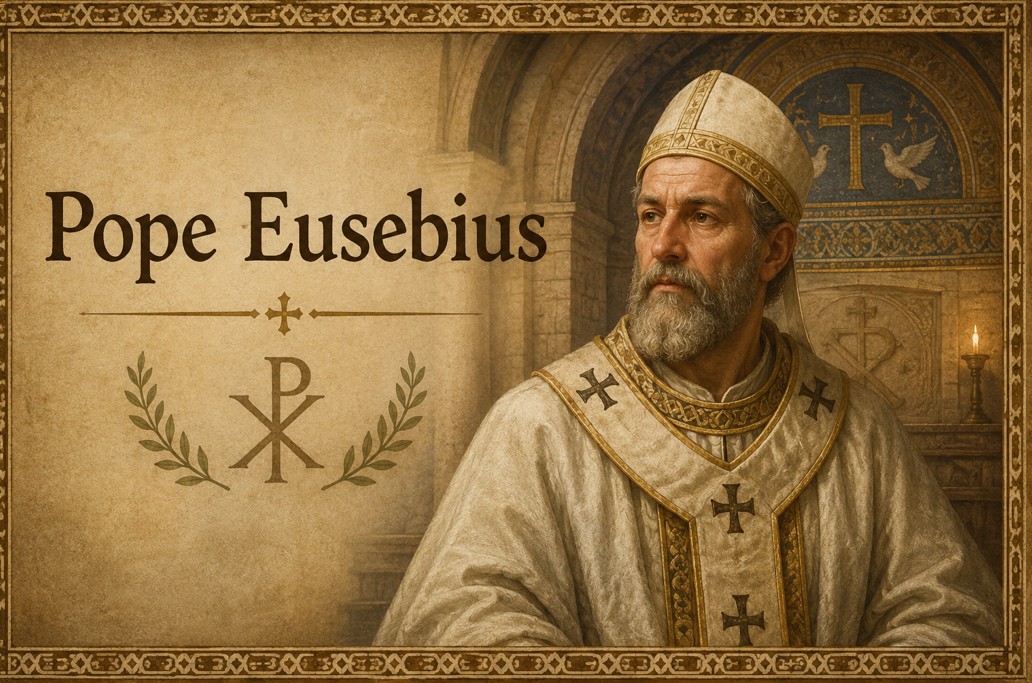
July 7, 2026: St. Eusebius, the thirty-first successor of Saint Peter, served as pope for only a few months around 309–310 AD. Despite his brief pontificate, he left a profound legacy by defending both the mercy and discipline of the Church during a period of deep internal division. Following the Great Persecution, Christians struggled with the question of how to treat those who had abandoned the faith under pressure. Eusebius' compassionate yet principled leadership demonstrated that forgiveness must always be accompanied by genuine repentance.


What should the Church do when those who once denied Christ sincerely seek to return?
This question shaped the brief but significant papacy of St. Eusebius. At a time when Christians were emerging from the horrors of Diocletian's persecution, the Church faced painful divisions over repentance, forgiveness, and reconciliation. Eusebius believed that God's mercy was available to every repentant sinner, but he also insisted that reconciliation required sincere conversion.
His courageous stand ultimately cost him his freedom.
Little is known about Eusebius' early life. Ancient sources suggest he was of Greek origin, although details of his family and upbringing have not survived.
He probably served the Roman Church during the years of persecution and witnessed first-hand the suffering endured by Christians. These experiences helped shape his balanced approach to justice and mercy.
(CLICK HERE to follow Catholic Connect for regular News and Content)
Eusebius was elected Bishop of Rome following the death of Pope Marcellus I.
The Church was slowly recovering from the Great Persecution, but serious disagreements remained over the treatment of the lapsi—those who had renounced Christianity to avoid persecution. While some argued they should never be readmitted, others wanted immediate restoration without any form of penance.
Eusebius rejected both extremes.
Eusebius led the Church during the reign of Emperor Maxentius.
Although persecution had largely subsided in Rome, tensions within the Church remained intense.
Though his pontificate was brief, Eusebius made several lasting contributions:
His approach helped shape the Church's enduring understanding of reconciliation.
Eusebius is remembered for:
His spirituality reflected Christ's example of combining mercy with truth.
The principal controversy of Eusebius' papacy centred on a Roman priest named Heraclius, who opposed the pope's discipline regarding the lapsi. Their disagreement led to unrest among Christians in Rome.
Concerned about public disorder, Emperor Maxentius exiled both Eusebius and Heraclius to Sicily.
Eusebius died in exile, remaining faithful to his pastoral responsibilities until the end.
Although none of his writings survive, his leadership conveys a timeless truth: God's mercy is freely offered, but true reconciliation begins with sincere repentance.
The Church venerates Eusebius as a saint.
He is honoured as a confessor of the faith whose steadfast leadership during exile strengthened the unity of the early Church.
Why does St. Eusebius matter today?
His legacy continues through the life of the Church today, carried forward by his successors.
To know more about the previous Popes, click here
By Catholic Connect Reporter
St. Eusebius Pope, Pope Eusebius biography, thirty-first pope Catholic Church, Pope Eusebius exile, Pope Eusebius and the lapsi, early Catholic popes, Catholic Church reconciliation, Church history, apostolic succession, St. Eusebius facts






© 2026 CATHOLIC CONNECT POWERED BY ATCONLINE LLP