- 09 October, 2026

Feb 12, 2026: An academic debate over the origins of the Shroud of Turin has intensified after specialists published a detailed rebuttal to a 2025 study claiming the cloth was created in the Middle Ages using a bas-relief — a type of shallow carved sculpture where figures slightly project from a flat surface.



The original study, published in 2025 by Brazilian researcher Cicero Moraes, argued that the image on the Shroud could have been produced by pressing linen against such a carved surface. Using digital 3D modeling, Moraes suggested that this method better explains the contours seen on the cloth than the imprint of a real human body, thereby supporting the theory that the Shroud is a medieval artistic creation.
However, in a recent response published in the same academic journal in February 2026, three Shroud scholars — Tristan Casabianca, Emanuela Marinelli, and Alessandro Piana — challenged the scientific and historical validity of Moraes’ conclusions. Their critique echoes earlier concerns raised by Church authorities in Turin and research groups dedicated to studying the relic.
Questions Raised About the Scientific Method
In their rebuttal, the scholars argue that Moraes’ digital reconstruction contains anatomical inaccuracies, including reversed right and left features and body proportions that do not correspond to widely accepted measurements derived from the Shroud. They also question his reliance on a 1931 photograph despite the availability of more recent, higher-resolution images.
The authors further point out that the simulation was conducted on cotton rather than linen, the actual material of the Shroud. They contend that such choices weaken the reliability of the study’s conclusions.
Key Characteristics Allegedly Overlooked
According to the rebuttal, the bas-relief theory does not adequately account for distinctive features of the Shroud. The image is known for its extreme superficiality, affecting only the outermost fibers of the linen. In addition, multiple scientific examinations have identified the presence of bloodstains, which researchers argue would be difficult to replicate through known medieval artistic techniques.
The critics maintain that Moraes’ model does not explain these physicochemical characteristics, raising doubts about whether the bas-relief hypothesis can sufficiently account for the cloth’s unique properties.
Historical Arguments Under Scrutiny
The rebuttal also challenges the historical framework presented in support of a medieval forgery. Moraes referred to several artistic works from the 11th to 14th centuries as possible inspiration for the Shroud’s creator. However, the responding scholars note that none of these artworks depict a naked Christ shown front and back in a post-crucifixion scene, as seen on the Shroud.
They argue that linking different historical periods and locations without direct evidence risks weakening established principles of art history.
Debate Remains Unresolved
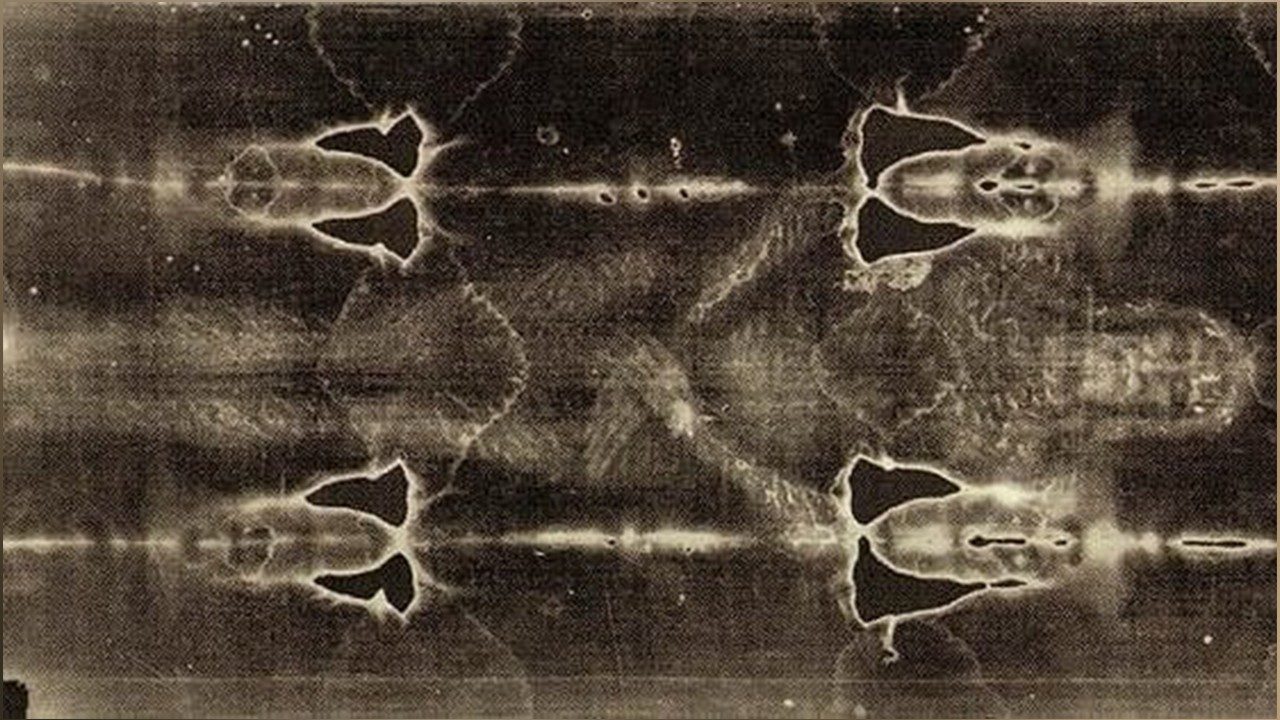
The Shroud has been the subject of controversy since it was first photographed in 1898 by Secondo Pia, whose negative image revealed striking details. Carbon dating conducted in 1988 suggested a medieval origin, dating the cloth between 1260 and 1390, though later analyses have questioned aspects of that testing.
In his published reply, Moraes maintained that his research focused strictly on evaluating how a body’s shape might deform when projected onto cloth. The publication of both the original study and the rebuttal in the same academic journal highlights that the debate over the Shroud’s origins remains open.
While the rebuttal does not claim to prove the Shroud’s authenticity, it argues that the bas-relief theory does not present enough scientific or historical evidence to convincingly support a medieval origin. More than a century after scientific investigation began, the Shroud of Turin continues to inspire both devotion and rigorous academic scrutiny.
Courtesy: Vatican News







© 2026 CATHOLIC CONNECT POWERED BY ATCONLINE LLP