- 05 July, 2026
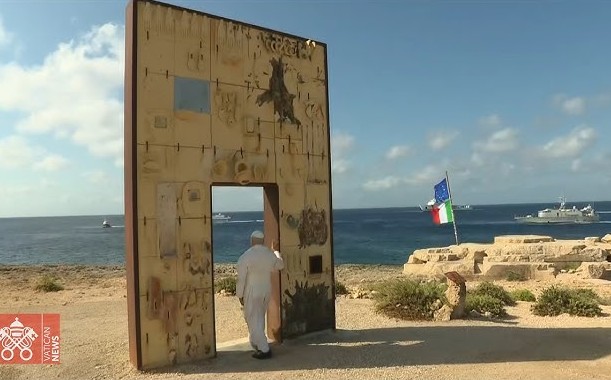
Lampedusa , July 5, 2026: Pope Leo XIV travelled to the Mediterranean island of Lampedusa on 4 July, making an emotional pilgrimage to one of Europe's most significant migration frontiers.


During his visit, he prayed at the Gateway to Europe monument, honoured migrants who lost their lives at sea, and thanked the island's residents for their extraordinary compassion towards those risking dangerous journeys across the Mediterranean.
The visit echoed Pope Francis historic 2013 trip to Lampedusa, reinforcing the Catholic Church's continued call for solidarity, human dignity and a more compassionate response to migration. Rather than focusing solely on political debate, Pope Leo urged Europeans to recognise migrants as fellow human beings deserving of protection, respect and hope.
One of the most poignant moments of the Pope's visit came at the Gateway to Europe monument (Porta d'Europa), which overlooks the Mediterranean Sea and stands as a powerful symbol of welcome for those arriving on Europe's southern shores.


Before arriving there, Pope Leo visited the island's cemetery, where he placed flowers on the graves of migrants, pausing in silent prayer, particularly at the graves of children who lost their lives attempting the crossing.
At the monument, he met a migrant family whose young son presented him with a football and a handwritten letter. The child explained that he had arrived alone in Lampedusa ten years earlier after losing his mother during his journey. He wrote that someone had once given him a paper football, bringing him comfort during his darkest moments. The Pope accepted the gift with visible emotion before spending time praying alone beside the sea.
Throughout the day, Pope Leo repeatedly praised Lampedusa's approximately 6,000 residents, describing their generosity as a "miracle of compassion."
Celebrating Mass at the island's Arena sports field, he thanked volunteers, Coast Guard personnel, healthcare workers, local authorities, religious communities and countless residents who have welcomed migrants arriving exhausted from perilous sea crossings.
The Pope also acknowledged the solidarity shown by migrants themselves.
"I greet the migrants who are here," he said, noting that many "have not only received solidarity but have often shown it on their journey, as the poor helping the poorest."
Reflecting on the Gospel parable of the Good Samaritan, Pope Leo described migrants who perish in the Mediterranean as "victims both of decisions that were made and of decisions that were not made."
He warned against indifference, fear, prejudice and criminal trafficking networks that exploit vulnerable people seeking safety. The Pope also criticised economic inequality and instability that force many families to leave their homelands.
Drawing a parallel with the Good Samaritan, he reminded Christians that true faith requires drawing close to those in need rather than "passing by" their suffering.
"The Gospel resounds where peoples meet," he said, adding that it falls silent whenever people isolate themselves from others.
From Lampedusa, situated closer to Tunisia than mainland Italy, Pope Leo addressed the wider European migration debate.
He acknowledged that migration presents significant challenges but insisted Europe possesses both the capacity and responsibility to respond with humanity. Rather than relying solely on emergency measures or stricter border controls, he called for comprehensive long-term policies that protect, receive, accompany and integrate migrants while supporting development in countries of origin so that fewer people are forced to leave home.
The Pope stressed that governments alone cannot shoulder this responsibility. Civil society, churches and local communities all have a role in building a more compassionate response.
He also warned that Lampedusa's growing tourism industry should never create an "invisible wall" separating holidaymakers from migrants arriving after traumatic journeys. Instead, he encouraged residents to help visitors understand the island's unique history of charity and hospitality.
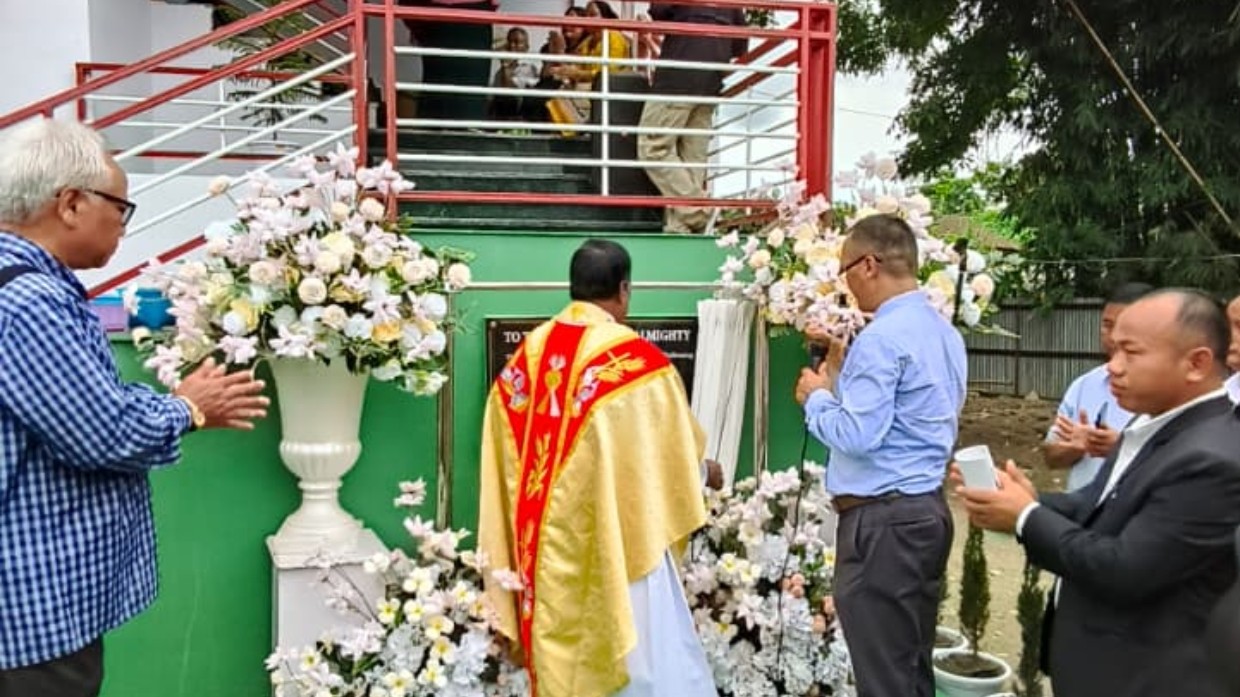
The visit carried strong symbolic significance as Pope Leo travelled in the same Fiat vehicle used by Pope Francis during his landmark visit in 2013. Before celebrating Mass, he also blessed a plaque dedicating Favaloro Pier—the main arrival point for migrant boats—to Pope Francis.
The visit comes as European governments continue debating stricter migration policies, including faster deportation procedures and offshore return centres. Against this backdrop, Pope Leo urged Christians to remain credible witnesses of peace, compassion and fraternity.
Concluding his homily, he entrusted migrants and the people of Lampedusa to the protection of Our Lady of Safe Harbour, reminding the faithful that every Christian community should become "a safe haven" for those in need.
His visit to Lampedusa, and particularly to the Gateway to Europe monument, served as a powerful reminder that behind every migration statistic is a human life deserving of dignity, hope and compassion.
Courtesy Vatican News
Picture Courtesy Vatican Media

© 2026 CATHOLIC CONNECT POWERED BY ATCONLINE LLP