- 29 January, 2026

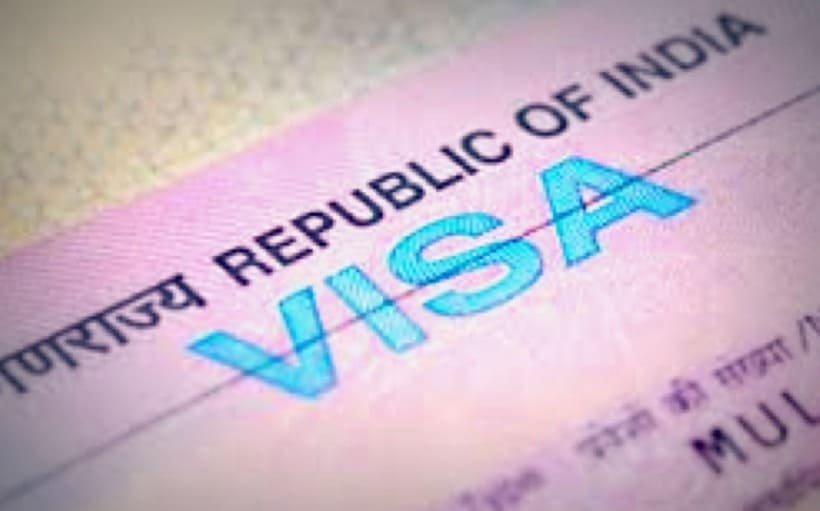
Dhaka, Jan 29, 2026: Since political unrest erupted in August 2024, stricter Indian visa regulations have sharply reduced cross-border travel, preventing thousands of Bangladeshi Catholics from accessing essential medical care.


“I wanted to go to India for treatment of my heart disease, but I did not get a medical visa,” said Mita Corraya, a Catholic from Dhaka. “My cousin recovered after receiving treatment at Christian Medical College Vellore. Sadly, I was not given a visa.”
Corraya told EWTN News that she is now receiving similar treatment in Dhaka at a much higher cost. “So far, my treatment has cost nearly 1 million taka [about $8,101]. If I had been able to go to India, it would have cost around 500,000 taka [about half],” she said.




For decades, India had been the most affordable and trusted destination for Bangladeshis seeking treatment abroad. Many Catholics depended on Indian hospitals — including several Christian-run institutions — for lifesaving care. However, political instability in Bangladesh during July–August 2024 and strained relations with New Delhi led to tightened visa rules, leaving Catholic patients and families facing medical and emotional hardship.
An estimated 3.6 million Bangladeshis previously traveled to India each year for tourism, healthcare, and business. Since Aug. 5, 2024, the number of Bangladeshi travelers — particularly medical patients — has fallen sharply due to stricter visa procedures.
Cancer patients among the worst affected
Cancer patients have been particularly affected by visa complications. Rina Gomes, a Catholic from Tejgaon parish in Dhaka, said she has been unable to return to India for follow-up care after breast cancer treatment.
“I went to India for treatment in May 2024,” Gomes said. “Now I cannot go back. The political relationship between India and Bangladesh has become worse, and ordinary people are suffering. This should be stopped.”
Bangladesh ranks 10th globally among countries whose citizens seek medical treatment abroad. Health sector data show that 51% of Bangladeshi patients travel to India, followed by Thailand and Singapore at 20% each. Smaller numbers go to the United Kingdom (3%), Japan and Malaysia (2%), and China and the United Arab Emirates (1%).
More than half of Bangladeshi patients traveling abroad do so mainly for diagnosis and medical checkups. Among those seeking treatment, heart disease, kidney ailments, cancer, and cataracts are the most common conditions.
‘People are suffering because of politics’
“Previously, many patients traveled to India on tourist visas and consulted doctors,” said Dr. Edward Pallab Rozario, a Catholic Bangladeshi family medicine specialist and certified diabetologist, as well as a children, skin, VD, sex, and burn physician. “Now they must apply for medical visas. About 80% receive approval, but 20% do not.”
Rozario said Indian hospitals remain popular due to affordability and patient-centered care. “Patients tell us Indian doctors spend time with them and listen carefully. The cost is also lower. That is why people still want to go, despite the difficulties.”
Visa restrictions have also strained family ties within Bangladesh’s small Catholic community, which has long-standing cross-border links with India.
A Telugu Catholic living in Dhaka, who requested anonymity, told EWTN News that several members of his family live in Andhra Pradesh. “One of my sisters married there, and two studied there. We used to visit once a year, but now we cannot get tourist visas.”
“My mother has become ill because she has not seen her daughters for more than a year,” he said.
He also described the case of a Christian student who failed to obtain a visa extension in India and attempted to cross the border irregularly. The student was arrested and jailed by Indian authorities. “Community leaders are working for his release,” he said. He appealed for better relations between the two countries, saying, “People are suffering because of politics. This should not happen.”
Trade tensions deepen impact
The diplomatic strain has extended into trade, further affecting livelihoods in Bangladesh.
Following political changes on Aug. 5, 2024, India imposed trade restrictions, including canceling transshipment facilities on April 8 that allowed Bangladesh to export goods via Indian airports. India later introduced phased restrictions on Bangladeshi exports through land ports, affecting garments, processed food, jute products, cotton-yarn waste, plastic goods, and wooden furniture.
Bangladesh responded by halting yarn imports from India through land ports on April 15.
‘Economics should not be mixed with politics’
Economists warn that prolonged restrictions could weaken Bangladesh’s export capacity.
Khandaker Golam Moazzem, research director at the Center for Policy Dialogue, told EWTN News that Bangladesh has limited export markets, making India strategically important.
“Even after Bangladesh restricted yarn imports, imports from India increased,” he said. “But after India imposed restrictions, Bangladeshi exports declined. Economics should not always be mixed with political issues.”
Kamruzzaman Kamal, director of marketing at PRAN-RFL Group, said rising logistics costs have reduced profitability. “There are additional costs at land ports, and many products are no longer viable,” he told EWTN News. “We want initiatives to strengthen bilateral relations and reopen land ports.” For Bangladesh’s Catholic minority, the crisis remains deeply personal.
“We do not want conflict,” Corraya said quietly. “We only want treatment, dignity, and the chance to live.”
Courtesy: Catholic News Agency
© 2026 CATHOLIC CONNECT POWERED BY ATCONLINE LLP