- 22 October, 2026

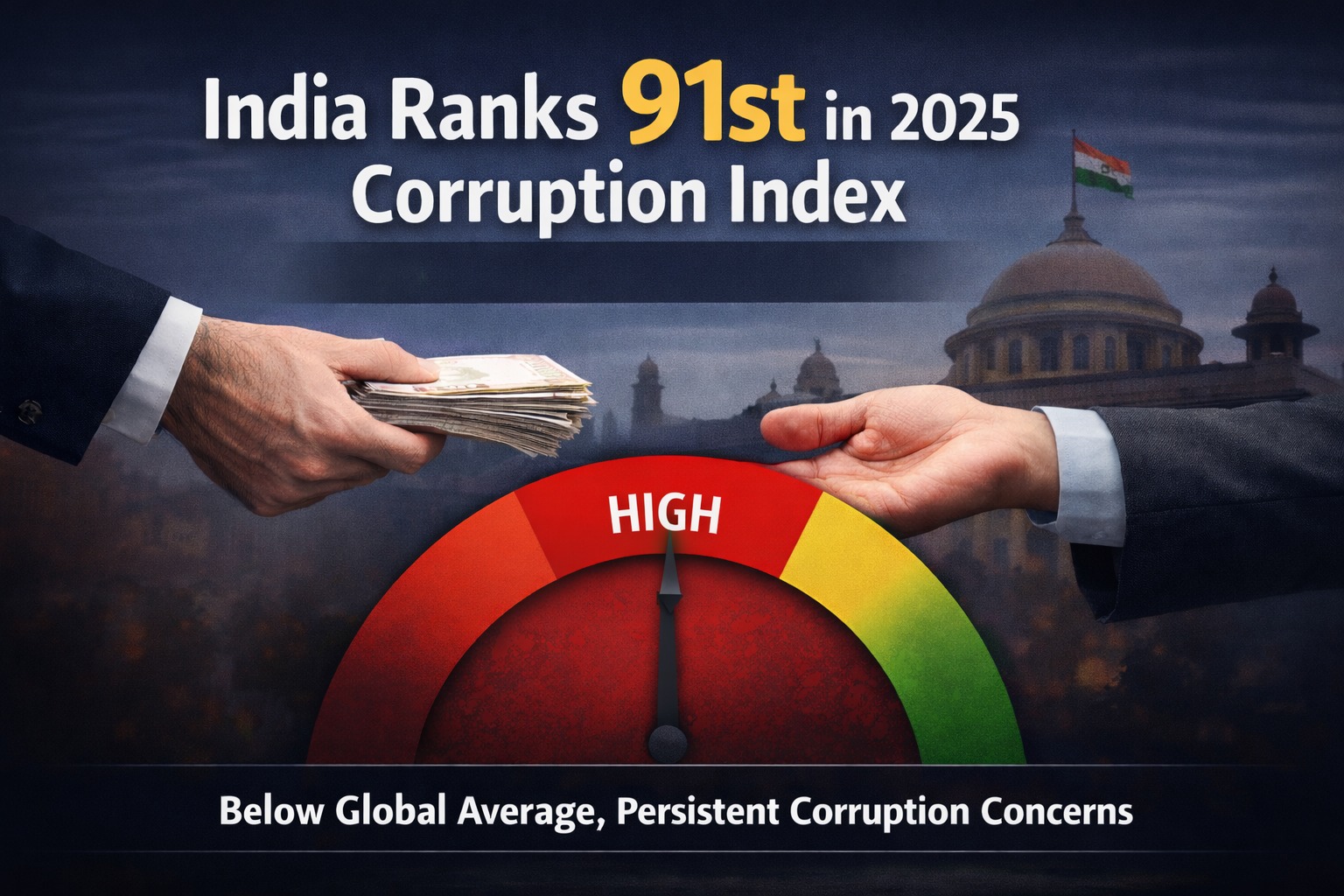
Feb 11, 2026: Perceptions of public sector integrity remain under scrutiny as India placed 91st among 182 countries and territories in the 2025 Corruption Perceptions Index, securing a score of 39, according to the latest report released by Transparency International on Tuesday. The ranking positions the country below the global average and underscores persistent concerns about corruption, despite incremental improvements in recent years.



The Corruption Perceptions Index evaluates perceived levels of public sector corruption based on assessments by experts and business leaders. Scores range from zero, representing very high perceived corruption, to 100, indicating a clean public sector. With a score of 39, India continues to be viewed as facing corruption as an entrenched structural problem rather than an isolated occurrence, affecting governance, accountability, and transparency across institutions.
In comparison with previous years, India’s ranking has shifted only marginally, highlighting the slow pace of change in perceptions. Although reforms, digital initiatives, and enforcement measures may have helped avoid further decline, they have yet to produce a marked improvement in how corruption is perceived. The modest change in score underscores the difficulty of addressing deeply rooted concerns such as bureaucratic opacity, political interference, weak oversight systems, and inconsistent enforcement of laws.
The 2025 index presents a sobering global outlook. Many nations have either stagnated or experienced setbacks, with Transparency International cautioning that corruption continues to obstruct economic growth, erode social trust, and undermine democratic accountability. Across the Asia-Pacific region, results have varied, with some countries recording improvements while others continue to grapple with governance shortcomings and public dissatisfaction.
For India, the CPI ranking has both economic and political ramifications. Perceptions of corruption shape investor confidence, influence evaluations of regulatory risk, and affect the overall ease of doing business. A score below the global average can impact foreign investment decisions and shape how international institutions and markets assess the country’s governance framework.
At home, the ranking feeds into ongoing discussions about the strength of anti-corruption systems. While legal frameworks and institutions are in place, critics contend that enforcement remains uneven and at times subject to political influence. Matters such as transparency in public procurement, safeguards for whistleblowers, and the autonomy of oversight bodies remain central to debates on governance reform.
Ultimately, India’s placement at 91st underscores that symbolic advances or isolated policy efforts are insufficient to significantly alter perceptions. Continued institutional reform, more robust accountability mechanisms, and enhanced transparency in public decision-making will be essential if the country is to achieve stronger progress in future editions of the index.
Courtesy: Indian Express





© 2026 CATHOLIC CONNECT POWERED BY ATCONLINE LLP