- 19 April, 2026

Odisha, April 18, 2026: The recent denial of burial rights to two Christian tribal families in Odisha’s Nabarangpur district has once again brought attention to the growing vulnerability of minority Christian communities in the region. These incidents, occurring in villages under the BJP-ruled state government, reflect a disturbing pattern of religious coercion, social ostracism, and alleged administrative indifference.

On April 13, the family of senior citizen Raimati Gond in Dumurimunda village was plunged into distress not only by her death after a prolonged illness, but by the community’s refusal to allow her burial in the village cemetery. Gond’s family, members of the Gond tribal community who had embraced Christianity years ago, say they were told they would be denied burial rights unless they abandoned Christianity and reconverted to Hinduism.
For three agonizing days, Raimati Gond’s body remained unburied as the family negotiated with local Hindu leaders and repeatedly appealed to the police and district administration. Eventually, the burial was permitted—but only on the family’s private land. According to the family, local authorities sided with the groups opposing the burial, compounding their trauma.


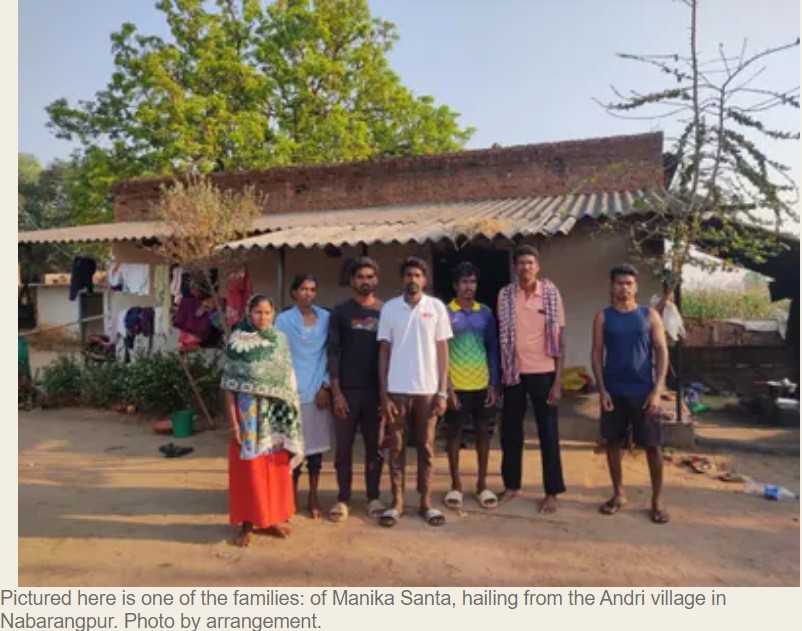
Shockingly, on the same day, a similar ordeal unfolded in Andri village, just 40 kilometers away. When 56-year-old Manika Santa died after years of dialysis treatment, her family too was prevented from performing her burial rites. Her son, Jagli Santa, recounted that villagers made it clear the burial could proceed only if the family “returned” to Hinduism.
Jagli explained that his family, part of the Kondha Adivasi community, had lived peacefully alongside Hindu families for decades. “We coexisted peacefully and even participated in each other’s celebrations,” he said. But according to him, tensions began escalating over the past year, with Christian families increasingly facing hostility and pressure.
The district administration has downplayed the incidents. Nabarangpur Additional District Magistrate Tapan Kumar Khuntia stated that “the issue has been resolved with the active intervention of the local and district administration,” but declined to explain why the families were forced to wait nearly three days before burying their dead. Instead, according to the Christian families, “resolution” meant that they were compelled to sign an agreement to keep their village church closed.
This alleged forced closure of Christian places of worship is not an isolated case. In January, a church in Kopena village in the same district was shut down following pressure from Hindu groups. Since then, local Christians have reportedly been forced to pray in their homes. When a young boy from the same village died, his family also had to bury him on their own land after being denied access to the village burial ground.
A report by Catholic Connect highlighted similar developments in Odisha, where Christian families have alleged threats, church closures, and denial of burial rights amid communal tensions. According to the report, villagers were pressured to abandon their Christian faith, while local authorities allegedly failed to protect their constitutional right to religious freedom. These repeated incidents suggest a broader pattern of marginalisation and intimidation against vulnerable tribal Christian communities.
The tribal populations in these villages—primarily Gonds and Kondhas—traditionally practiced indigenous faiths centered on nature and ancestral worship. Both Hinduism and Christianity were later influences in the region. However, local Christian leaders say right-wing groups are now weaponizing religion to divide tribal communities and push “ghar wapsi” (religious reconversion) campaigns.
Pastor Gourab Kauri, secretary of the Christian Minority Council in Nabarangpur district, says such incidents are increasing at an alarming rate. “The saddest part is that those opposing us also belong to the same Adivasi community,” he noted. According to local observers, the rise in communal tension coincides with growing political influence of right-wing organizations in the district.
Tukuna Khura, a local journalist tracking these developments, says “things dramatically changed after the BJP came to power.” Christian leaders have accused local political actors of emboldening extremist elements by failing to intervene decisively. They argue that without political protection, such blatant denial of burial rights and forced church closures could not happen.
These incidents in Nabarangpur are not merely isolated village disputes—they are emblematic of a larger crisis where religious minorities, especially in tribal regions, are increasingly facing discrimination in basic matters of worship, dignity, and even death. Denying burial rights strikes at the very core of human dignity and religious freedom, rights guaranteed under the Constitution of India.
Unless state authorities take firm and impartial action, the fear among these Christian families will continue to deepen. For communities already living on the margins, the denial of a dignified burial is not just an act of exclusion—it is a chilling message that their faith and identity are unwelcome.
Courtesy Sukanya Shantha (The Wire)
Picture Courtesy The Wire
© 2026 CATHOLIC CONNECT POWERED BY ATCONLINE LLP