- 18 April, 2026
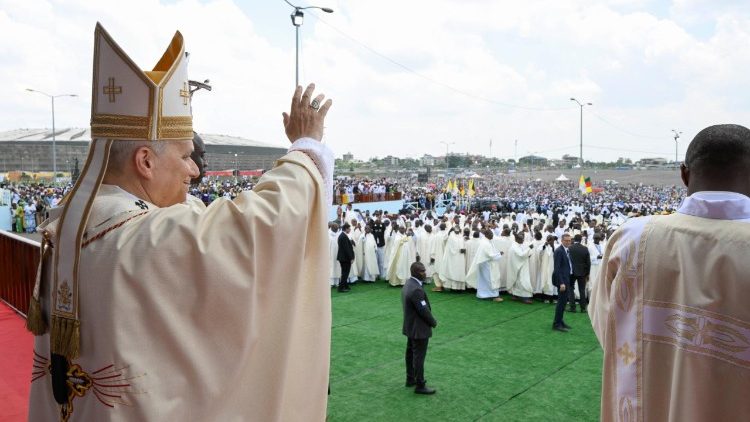
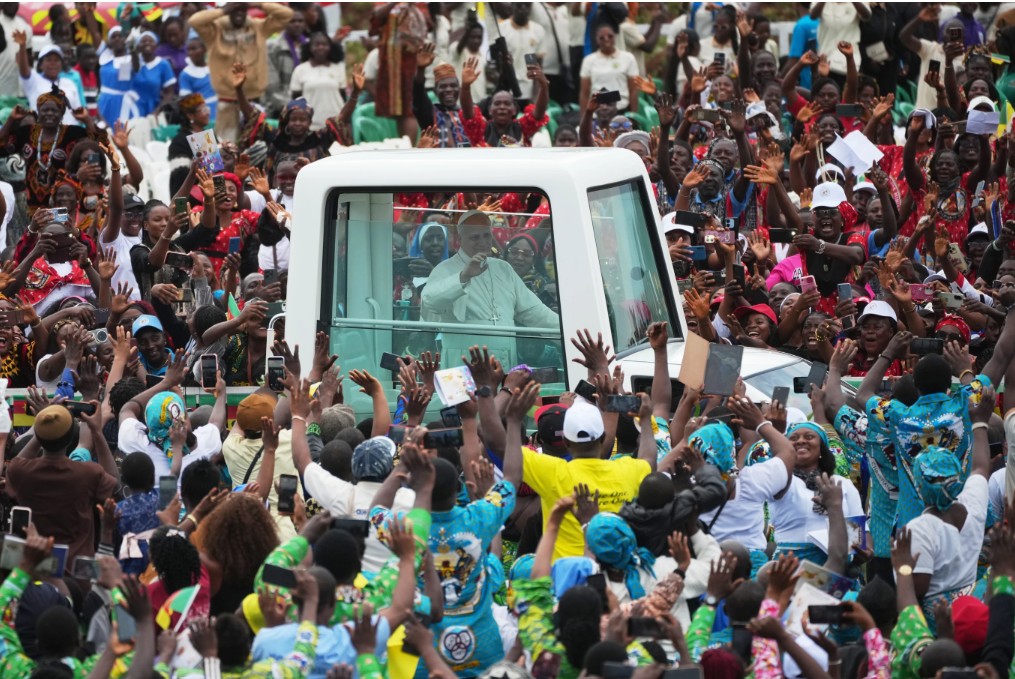
Africa, April 18, 2026: On the fifth day of his Apostolic Journey in Africa, Pope Leo celebrated Mass for 120,000 people in Douala and urged university students in Yaoundé to cultivate “holy restlessness”.

On Friday, a day after denouncing corruption and appealing for peace in the north-western city of Bamenda, Pope Leo turned his attention to another urgent challenge facing Cameroon: hunger.
In his homily during Mass in Douala, the nation’s economic centre, the Pope said that Jesus invites us to “look at all these hungry people, weighed down by fatigue”, and poses a question to each of us: “What will you do?”.


‘There is bread for everyone’
Nearly 40 percent of Cameroon’s population lives below the poverty line, and the Red Cross reported in February that 3.3 million people were experiencing hunger.
Reflecting on the day’s Gospel reading about the feeding of the five thousand, the Pope noted that Jesus, confronted with the hunger of the crowd, asked His disciples how they would respond—posing the same question “to each one of us” today. He underlined that the crowd was ultimately fed through an act of sharing, pointing to the truth that “there is bread for everyone if it is given to everyone.”
Addressing the approximately 120,000 faithful present, the Pope said that no one will go hungry if food “is taken, not with a hand that snatches away, but with a hand that gives.”
‘Holy restlessness’
Following the Mass, the Pope made a private visit to a Catholic hospital before returning to Yaoundé, the capital, to visit the Catholic University of Central Africa.
There, he offered a detailed reflection on the purpose of higher education, noting that in an age marked by growing “individualism, superficiality and hypocrisy”, universities remain a privileged space for “friendship, cooperation … interiority and reflection”.
He emphasised that part of the university’s mission is “to form consciences that are free” and to foster what he described as “a holy restlessness”. He also revisited the theme of artificial intelligence, which he has frequently addressed in his speeches.
The Pope observed that this technology “increasingly shapes and permeates our mentality”, and said this shift makes the study of the humanities even more vital, as it enables individuals to understand “the logic behind the economics, embedded biases and forms of power” influencing the AI era.
Meeting with religious superiors
After returning to the Apostolic Nunciature, where he is residing, Pope Leo met with nine religious men and women representing more than 250 religious institutes and congregations working in Cameroon.
According to a statement from the Holy See Press Office, the superiors shared insights into their charitable work, particularly their service to young people, displaced communities, and victims of violence and human trafficking.
In response, the Pope told them that consecrated life requires “radical courage” to confront the world’s “most complex problems” and to reach out to “those most in need of hope, of the love of God.”
Courtesy: Vatican News
© 2026 CATHOLIC CONNECT POWERED BY ATCONLINE LLP