- 30 September, 2026

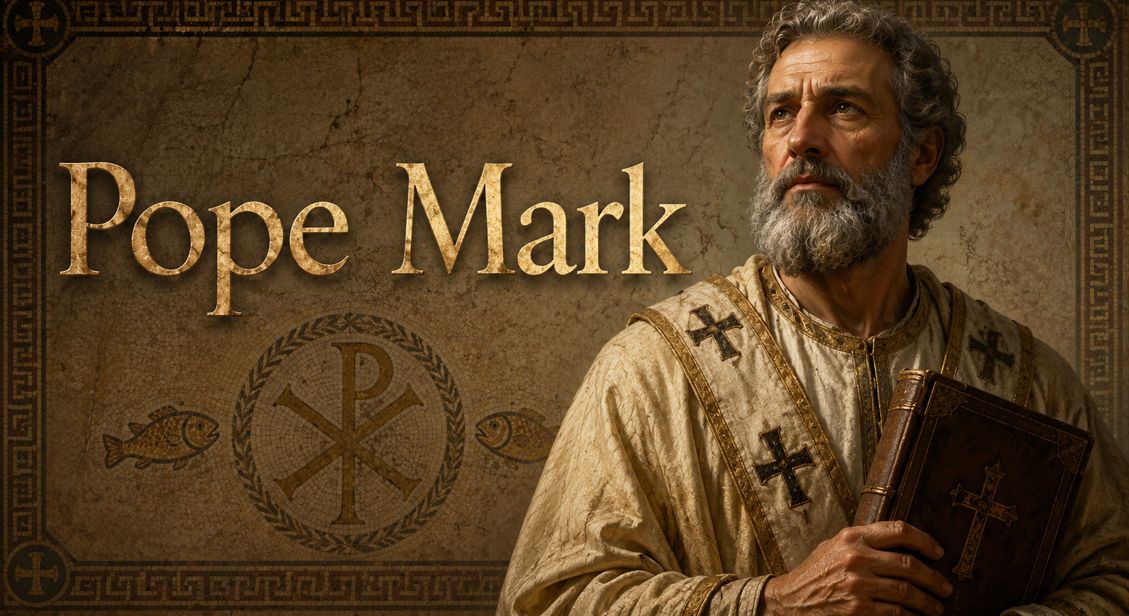
July 20, 2026: St. Mark, the thirty-fourth successor of Saint Peter, occupied the Chair of Peter for only a few months in 336 AD. Although his pontificate was brief, it came at a decisive moment in the history of Christianity. The Church had emerged from centuries of persecution and was beginning to establish itself publicly across the Roman Empire. Pope Mark used his short time as Bishop of Rome to strengthen the Church's organisation and lay foundations that would benefit future generations.


Though overshadowed by the longer reign of his predecessor, St. Sylvester I, Pope Mark's contribution reminds us that faithful leadership is measured not by its length but by its impact.
Can a pope who served for less than a year leave a lasting legacy?
The life of St. Mark answers that question with a resounding yes. Although his papacy lasted only about nine months, he strengthened the administration of the Church and contributed to its growing public presence during one of Christianity's most peaceful and promising periods.
His pontificate demonstrates that even brief leadership can shape the future when guided by wisdom, faith and dedication.
Very little is known about Mark's early life. Ancient records indicate that he was born in Rome and belonged to the Christian community that had witnessed the remarkable transformation brought about by Emperor Constantine's recognition of Christianity.
(CLICK HERE to follow Catholic Connect for regular News and Content)
Growing up during this period of transition, Mark experienced the Church's journey from persecution to public acceptance, preparing him for leadership in a rapidly changing world.
Following the death of Pope Sylvester I, he was elected Bishop of Rome in January 336 AD.
His election came at a time when the Church enjoyed unprecedented freedom. The immediate challenge was no longer survival but organisation, pastoral care and strengthening the unity of Christians throughout the empire.
Although his reign was short, Mark continued the steady work of consolidating the Church's structures established during the Constantinian era.
Pope Mark served during the reign of Emperor Constantine the Great, whose support had transformed Christianity's position within the Roman Empire.
Although persecution had ended, theological debates—particularly surrounding Arianism—continued to challenge the unity of the Church.
Despite his brief pontificate, Pope Mark is credited with several important contributions.
Although few documents survive from his pontificate, these contributions helped strengthen the Church during a crucial period of growth.
St. Mark is remembered for:
His spirituality reflected a pastor committed to building the Church through faithful service rather than personal acclaim.
Mark's pontificate was comparatively peaceful, yet important challenges remained.
The Church continued addressing divisions caused by the Arian controversy, which questioned Christ's full divinity despite the decisions of the Council of Nicaea. Ensuring unity among bishops and maintaining doctrinal clarity required careful pastoral leadership.
His brief reign also limited the opportunities for introducing broader reforms, making continuity with his predecessor's work especially important.
Although none of Pope Mark's writings have survived, his life offers an enduring lesson: The strength of the Church is built through faithful service, even when that service lasts only a short time.
The Catholic Church honours Pope Mark as a saint.
He is remembered as a faithful shepherd who helped consolidate the Church during its first generation of religious freedom.
Why does St. Mark matter today?
His legacy continues through the life of the Church today, carried forward by his successors.
To know more about the previous Popes, click here
By Catholic Connect Reporter
St. Mark Pope, Pope Mark biography, Pope Mark 336 AD, thirty-fourth pope of the Catholic Church, early Catholic popes, Pope Mark facts, Pope Mark history, Catholic Church history, apostolic succession, St. Mark feast day, Liber Pontificalis, Constantine and the early Church





© 2026 CATHOLIC CONNECT POWERED BY ATCONLINE LLP