- 25 October, 2026

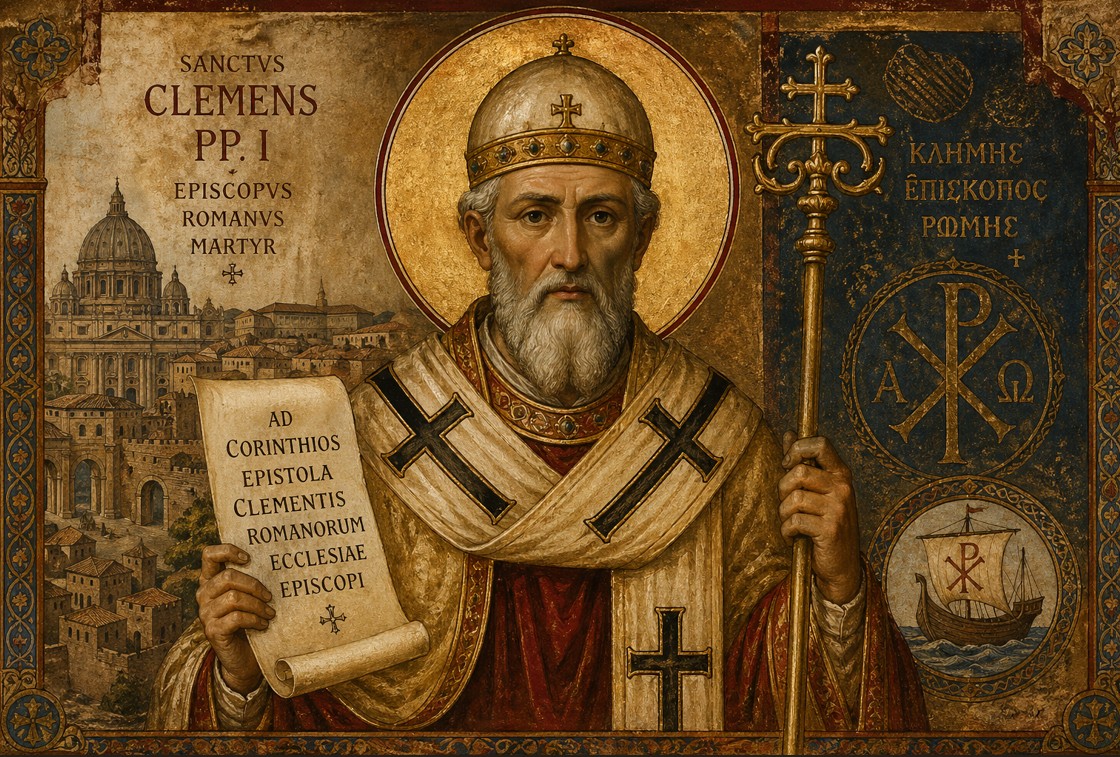
Pope Clement I, also known as Clement of Rome, succeeded Pope Anacletus and is remembered as one of the earliest Apostolic Fathers who helped preserve unity and authority in the growing Church.


This section provides a clear factual snapshot, helping readers immediately situate Clement in history.
As the fourth successor of Saint Peter, Clement I stands out as one of the first Church leaders to leave behind written testimony. His leadership helped strengthen unity and authority in a Church still defining its identity.
Details about Clement’s early life are limited. Tradition suggests he was a Roman Christian, possibly of Jewish or noble background. Some early writers even associate him with the companions of the apostles, indicating that he may have been directly formed by their teaching.
Following the papacy of Anacletus, Clement was chosen as Bishop of Rome. His leadership reflects the continued development of apostolic succession, ensuring that the authority entrusted to Peter remained alive in the Church.
Clement led the Church during the late first century under the Roman Empire.
Although large-scale persecution like that under Emperor Nero had lessened, tensions remained. The Church was now facing not only external threats but also internal disagreements.
Clement’s contributions are especially significant because they are historically documented:
These contributions mattered because they helped establish order and authority, preventing fragmentation in the early Church.
Clement is remembered for:
His spirituality centered on harmony, humility, and obedience—qualities essential for a growing and diverse Church.
Clement faced both internal and external challenges:
His response to conflict—through dialogue and teaching—set an important precedent for Church leadership.
From his letter to the Corinthians, Clement writes: “Let us cleave to those to whom grace has been given by God.”
This teaching reflects his call for unity, humility, and respect for rightful authority.
Tradition holds that Clement was exiled and later martyred, possibly by being thrown into the sea.
He is honored as one of the Apostolic Fathers, bridging the time between the apostles and later Church leaders.
St. Clement I represents:
His writings continue to influence Church understanding of leadership and community life.
Why does St. Clement I matter today?
His legacy continues in the Church’s emphasis on unity and apostolic tradition, carried forward by leaders such as Pope Francis.
To know more about the previous Popes, click here
By Catholic Connect Reporter


© 2026 CATHOLIC CONNECT POWERED BY ATCONLINE LLP