- 15 June, 2026

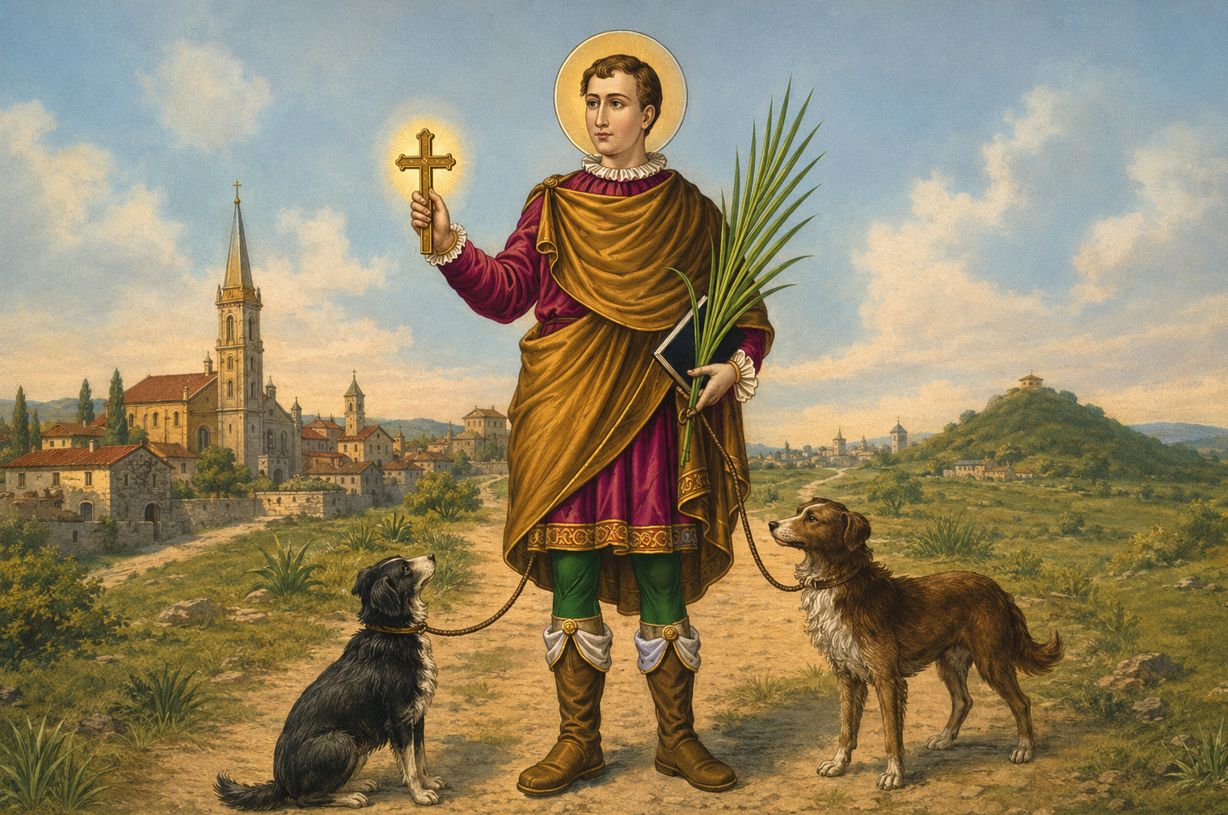
Sicily, June 15, 2026: Why is Saint Vitus remembered as one of the most beloved young martyrs of the early Church? Discover the extraordinary story of the child saint whose faith survived persecution, torture, and death under the Roman Empire—and whose devotion spread from ancient Sicily across Europe, giving his name to churches, traditions, and even the famous “Dance of Saint Vitus.”


Feast Day: 15th June
Born: Approximately 290 AD, Sicily, Roman Empire
Died: Approximately 303 AD, Lucania, Italy
Patron of: Dancers, actors, comedians, epileptics, young people, dogs, and those suffering from nervous disorders


Known For: Courageous Christian faith, martyrdom during the persecution of Emperor Diocletian, and miraculous intercession
Title: Child Martyr of the Early Church
Few saints from the early centuries of Christianity have captured the imagination of believers like Saint Vitus. Though he lived as a young boy during one of the most dangerous periods for Christians, his courage and unwavering trust in Christ made him one of the most honoured martyrs in Church history.
At a time when the Roman Empire demanded worship of pagan gods and loyalty to the emperor above all else, Saint Vitus chose to remain faithful to Jesus Christ. His story became a powerful reminder that faith does not depend on age, wealth, or social status.
For centuries, Christians across Europe have honoured Saint Vitus as an example of purity, bravery, and complete dedication to God. His name is remembered in great cathedrals, monasteries, towns, and traditions throughout the world.
(CLICK HERE to follow Catholic Connect for regular Catholic News & Content)
Saint Vitus was born around the end of the third century in Sicily, during the era when Christianity was still facing severe persecution in the Roman Empire.
According to ancient Christian tradition, Vitus was the son of a wealthy pagan named Hylas. Despite being raised in a non-Christian household, Vitus encountered the teachings of Christianity and embraced the faith at a young age.
His devotion to Christ was encouraged by his Christian nurse, Crescentia, and her husband Modestus, who helped guide him spiritually.
Even as a child, Vitus showed remarkable faith and refused to abandon his belief in Jesus, despite pressure from his family and authorities.
Christian tradition remembers Saint Vitus as a child blessed with extraordinary spiritual gifts.
Stories about his early life describe him as a young believer who prayed for the sick and performed miracles through God's power. His reputation for holiness spread, attracting people who were amazed by his faith and compassion.
However, his growing influence also brought danger. During the persecution of Christians under the Roman Emperor Diocletian, openly following Christ could lead to imprisonment or death.
Vitus remained fearless, choosing faithfulness to God over personal safety.
The persecution under Emperor Diocletian was among the most intense attacks against Christianity in the Roman Empire.
According to tradition, Vitus was brought before authorities and ordered to renounce Christianity. Because of his young age, some attempted to persuade him through promises and rewards.
But Vitus refused to deny Christ.
His courage amazed those around him. He demonstrated that true strength comes not from physical power but from spiritual conviction.
His refusal to worship pagan gods resulted in severe punishment.
Ancient accounts describe Saint Vitus, along with Crescentia and Modestus, suffering persecution because of their Christian faith.
They were subjected to torture but remained steadfast in their belief. Tradition holds that God protected them through miraculous signs before they finally gave their lives as martyrs.
Their deaths became a testimony to the early Christian community that faith in Christ was worth every sacrifice.
The memory of Saint Vitus spread rapidly, and believers began honouring him as a powerful intercessor.
After his martyrdom, devotion to Saint Vitus grew throughout Europe.
Many Christians prayed for his intercession, especially those suffering from illnesses affecting movement and the nervous system. His name became connected with healing traditions and protection from sudden illnesses.
One of the most famous expressions connected to him is the “Dance of Saint Vitus,” a historical name given to certain involuntary movements and dancing disorders in medieval Europe. People often sought the saint's help during outbreaks of such conditions.
Although the medical understanding of these illnesses has changed over time, the devotion reflected the deep trust Christians placed in Saint Vitus as a compassionate heavenly protector.
The relics of Saint Vitus became highly honoured, and devotion to him spread far beyond Sicily.
His remains were eventually associated with important Christian centres, including regions of Italy, Germany, and Central Europe.
One of the most famous churches dedicated to him is St. Vitus Cathedral, one of the greatest Gothic cathedrals in Europe.
The cathedral became a symbol of Christian faith and a major place of pilgrimage, preserving the memory of Saint Vitus for generations.
Saint Vitus holds a special place among the saints because he represents the strength of youthful faith.
He is invoked by people facing physical suffering, especially those affected by neurological conditions. He is also honoured by dancers, performers, and young people who look to him as an example of courage and dedication.
His life teaches that holiness is not limited by age. Even a child can become a witness of extraordinary faith.
The life of Saint Vitus offers powerful lessons for believers today.
His example teaches that:
Saint Vitus reminds Christians that the strength of faith is not measured by earthly power but by love, courage, and commitment to God.
In a world where many people struggle to remain faithful amid pressure and uncertainty, Saint Vitus continues to inspire believers with his example of fearless devotion.
He was not a king, soldier, or scholar. He was a young Christian who simply refused to abandon Christ.
From the ancient streets of Sicily to the magnificent churches of Europe, the story of Saint Vitus continues to proclaim a timeless message: faith can overcome fear, and courage rooted in God can transform history.
His witness remains a reminder that even the smallest voice, when filled with faith, can echo across centuries.
By Catholic Connect Reporter
Saint Vitus, Saint Vitus martyr, Christian martyrs, Saint Vitus feast day, child saints, early Church martyrs, Diocletian persecution, Saint Vitus Cathedral Prague, Dance of Saint Vitus, Catholic saints, patron saints of healing, saints of June, Sicilian saints


© 2026 CATHOLIC CONNECT POWERED BY ATCONLINE LLP