- 30 September, 2026

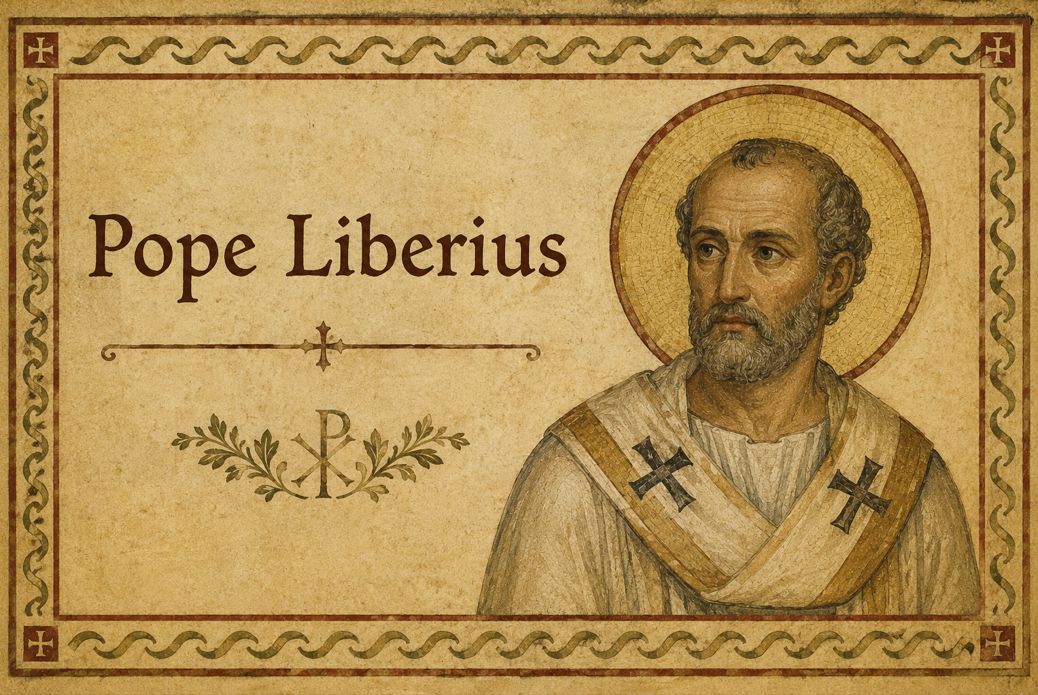
July 24, 2026: Pope Liberius, the thirty-sixth successor of Saint Peter, guided the Catholic Church through one of the most turbulent periods of the fourth century. His pontificate, from 352 to 366 AD, was marked by the continuing Arian controversy, imperial interference in Church affairs, and his own exile from Rome. Despite immense political pressure, Liberius became a symbol of perseverance and the struggle to preserve the Church's independence in matters of faith.


Although historians continue to debate certain aspects of his pontificate, there is little doubt that Liberius led the Church during a defining moment in its history, when the relationship between imperial authority and ecclesiastical leadership was being tested as never before.
Can a pope remain faithful when faced with exile, political pressure and isolation?
Pope Liberius answered that question through one of the most dramatic pontificates of the early Church. During his reign, theological disagreements were no longer confined to bishops and councils. Emperors increasingly sought to influence Church doctrine, placing enormous pressure on Church leaders to compromise.
Liberius' story is one of conviction, suffering and the difficult choices faced by those entrusted with safeguarding the faith during times of political upheaval.
(CLICK HERE to follow Catholic Connect for regular News and Content)
Little is known about Liberius' early years. Born in Rome, he grew up as Christianity was becoming firmly established throughout the Roman Empire following the reign of Emperor Constantine.
Before his election as Bishop of Rome, Liberius was respected for his learning, pastoral wisdom and commitment to the Nicene faith. These qualities made him a natural choice to lead the Church during an increasingly difficult period.
Following the death of Pope Julius I, Liberius was elected Bishop of Rome in 352 AD.
He inherited a Church still deeply divided by the Arian controversy, which questioned the full divinity of Jesus Christ. While the Council of Nicaea had affirmed orthodox teaching in 325 AD, many influential bishops and political leaders continued to support Arian theology.
Liberius quickly found himself at the centre of this conflict.
Liberius served during the reign of Emperor Constantius II, a ruler sympathetic to Arian bishops.
Rather than facing persecution from pagan rulers, the Church now struggled with divisions from within and political interference from Christian emperors.
Although his pontificate was marked by conflict, Liberius made several important contributions to the Church.
His pontificate highlighted the growing importance of the Bishop of Rome as an independent spiritual authority.
Liberius is remembered for:
His spirituality reflected trust in God during times when human support was uncertain.
Liberius' pontificate remains one of the most discussed among historians.
Some ancient sources suggest that, after prolonged exile and harsh treatment, he may have signed an ambiguous theological formula that fell short of the full Nicene expression in order to secure his return to Rome. Other historians question the reliability of these accounts or argue that any concession was made under extraordinary coercion and should be understood within its historical context.
What is beyond dispute is that Liberius consistently defended St. Athanasius for much of his pontificate and suffered exile because of his refusal to abandon the Nicene cause. His experience illustrates the immense pressures placed upon Church leaders when political power sought to shape matters of doctrine.
Although no major theological writings of Liberius survive, his life offers a lasting lesson: Faithfulness to Christ often requires courage when truth is challenged by power.
Unlike most of the early popes of this period, Liberius has not been canonised by the Catholic Church.
His omission from the Roman Martyrology reflects the historical debates surrounding his pontificate rather than the significance of his leadership.
Why does Pope Liberius matter today?
The life of Liberius reminds Christians that leadership is rarely easy. His willingness to endure exile for the sake of conscience continues to inspire those called to remain faithful amid adversity.
To know more about the previous Popes, click here
By Catholic Connect Reporter
Pope Liberius, Pope Liberius biography, Pope Liberius exile, Pope Liberius and Arianism, Pope Liberius history, thirty-sixth pope of the Catholic Church, St Athanasius and Liberius, Nicene Creed, early Catholic popes, Catholic Church history, apostolic succession



© 2026 CATHOLIC CONNECT POWERED BY ATCONLINE LLP