- 04 April, 2026

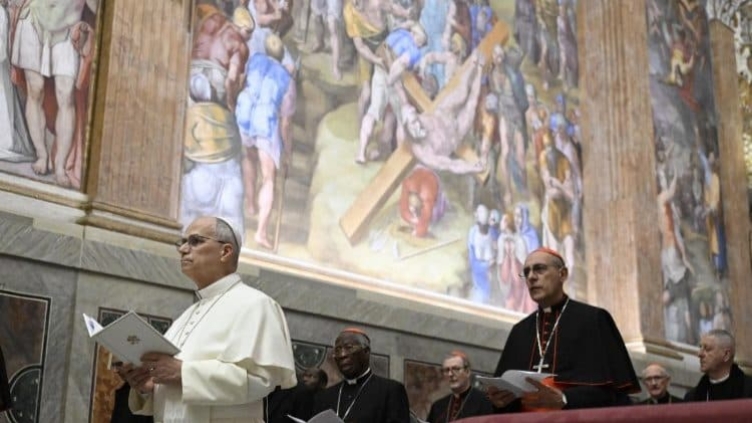
Vatican, February 26, 2026: Bishop Erik Varden of Trondheim, appointed by Pope Leo XIV to lead the 2026 Lenten spiritual exercises for the pope and senior members of the Roman Curia, delivered a forceful reflection on Wednesday, urging Church leaders to confront abuse and internal corruption with honesty and responsibility.

Speaking in the Pauline Chapel of the Apostolic Palace at the Vatican, Varden reflected on the meaning of failure in the Christian life. “Falls can humble us when we are puffed up, showing God’s power to save,” he said, adding that such moments can become part of a personal journey of salvation. At the same time, he cautioned that Christians—especially clergy—“cannot afford to be gullible.”
He warned that not every failure leads to renewal. “Not every fall ends in exhilaration,” Varden said. “There are falls that reek hellishly,” bringing destruction to the guilty and causing lasting harm to many innocent people. He emphasized the damage caused by wrongdoing within the Church, stating, “Nothing has done the Church more tragic harm, and compromised our witness more, than corruption arisen within our own house.”


Addressing the broader crisis facing the Church, Varden said, “The worst crisis of the Church,” Varden said, “has been brought on, not by secular opposition, but by ecclesiastical corruption. The wounds inflicted will take time to heal. They call out for justice and for tears.”
Turning to the issue of abuse, he noted the temptation to search for a single pathological cause when confronting corruption. Human life, he said, includes “existential hunger, vulnerability, a yearning for comfort,” experiences that can sometimes emerge through assault in a fallen world.
Varden warned that spiritual leaders, particularly founders, face increased risks, observing that spiritual exposure can seek “physical or affective release.” He cautioned that such behavior may be rationalized as spiritually elevated, “more elevated than the misdemeanors of ordinary mortals.”
Although Varden did not mention any individual or group by name, the written version of his meditation, published on his blog Coram fratribus and on the Vatican News website, included a reference to Céline Hoyeau’s 2021 book La trahison des pères, which documents abuse and manipulation by founders of new religious communities and the institutional failures surrounding them.
In recent years, repeated cases have led Church leaders and experts to call for reforms in canon law, including recognising spiritual abuse as a distinct crime and treating spiritual manipulation as an aggravating factor in abuse cases.
One of the most widely known cases in this context is that of Father Marko Rupnik, a former Jesuit and mosaic artist accused of abusing and manipulating at least 40 women, many of them religious sisters from a community he helped establish in Slovenia. His artworks remain displayed in churches and chapels worldwide, including within the Apostolic Palace.
Another case involves the Legionaries of Christ and its founder Marcial Maciel, who abused women, seminarians, and minors while using Church institutions to support a double life. Although Pope Benedict XVI ordered Maciel to a life of prayer and penance in 2006, the congregation he founded continued under revised leadership and statutes.
Concluding his reflection, Varden stressed that integrity must shape every aspect of a spiritual leader’s life. “The integrity of a spiritual teacher will be attested by his conversation, but not only; it will be evidenced as much by his online habits, his comportment at table or at the bar, his freedom with regard to others’ adulation.”
“The spiritual life is not adjunct to the remainder of existence,” he said, “it is its soul.” Warning against separation between body and spirit, he added, “We must beware of all dualism,” recalling that “the Word became flesh so that our flesh might be imbued with Logos.”
He concluded by calling for harmony between the spiritual and the human, saying, “We must learn to be equally at ease in our carnal and spiritual nature,” so that “Christ our Master may govern peacefully in both.”


© 2026 CATHOLIC CONNECT POWERED BY ATCONLINE LLP