- 03 June, 2026


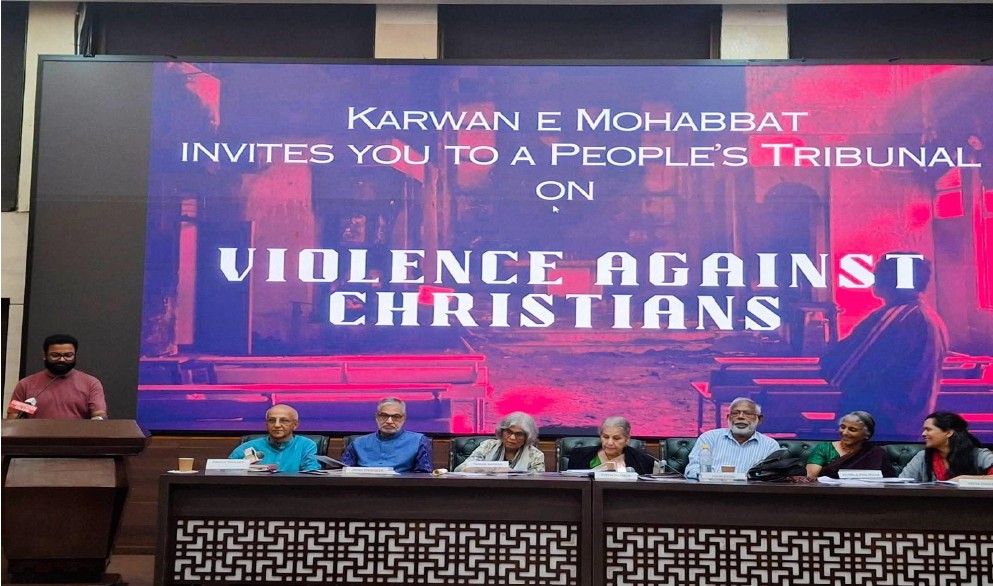
New Delhi, June 2, 2026: The struggle of Dalit Christians in India is rooted in a history that stretches back generations. For many from oppressed caste backgrounds, conversion to Christianity was not merely a change of religion—it was a search for dignity, equality and freedom from the deeply entrenched practice of untouchability. Yet history has shown that conversion did not always erase social discrimination.

A Long History of Faith, Caste and the Search for Dignity
While faith offered spiritual liberation, caste identities often continued to shape social realities. This complex relationship between caste and religion has been debated for decades in courts, legislatures and communities across the country.
Today, many advocates fear that two recent developments—the Supreme Court’s ruling on Dalit Christians and proposed amendments to the Foreign Contribution Regulation Act (FCRA)—could significantly reshape the future of one of India’s most vulnerable minority communities.


The Supreme Court Ruling and Its Impact
The Supreme Court recently ruled that Dalits who convert to Christianity cannot claim protections under the SC/ST (Prevention of Atrocities) Act and are not entitled to Scheduled Caste reservations in education and government employment.
Supporters of Dalit Christian rights argue that the judgment overlooks a crucial reality: while a person may change religion, social discrimination often continues. They contend that caste-based prejudice does not automatically disappear after conversion and that many Christian Dalits continue to face exclusion in housing, employment and social life.
Particular concern has emerged in states such as Andhra Pradesh and Telangana, where converted Dalit Christians currently receive limited benefits under specific OBC categories. Legal experts and community leaders worry that the reasoning used in the judgment—that conversion removes caste identity—could eventually be extended to challenge these existing provisions as well.
(CLICK HERE to follow Catholic Connect for regular Catholic News & Content)
The Debate Over Caste and Conversion
At the heart of the controversy lies a fundamental question: Can conversion erase caste?
For decades, several state governments and social justice advocates have maintained that while religious identity may change, social realities often remain unchanged. This understanding formed the basis for policies that recognized the continuing disadvantages faced by converted Dalit communities.
The recent ruling reflects a different interpretation, one that views Christianity as inherently caste-free. Critics argue that such a perspective does not adequately reflect the lived experiences of many Dalit Christians who continue to encounter discrimination despite their conversion.
The debate also echoes concerns once raised by Dr. B.R. Ambedkar, who explored Christianity before eventually embracing Buddhism. Ambedkar acknowledged Christianity’s message of equality but worried about how converts might be perceived within India's social and political landscape.
Why the FCRA Amendment Raises Further Concerns
Alongside the court ruling, attention has shifted to proposed changes in foreign funding regulations.
Many Christian educational institutions, hospitals and social service organizations have historically relied on foreign philanthropic support. Over the decades, these institutions have provided education, healthcare and employment to millions of Indians from all religious backgrounds.
Critics of the proposed FCRA amendments fear that increased regulatory powers could weaken the ability of such institutions to function independently. Community leaders argue that any reduction in their capacity would disproportionately affect marginalized populations who depend on these services.
For many Dalit and Adivasi Christians, these institutions have served as pathways to education, employment and social mobility. Concerns have therefore emerged that legal and administrative changes could gradually erode opportunities that took generations to build.
Beyond Policy: The Human Dimension
Behind legal arguments and policy debates are real families whose futures hang in the balance.
Students hoping to pursue higher education, workers seeking stable employment, rural communities relying on mission-run hospitals and families searching for social acceptance all stand to be affected by these developments.
Human rights advocates warn that when constitutional protections weaken and institutions face uncertainty, marginalized communities often bear the heaviest burden.
A Hope Rooted in Constitutional Values
Despite growing concerns, many leaders, activists and faith communities remain hopeful.
India’s Constitution continues to guarantee equality, religious freedom and protection for all citizens regardless of faith or background. Civil society groups, legal advocates and community organizations are expected to continue engaging with these issues through democratic and constitutional means.
History has repeatedly shown that voices raised in defense of justice can influence public policy and shape national conversations. For Dalit Christians and other vulnerable minorities, hope lies in continued dialogue, legal engagement and solidarity from citizens who believe that dignity and equal opportunity belong to everyone.
As India moves forward, the challenge will be ensuring that constitutional promises are not merely words on paper but living realities for every community—especially those who need those protections the most.
Courtesy : Kancha Ilaiah Shepherd (The Wire)

© 2026 CATHOLIC CONNECT POWERED BY ATCONLINE LLP