- 14 October, 2026
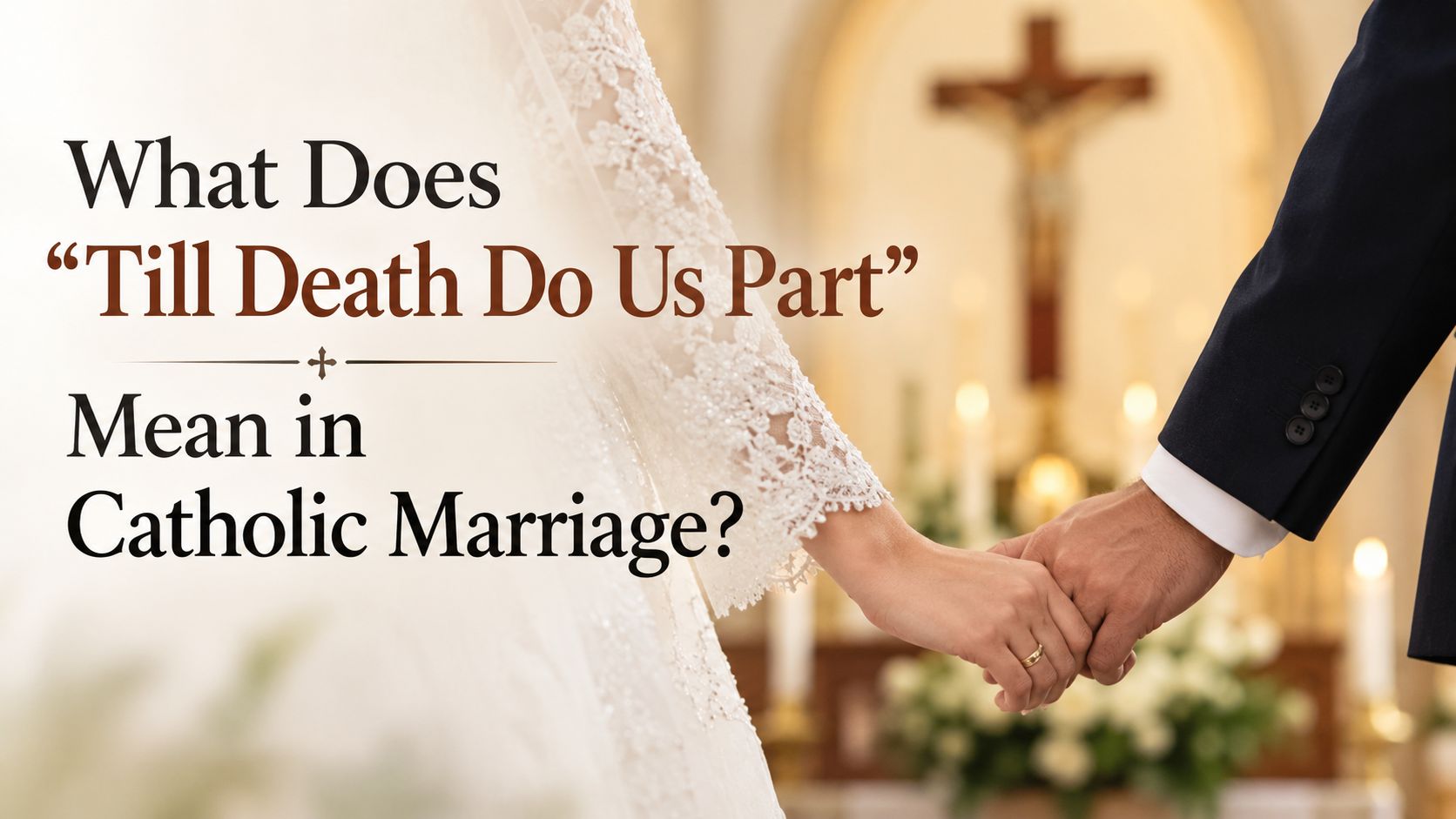
Oct 14, 2026: Romantic films often end at the wedding. The couple overcomes every obstacle, declares their love and walks into a future that promises happiness. But what happens after the credits roll?


Real marriage includes bills, disagreements, changing priorities, family responsibilities and days when being together takes more effort than either person expected. In a culture where relationships are increasingly discussed in terms of compatibility, personal fulfilment and knowing when to walk away, the Catholic promise “till death do us part” deserves a closer look.
Is it an outdated ideal, or does it offer something that modern relationships need?
More Than a Relationship That Works
A contract generally establishes terms and obligations between parties. A Catholic marriage is understood differently: it is a covenant, a lifelong commitment in which two people give themselves to one another in faithful love.
Jesus says, “What therefore God has joined together, let not man put asunder” (Matthew 19:6).
This does not mean that feelings never change or that a couple will always agree. It means marriage is not built solely on the expectation that the other person will continue to meet every preference or make life feel exciting. Love also involves learning to communicate, accepting imperfections, taking responsibility and working through difficulties together.
Movies and social media are not solely responsible for unrealistic expectations, but stories that focus on falling in love more than staying in love can leave us unprepared for the ordinary work a lasting relationship requires.
A wedding celebrates a decision. Marriage is the life that follows it.
But Does “Forever” Mean Enduring Abuse?
Absolutely not. The Catholic teaching that marriage is lifelong must never be used to pressure someone into remaining in a dangerous or abusive situation.
Violence, coercion, threats and controlling behaviour are not expressions of marital love. A spouse is not required to sacrifice their safety or their children's safety to prove their commitment.
Separation may be necessary when living together becomes seriously harmful. Anyone experiencing abuse should seek safety and appropriate professional, pastoral and legal support.
Protecting someone from harm does not mean treating marriage as disposable. It recognises that human dignity and safety matter, and that commitment cannot be used to justify mistreatment.
Seven Ways to Prepare for a Marriage Covenant
If you are looking for a spouse, preparing for marriage involves more than finding someone you love. It means learning what a lifelong commitment asks of both people.
1. Look beyond attraction: Chemistry matters, but so do honesty, emotional maturity, kindness and accountability. Notice how a potential partner handles frustration, treats others and responds when things do not go their way.
2. Have the difficult conversations early: Discuss faith, children, finances, careers, household responsibilities and expectations about extended family. Love does not automatically resolve differences that neither person is willing to address.
3. Learn to disagree respectfully: A lasting marriage does not require two people to think alike. It requires them to listen, apologise, resolve conflicts and express concerns without insults, threats or humiliation.
4. Prepare for the ordinary day: The excitement of courtship and the wedding will eventually give way to routines and responsibilities. Talk about how you will share burdens, support each other's growth and face unexpected challenges together.
5. Prepare to forgive, but also to take responsibility: Forgiveness is important, but it does not mean ignoring repeated wrongdoing. Both spouses must be willing to acknowledge mistakes, make amends and demonstrate genuine change.
6. Learn to manage money together. Discuss income, debts, savings, spending habits, financial responsibilities towards parents and your plans for the future. Financial transparency before marriage can prevent misunderstandings later.
7. Build your relationship around Christ: Pray together, participate in the sacramental life of the Church and take marriage preparation seriously. Ask not only whether you are compatible, but whether you can help one another grow in faith and holiness.
Before You Say “I Do”
“Till death do us part” does not promise a perfect marriage. It expresses the intention to build a faithful, lifelong partnership rather than a relationship with an expiry date.
You do not need to find someone who will never disappoint you. You need a relationship grounded in mutual respect, trust, safety and a willingness to grow together.
Perhaps the real question is not whether lifelong love is difficult, but whether we are prepared for the kind of love that lasts beyond the excitement of falling in love.
If you have been praying about marriage and feel ready to take a practical step towards meeting someone, Catholic Connect Matrimony can help you take that step with greater confidence. Bringing together over 5,200 Catholic singles from India and abroad, the platform offers a safe environment for those seeking a sacramental marriage. With verified profiles, advanced security features and search filters based on denomination, age, profession, location, language and other preferences, it makes it easier to connect with genuine individuals who share your hopes for married life. Visit catholicconnectmatrimony.com to learn more.
By Catholic Connect Reporter
Read More:
Trusting God’s Timing in Marriage? What to Do While You Wait
“When Are You Getting Married?” What to Do When the Pressure Gets Real
How to Evaluate Compatibility in Marriage from a Catholic Perspective
Calling All Indian Catholic Singles: Tell Us What You're Looking for in a Life Partner
5 Friendship Qualities That Make Marriages Last
Love Isn't Enough: Why Communication Can Make or Break a Marriage
© 2026 CATHOLIC CONNECT POWERED BY ATCONLINE LLP