- 16 June, 2026

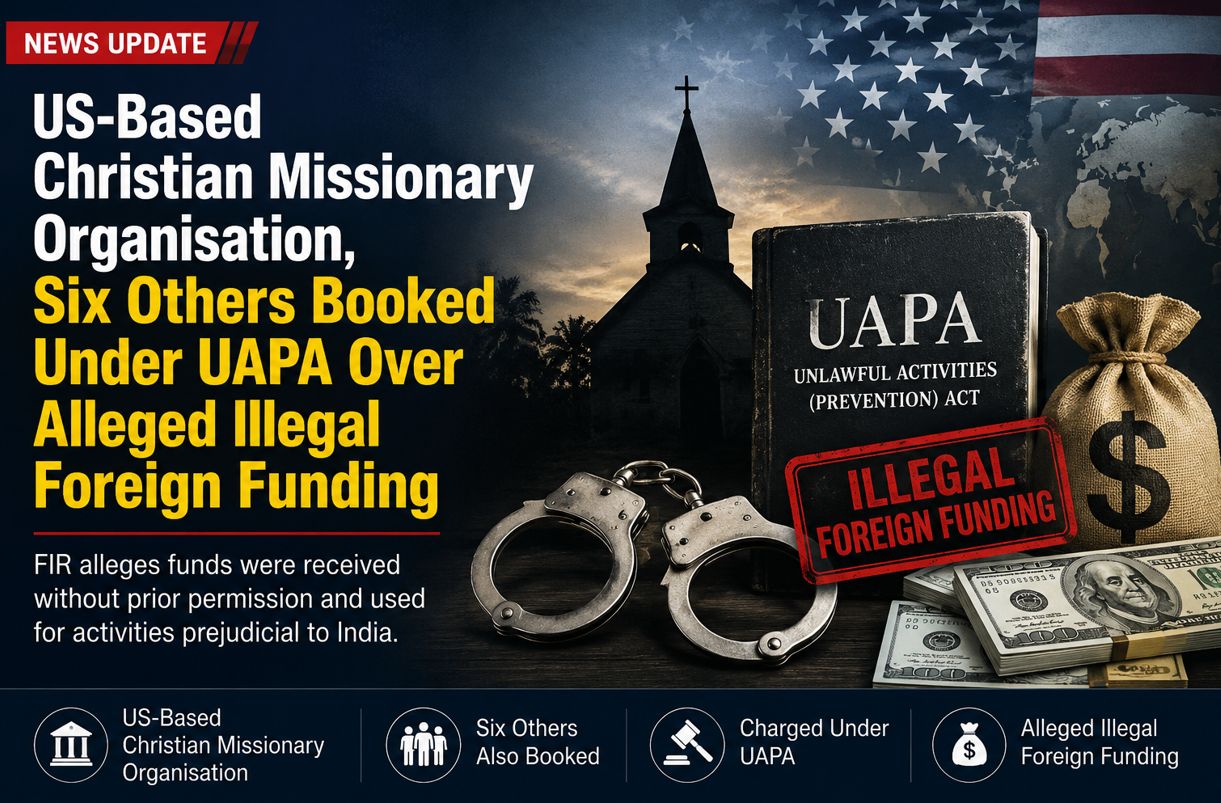
Bengaluru, June 16, 2026: A US-based Christian organisation and six individuals have been booked in Bengaluru under the Unlawful Activities (Prevention) Act (UAPA) following an Enforcement Directorate (ED) investigation into alleged illegal movement of foreign funds. The case has triggered a wider discussion about financial transparency, religious activities, and national security.


According to reports, investigators have alleged that foreign funds were routed through a network involving foreign debit cards and reached regions affected by Left Wing Extremism and Naxalite influence. The allegations are part of an ongoing investigation, and the facts of the case will be established through the legal process.
The organisation named in the case is the US-based Christian missionary group The Timothy Initiative (TTI).
The six individuals named in the FIR are:


The case was registered by Bengaluru police based on information provided by the Enforcement Directorate. Authorities have alleged that foreign funds were moved through overseas financial channels and were used in areas considered sensitive from a security perspective.
Being named in an FIR does not establish guilt. The individuals and the organisation will have the opportunity to respond to the allegations through the judicial process.
At the centre of the investigation is an alleged foreign funding trail of around Rs. 92.55 crore, with some reports referring to the figure as approximately Rs. 95 crore.
According to the Enforcement Directorate’s complaint, the funds were allegedly channelled through a network involving foreign-issued debit cards between November 2025 and April 2026. Investigators are examining whether these financial transactions bypassed regulatory requirements and whether the funds reached areas affected by Left Wing Extremism.
The probe is also looking into whether the movement and use of these funds complied with India’s laws governing foreign contributions and financial transfers.
The allegations remain under investigation, and the final findings will depend on evidence presented during the legal proceedings.
The Enforcement Directorate’s investigation reportedly focused on financial transactions involving foreign contributions and the alleged use of foreign-issued debit cards. Officials have raised concerns that certain funding routes may have avoided established regulatory systems.
The action has brought renewed attention to how foreign organisations operate in India, particularly when their activities involve regions where security agencies maintain heightened vigilance.
Authorities have argued that monitoring foreign financial flows is necessary to prevent potential misuse of funds. At the same time, India’s constitutional framework protects the freedom to practise and propagate religion, provided activities remain within the boundaries of law.
The case has reopened a long-standing debate about balancing religious freedom with national security requirements.
The central issue is not simply the existence of religious outreach but whether financial activities connected to such work are transparent, accountable, and compliant with Indian regulations.
When foreign funds enter the country through unclear or unauthorised channels, security agencies may investigate possible violations. However, legitimate religious, humanitarian, and charitable organisations that follow legal requirements continue to have the right to function.
India regulates foreign contributions through laws such as the Foreign Contribution Regulation Act (FCRA), which requires organisations receiving overseas funds to maintain proper records and submit necessary reports.
The Bengaluru case highlights the importance of strong oversight of international financial networks. Clear documentation and accountability help ensure that foreign contributions are used for lawful purposes.
At the same time, regulations must allow genuine organisations engaged in peaceful charitable and social activities to operate without unnecessary restrictions.
A fair system requires both effective enforcement against misuse and protection for lawful activities.
As the investigation continues, the focus will remain on evidence, due process, and the findings of the courts. Cases involving foreign funding and national security require careful handling to protect both public safety and constitutional freedoms.
Greater transparency, stronger compliance mechanisms, and open accountability can help build trust between authorities, communities, and organisations working across India.
A balanced approach can ensure that security concerns are addressed while the country continues to uphold the principles of democracy, law, and religious freedom.
Courtesy Indian Express
© 2026 CATHOLIC CONNECT POWERED BY ATCONLINE LLP