- 16 June, 2026
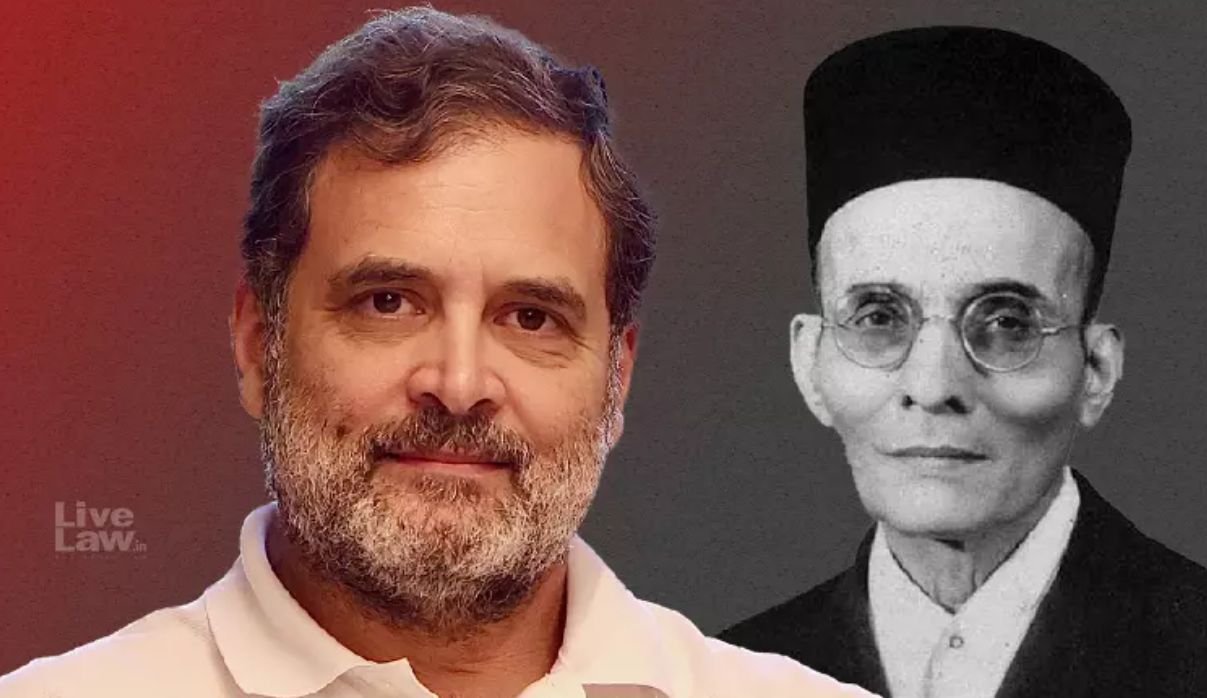
New Delhi, June 16, 2026: More than seven decades after India gained independence, debates surrounding the country’s freedom movement continue to shape public discourse and political conversations. Few figures remain as contested as Vinayak Damodar Savarkar, whose role in India’s struggle against British rule has long been interpreted in sharply different ways.


A Historical Debate Returns to the Courtroom
A recent hearing in a Pune court has once again brought attention to one of the most debated aspects of Savarkar’s life — his mercy petitions submitted to the British authorities during his imprisonment.
During cross-examination in a defamation case filed against Congress leader Rahul Gandhi, Savarkar’s grandnephew Satyaki Savarkar acknowledged that Savarkar had submitted multiple clemency petitions seeking a reduction of his sentence. He also stated that several other revolutionary figures, including Bhagat Singh, Rajguru, Batukeshwar Dutt and Ashfaqulla Khan, adopted different approaches towards British imprisonment.


The testimony has renewed a broader historical discussion: how should India understand the actions of freedom fighters who faced imprisonment, torture and difficult moral choices under colonial rule?
The Pune Court Hearing: A Fresh Focus on Savarkar’s Petitions
The discussion emerged during proceedings before a special MP/MLA court in Pune, where Satyaki Savarkar is pursuing a defamation case against Rahul Gandhi.
During cross-examination by Gandhi’s counsel Milind Pawar, Satyaki Savarkar was questioned about the petitions submitted by his granduncle during his imprisonment under British rule.
According to reports, Satyaki acknowledged: “It is true to say that, Savarkar had filed a clemency petition ten times.”
He further stated that Savarkar filed his first mercy petition within a month of receiving his sentence.
The issue has become central to a wider political and historical debate because Savarkar remains both admired by supporters as a revolutionary nationalist and criticised by opponents over his interactions with the British colonial government.
Savarkar’s Imprisonment and the Context of Mercy Petitions
Vinayak Damodar Savarkar was arrested by British authorities and sentenced to transportation for life, leading to his imprisonment in the Cellular Jail in the Andaman Islands.
The Cellular Jail, often referred to as Kala Pani, was among the harshest prisons used by the British Empire. Prisoners faced isolation, forced labour and severe physical and psychological hardship.
Supporters of Savarkar argue that petitions submitted from prison must be understood within the brutal realities faced by political prisoners at the time. They maintain that seeking clemency was sometimes a strategic decision intended to secure release and continue nationalist activities outside prison.
Critics, however, argue that revolutionary figures who refused similar appeals demonstrated a different form of resistance and ideological commitment.
The debate therefore extends beyond the existence of petitions themselves and focuses on how historians interpret political choices made under extreme circumstances.
Comparisons With Bhagat Singh and Other Revolutionaries
During the court proceedings, Satyaki Savarkar was also asked about other revolutionary leaders from the same era.
He acknowledged that figures such as Bhagat Singh, Rajguru, Batukeshwar Dutt and Ashfaqulla Khan did not submit mercy petitions seeking personal relief from British punishment.
He stated: “It is true to say that, revolutionists from that same period – Rajguru, Batukeshwar Dutt, and Ashfaqulla Khan – did not file a clemency petition.”
He also acknowledged that Bhagat Singh and Batukeshwar Dutt had demanded recognition as prisoners of war rather than seeking leniency.
According to the testimony, Satyaki said: “Bhagat Singh and Batukeshwar Dutt remained steadfast in their ideology and principles until the very end.”
These comparisons have long been part of discussions about the different philosophies within India’s freedom movement.
While some revolutionaries embraced martyrdom as a political statement, others pursued survival and continued resistance through different methods.
The Challenge of Judging Freedom Fighters Through History
The controversy surrounding Savarkar highlights a larger question faced by historians: should figures from the past be judged only by individual actions, or should those actions be understood within the pressures of their historical moment?
The Indian independence movement was not a single unified struggle. It included constitutional reformers, revolutionary groups, social activists and political organisations with different strategies.
Some believed political negotiations could weaken colonial rule. Others believed armed resistance and sacrifice were necessary to awaken national consciousness.
Savarkar himself was an influential nationalist thinker whose writings and political ideas continue to generate discussion. His supporters highlight his early revolutionary activities, imprisonment and contributions to nationalist thought. His critics focus on later political positions and decisions during British rule.
The current court proceedings have reopened these historical questions rather than providing a final answer.
The Continuing Political and Social Debate
The issue has gained attention because Savarkar remains an important figure in contemporary Indian politics.
Different political groups interpret his legacy in contrasting ways. For some, questioning Savarkar’s actions amounts to disrespecting a freedom fighter. For others, examining his choices is part of understanding history honestly.
The court testimony has added new details to a debate that has existed for decades.
The discussion also reflects a broader challenge faced by many countries: how to remember national figures whose lives contain both achievements and controversies.
Remembering History With Balance and Understanding
The debate over Savarkar’s mercy petitions is unlikely to disappear soon. The recent Pune court proceedings have once again placed questions about courage, compromise, survival and ideology at the centre of public discussion.
India’s freedom struggle was shaped by individuals who made different choices under extraordinary circumstances. Some chose defiance until death, while others attempted different paths to continue their political goals.
Understanding history requires acknowledging complexity rather than reducing individuals to simple labels. Savarkar’s legacy, like that of many historical figures, remains a subject of interpretation, research and debate.
As India continues to reflect on its independence movement, the challenge remains to remember its heroes with honesty — recognising their sacrifices, examining their decisions and allowing history to be studied with seriousness, fairness and depth.
Courtesy : Live Law
© 2026 CATHOLIC CONNECT POWERED BY ATCONLINE LLP