- 16 July, 2026
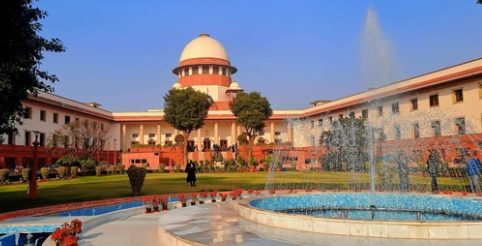
New Delhi, July 16, 2026: A question raised by the Supreme Court during a hearing on the implementation of the CBSE's three-language policy has sparked a wider national debate on language, identity and education: Can English, after more than three centuries of use in India, be regarded as an Indian language?


The observation came while a Bench comprising Chief Justice Surya Kant and Justice Joymalya Bagchi heard petitions challenging the Central Board of Secondary Education's (CBSE) implementation of the three-language policy for students in Classes 6 to 9. The court has sought responses from the Union Government and the CBSE but has not expressed any final opinion on the issue.
During the hearing, the Bench questioned the CBSE's description of English as a "non-native" language under its revised framework. Justice Bagchi observed that the Constitution does not use the term "native" and instead refers to expressions such as "mother tongue", "regional language" and "Indian language." He asked whether English, after centuries of continuous use in the country, could now be considered an indigenous Indian language.


The judges indicated that while the objective of promoting Indian languages was constitutionally valid, the terminology adopted by the CBSE might require reconsideration.
The case centres on the implementation of the three-language formula, first recommended by the Kothari Commission in the 1960s and reaffirmed in the National Education Policy (NEP) 2020. Under the policy, students are expected to learn three languages, with at least two being languages native to India. The controversy arose after the CBSE made the policy mandatory for Classes 6 to 9 from the 2026–27 academic year.
Petitioners have argued that the revised policy has been introduced without adequate preparation. They contend that textbooks are unavailable for several recognised Indian languages and that schools face a shortage of qualified language teachers.
The petitioners have also raised concerns about students in English-medium schools who currently study foreign languages such as French, German or Spanish. They argue that if English is treated as a non-native language, students could be required to study English along with two Indian languages, leaving little room for an additional foreign language.
Senior Advocate Gopal Sankaranarayanan, appearing for the petitioners, submitted that English has been part of India's educational and social landscape for more than 300 years and questioned whether it should continue to be classified as a foreign or non-native language.
English, introduced during British colonial rule, continues to serve as one of the Union government's official languages under the Official Languages Act, 1963. It remains the primary language of higher education, the higher judiciary, science, technology, business and communication across states. Linguists also recognise Indian English as a distinct variety that has evolved through centuries of local usage.
However, English is not among the 22 languages listed in the Eighth Schedule of the Constitution, and Indian law does not provide a clear definition of what constitutes an "indigenous" or "native" language.
Legal experts say the case extends beyond the implementation of the three-language policy and raises broader constitutional questions about India's linguistic identity and language policy.
The Supreme Court will continue hearing the matter after receiving responses from the Centre and the CBSE. Its eventual ruling could have significant implications for language education and future policy discussions across the country.
By Catholic Connect Reporter

© 2026 CATHOLIC CONNECT POWERED BY ATCONLINE LLP