- 09 September, 2026

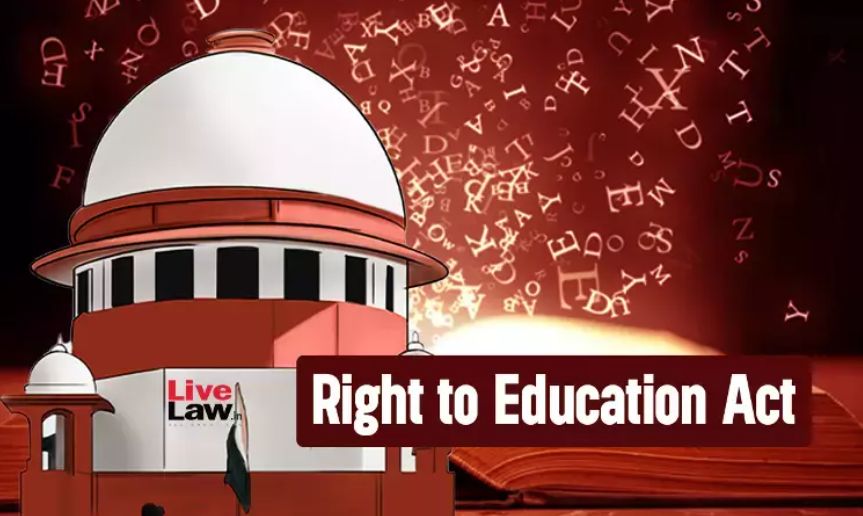
New Delhi, September 9, 2026: The Supreme Court has directed that teachers cannot be appointed or continued in schools and colleges unless they possess the qualifications prescribed under the applicable education laws.


A Bench comprising Chief Justice of India Surya Kant and Justices Joymalya Bagchi and V. Mohana issued the interim direction while hearing a Public Interest Litigation challenging statutory schemes relating to the provincialisation of teachers and other employees of educational institutions.
The court directed institutions to comply with qualification requirements prescribed under the Right to Education (RTE) Act, the National Council for Teacher Education (NCTE) Act and the University Grants Commission (UGC) Act.

“As an interim measure, no teacher shall be appointed/observed in schools/colleges unless possessing requisite prescribed qualification under Right to Education Act/NCTE Act/UGC Act,” the Bench said in its order.
The direction covers both fresh appointments and the continuation of teachers who do not possess the prescribed statutory qualifications.
The regulatory frameworks apply to different levels of education. The RTE framework lays down standards for elementary education, while the NCTE framework regulates teacher education and prescribes qualifications for school teachers. UGC regulations govern qualifications and appointments relating to higher education.
The interim order was passed in a PIL challenging schemes under which teachers and other employees of educational institutions could be absorbed into government service.
The petitioners have questioned whether such schemes can permit individuals to enter substantive government employment without undergoing a fair, transparent and competitive recruitment process. They have argued that bypassing regular recruitment procedures could undermine merit-based selection and affect standards in public education.
The Supreme Court has issued notice in the matter, with the broader constitutional and legal questions surrounding the schemes yet to be decided.
During the hearing, the Bench also expressed concern over the impact of appointing teachers without the required qualifications on students. The court questioned why unqualified persons were being appointed and how such appointments could safeguard the future of students.
The court's observations underline the importance of maintaining minimum professional standards in teaching, particularly in public educational institutions where teacher qualifications have a direct bearing on the quality of education provided to students.
The direction is interim and does not constitute a final ruling on the validity of the challenged provincialisation schemes.
The case will now proceed with responses from the concerned authorities as the court examines the wider issues concerning teacher recruitment, absorption into government service and compliance with statutory qualification requirements.
Courtesy : Debby Jain from Live Law







© 2026 CATHOLIC CONNECT POWERED BY ATCONLINE LLP