- 26 October, 2026
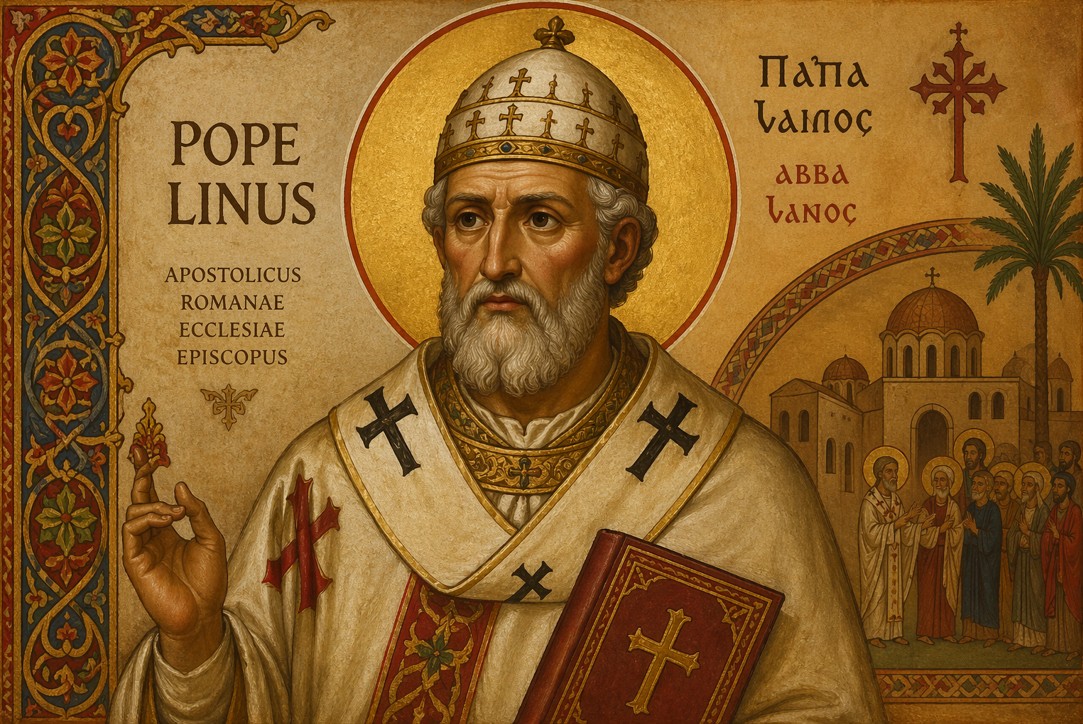
Pope Linus is recognized as the immediate successor of Saint Peter, continuing the leadership of the Church during one of its most fragile early periods.


Following the martyrdom of St. Peter, Linus stepped into a role marked by uncertainty and danger. As the second Pope, his leadership ensured continuity, stability, and growth of the early Christian community in the face of persecution.
Little is known with certainty about Linus’ early life, reflecting the limited historical records of the first century. Tradition holds that he was born in Tuscany, Italy, and may have been a disciple of the apostles, possibly even personally formed by St. Peter.
After the death of St. Peter in Rome, Linus was chosen to lead the Church. His election represents the early development of apostolic succession—the passing of leadership from one pope to another, ensuring unity and continuity in the Church’s mission.
Linus’ papacy took place during the height of the Roman Empire’s suspicion toward Christians. After the persecution under Emperor Nero, Christians continued to live under threat.
The Church faced:
This was a time when simply professing faith could lead to martyrdom.
Though historical details are limited, tradition attributes several important contributions to Linus:
These contributions mattered because they helped prevent fragmentation in a vulnerable, growing Church.
Linus is remembered as:
His spirituality reflects quiet strength—less visible than Peter’s, but equally essential for sustaining the Church.
Linus led during a period of ongoing difficulty:
While no major controversies are recorded, the lack of documentation itself highlights the fragile condition of the early Church.
Although no direct writings of Linus survive, his life echoes a powerful message:
Faithfulness in small and unseen duties sustains the Church through great trials.
Tradition holds that Linus died as a martyr in Rome, though historical certainty is limited.
He is buried in Rome, close to the tomb of St. Peter, symbolizing continuity in leadership.
St. Linus represents:
His legacy reminds the Church that growth often depends on steady, faithful service rather than dramatic action.
Why does St. Linus matter today?
As the second Pope, Linus ensured that the mission entrusted to Peter did not falter. His example continues to inspire the Church, carried forward today by his successors.
To know more about the previous Popes, click here
By Catholic Connect Reporter


© 2026 CATHOLIC CONNECT POWERED BY ATCONLINE LLP