- 28 July, 2026

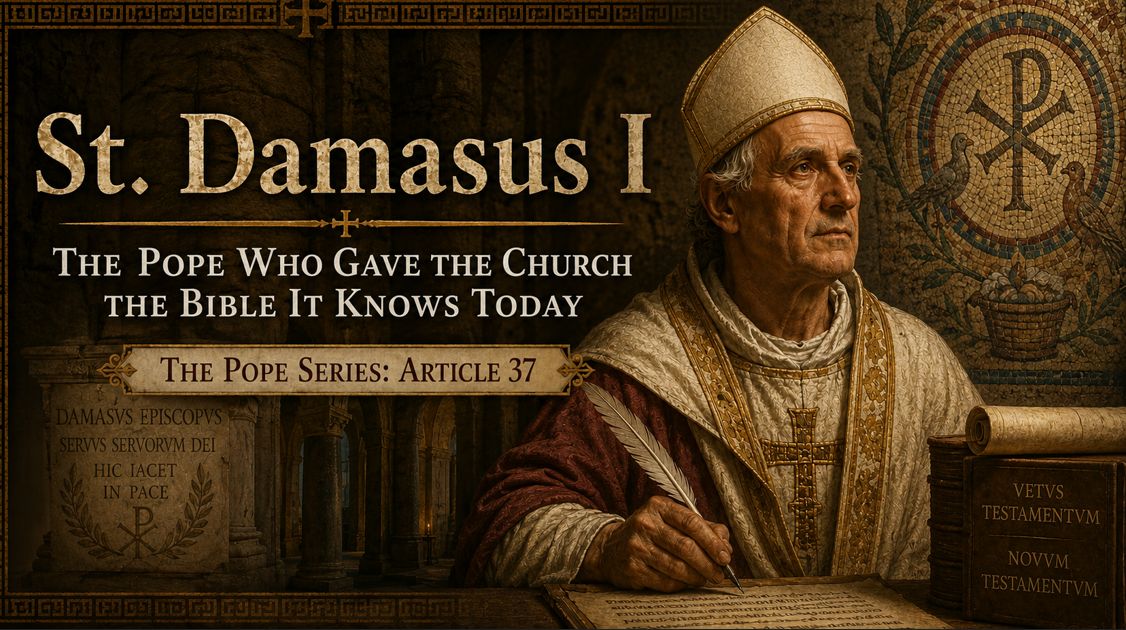
July 28, 2026: St. Damasus I, the thirty-seventh successor of Saint Peter, is remembered as one of the most influential popes in the history of the Catholic Church. Serving from 366 to 384 AD, he led the Church during a period of remarkable growth following the legalisation of Christianity. Yet his pontificate was far from peaceful. He inherited a divided Church, faced fierce opposition to his election, and navigated continuing theological disputes.


Amid these challenges, Damasus strengthened the authority of the papacy, promoted devotion to the martyrs, and commissioned one of the most important works in Christian history—the Latin translation of the Bible that would become known as the Vulgate.
His leadership helped shape the identity of the Western Church for centuries and left an enduring legacy that continues to influence Christians around the world.


How did the Bible used by millions of Christians today come into being?
The answer leads directly to Pope Damasus I. While he is remembered for defending orthodox teaching and strengthening the Church in Rome, his greatest contribution was recognising the need for an accurate and reliable Latin Bible. By entrusting the biblical scholar St. Jerome with this monumental task, Damasus helped preserve the Scriptures for future generations.
His papacy marked a turning point, as Christianity moved from surviving persecution to becoming a confident and organised faith capable of shaping civilisation.
(CLICK HERE to follow Catholic Connect and to stay updated with Catholic News & Content)
Damasus was born around 305 AD, probably in the Roman province of Lusitania, although some traditions place his birth in Rome. His parents were devout Christians, and his father served as a priest in Rome.
Growing up in the heart of the Christian community, Damasus received an excellent religious education and became closely involved in the Church's ministry. His deep knowledge of Scripture, theology and Church administration prepared him for the responsibilities that lay ahead.
Following the death of Pope Liberius, Damasus was elected Bishop of Rome in 366 AD.
His election, however, proved highly controversial. A rival candidate, Ursinus, was also chosen by another group of clergy and supporters, leading to violent clashes in Rome.
The dispute resulted in bloodshed and remained one of the most difficult episodes of the early papacy.
Despite the conflict, Damasus eventually secured widespread recognition as the legitimate Bishop of Rome and devoted his long pontificate to restoring unity within the Church.
Damasus served during a period when Christianity was becoming the dominant religion of the Roman Empire.
These developments offered new opportunities but also required strong leadership to preserve unity and sound doctrine.
Pope Damasus I left an extraordinary legacy that shaped the future of the Catholic Church.
His contributions continue to influence Catholic worship, theology and biblical study to this day.
St. Damasus I is remembered for:
His spirituality reflected a profound appreciation for both the Word of God and the witness of the saints.
Damasus' election was one of the most disputed in the history of the early Church. The rivalry between his supporters and those of Ursinus led to violent confrontations that claimed many lives.
He also faced accusations from political opponents, although these were investigated and dismissed. Throughout his pontificate, he continued to confront theological disputes, particularly Arianism and other movements that challenged orthodox Christian doctrine.
Rather than allowing these controversies to weaken the Church, Damasus used them as opportunities to clarify Catholic teaching and strengthen ecclesiastical leadership.
Although Damasus left relatively few theological writings, his life proclaims an enduring truth: The Word of God is the foundation upon which the Church must always stand.
The Catholic Church honours Damasus I as a saint.
He is remembered not only as a faithful pope but also as a champion of Sacred Scripture and one of the great builders of the early Church.
Why does St. Damasus I matter today?
His legacy continues through the life of the Church today, carried forward by his successors. Every time Christians open the Bible, they benefit from the foresight of a pope who understood the importance of making God's Word accessible, accurate and enduring.
To know more about the previous Popes, click here
By Catholic Connect Reporter
St. Damasus I, Pope Damasus I biography, Pope Damasus and St. Jerome, Latin Vulgate, Pope who commissioned the Vulgate, Pope Damasus history, thirty-seventh pope of the Catholic Church, early Catholic popes, Catholic Church history, Nicene Christianity, St. Damasus facts
© 2026 CATHOLIC CONNECT POWERED BY ATCONLINE LLP