- 22 June, 2026
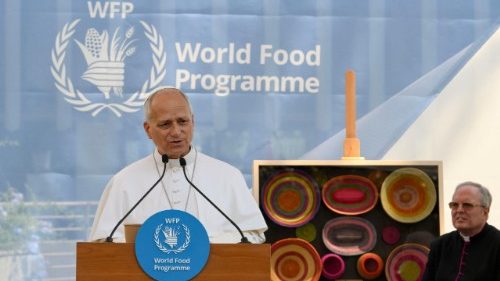
Vatican, June 22, 2026: "Together, we share the urgent task of confronting hunger and malnutrition, while also tackling the underlying structural causes that sustain them. To meet this task effectively, we must examine the challenges before us, their underlying causes, and the paths toward lasting solutions."


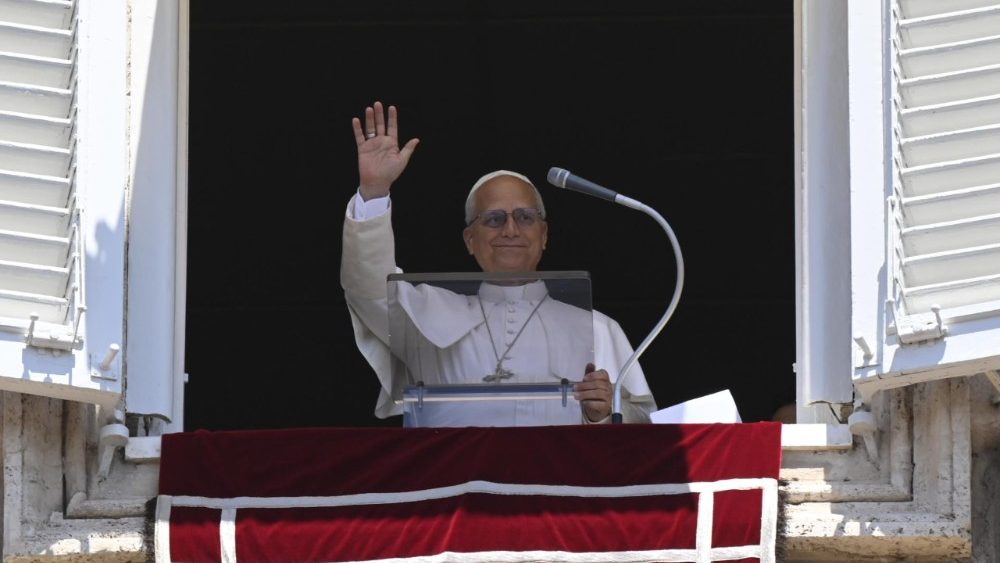
Pope Leo XIV said this while addressing the Executive Board of the United Nations World Food Programme at its headquarters in Rome on Monday.
In his address, he emphasised that multilateralism remains essential and that fundamental needs such as water, food, and healthcare must not be subjected to geopolitical interests.


The Pope expressed gratitude to the intergovernmental institution for its commitment to saving lives during emergencies and delivering food assistance amid conflicts and natural disasters, noting that its dedication closely aligns with the Catholic Church’s mission of upholding human dignity and promoting fraternity, rooted in the Gospel’s call to love one’s neighbour.
He observed that crises today have shifted from isolated incidents to ongoing realities, characterised by prolonged conflicts, chronic food insecurity, economic instability, and increasing climate vulnerabilities.
This situation, he noted, raises a fundamental question regarding "what configuration of the global order is capable of producing, reproducing, and, at times, normalising such conditions?"
He remarked that the issue is no longer confined to how intervention should take place, but rather "extends to understanding why the system constantly produces the very problems it is then forced to correct."
Increasingly fragmented international order
The Pope lamented that the international order has become increasingly fragmented, partly due to the crisis affecting the multilateral system. He observed that states have increasingly directed their resources towards national security, economic growth, and domestic stability, while neglecting the close connection between these concerns and multilateral cooperation.
According to the Holy Father, this trend exposes a striking paradox in which "unprecedented global productive capacity exists alongside expanding zones of extreme vulnerability."
"It is precisely within the gap between acknowledgement in principle and prioritisation in practice," he continued, "that we witness the progressive bureaucratisation of solidarity alongside the quiet commodification of human life."
On one hand, he explained, humanitarian action is increasingly weighed down by bureaucratic procedures that delay assistance to those in need. On the other hand, access to essential goods, including food, is too often shaped by economic or strategic interests.
Conflicts are “fed” more readily than people are nourished
As a consequence, he lamented, those who fail to generate quantifiable value risk becoming invisible.
"This twofold dynamic," he lamented, "creates a serious ethical challenge: the human person is no longer consistently placed at the centre of international action."
In this context, the Pope stressed the importance of recognising, as Pope Francis had done, "that whereas forms of aid and development projects are obstructed by involved and incomprehensible political decisions, skewed ideological visions and impenetrable customs barriers, weaponry is not.”
"In effect," the Pope said, "conflicts are “fed” more readily than people are nourished. This reality reflects not only operational shortcomings but also a fundamental imbalance in political and moral priorities."
WFP's presence helps prevent crises from deteriorating
The Pope recalled that the consequences extend far beyond those directly affected.
Hunger, Pope Leo noted, is not merely a humanitarian concern; it also weakens social cohesion, increases the risk of conflict, and drives forced migration.
From this perspective, he highlighted that humanitarian action is not separate from the international order and underscored the responsibility of the global community to strengthen solidarity, resist exclusion, and acknowledge the inherent God-given dignity of every person.
"Beyond managing crises, therefore, international institutions embody a principle of shared responsibility and affirm that the international community is bound together by concern for those in the most vulnerable situations."
In this regard, he stated that "the World Food Programme is more than a political, economic, or technical actor; it is a concrete expression of international solidarity. Indeed, where national institutions recede and community networks disintegrate, its presence helps to prevent humanitarian crises from deteriorating into irreversible collapse."
Renewed commitment to multilateral cooperation
For this reason, the Pope said, renewed commitment to multilateral cooperation is indispensable.
"I wish to appeal to the governments and peoples of the world to renew and strengthen their commitment, to increase the resources dedicated to combating hunger and its root causes, and to remove the obstacles that prevent aid from reaching those in need. At the same time, such support should also strengthen engagement with the Church and civil society. Reinforcing the capacities of all these actors together will multiply our collective effectiveness in the fight against hunger."
He noted that implementing this appeal effectively requires reducing unnecessary bureaucracy so that transparency and accountability serve people rather than obstruct assistance. In situations where governments lack effective territorial control or humanitarian access remains restricted, trusted local partners become indispensable.
Supporting the Catholic Church's humanitarian efforts
The Pope observed that the Catholic Church—through parishes, dioceses, Caritas agencies, and other faith-based initiatives—often reaches vulnerable communities in places inaccessible to international actors, and he encouraged the World Food Programme and its partners to continue supporting these efforts.
He stressed that addressing dietary needs not only eases suffering but also tackles the underlying causes of geopolitical instability, because "food security is an essential component of global and integral security."
In this regard, he praised the World Food Programme for extending its work beyond emergency response operations to include long-term initiatives, such as programmes that provide meals to schoolchildren.
Credibility of international cooperation itself at stake
Before concluding his address, the Pope issued a stark warning.
"What is at stake," he said, "is not only the effectiveness of an agency, but also the credibility of international cooperation itself," while observing that the organisation demonstrates that a renewed path remains possible.
However, he insisted that this requires the determination to simplify what has become excessively complex, to prioritise what is essential, and to ensure that no person is forgotten.
Finally, Pope Leo concluded by praying that God bless their efforts, "so that all may receive their daily bread and live in dignity."
Courtesy: Vatican News

© 2026 CATHOLIC CONNECT POWERED BY ATCONLINE LLP